Reading guide
All sixteen pages, five complete figures, six tables, twelve numbered equation groups, eight appendix displays and thirty-one references are covered. TopoRetarget converts human hand keypoints, object poses and an object mesh into robot references; separate RL policies learn to track them. The main advantage is preserving local hand–object geometry. Fixed retargeting parameters do not mean a single universal control policy. Hardware videos demonstrate cube reorientation and pen spinning qualitatively, without a reported hardware success denominator.
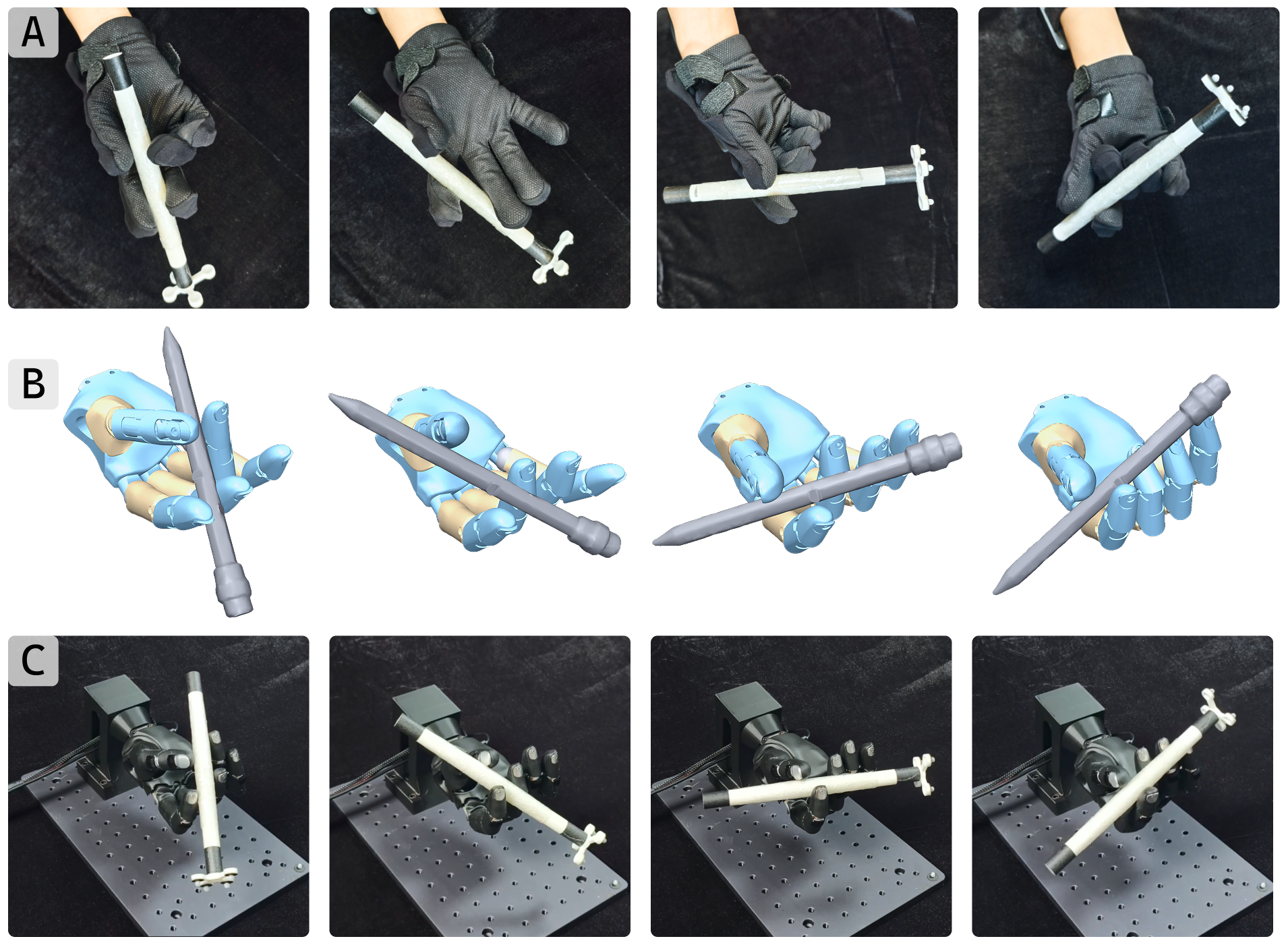
At a glance
A source hand–object interaction mesh supplies shared graph connectivity and distance-weighted Laplacian targets for robot retargeting. Bone-direction initialization and signed-distance constraints regularize the solution. ContactPose contact errors improve, and Pen-Spin policy success reaches 28/32 clips versus 15/32 for the best reported baseline, a 40.6-percentage-point gain. Retargeting takes 4.70 ms per frame, faster than OmniRetarget but slower than the three hand-only baselines. Zero-shot hardware demonstrations follow simulation training; they do not establish unrestricted object or skill generalization.
1 Introduction
Reference-based dexterous RL depends on physically useful demonstrations. Matching fingertips or hand shape alone can move contacts away from their intended object regions, distort intermediate phalanges, or create penetrations. TopoRetarget instead transfers a local neighborhood geometry that includes both hand and object vertices, then tests the resulting references through separately trained tracking policies. The contribution is reference generation with explicit geometric assumptions; motion capture, object trajectories, a robot model and subsequent policy training remain required.
2 Related Work
The paper connects dexterous hand retargeting, reference-based RL and interaction-preserving data generation. Its experiments adapt several prior methods to a common hand–object setting. These comparisons isolate reference quality only partly: baseline adaptations, controller training, reset protocols and object-state observations matter when interpreting downstream success.
2.1 Dexterous Hand Motion Retargeting
Hand retargeting ranges from fingertip matching to learned kinematic mappings and object-aware optimization. DexPilot, GeoRT and Mink provide the hand-only baselines here. TopoRetarget's shared hand–object mesh adds nearby object relationships and non-tip hand structure to the matching objective. This does not turn a kinematic reference into a verified dynamically feasible contact sequence.
2.2 Reinforcement Learning for Dexterous Manipulation
Dexterous RL uses domain randomization, reference tracking and residual corrections to cross the simulation-to-real gap. DexTrack, DexPLORE and related pipelines motivate higher-quality references. TopoRetarget changes the reference-generation stage; the downstream controller still has a tracking reward, task/embodiment-specific training and an observation containing object pose information.
2.3 Interaction-Preserving Data Generation
Interaction-preserving methods transfer relations among hands, objects and scene geometry. OmniRetarget supplies the closest interaction-mesh baseline but was developed for whole-body loco-manipulation. The paper adapts it to dexterous hands. TopoRetarget adds relative bone-direction initialization and local distance weighting; the retained figures show where these choices prevent contact drift or distorted intermediate fingers.
3 TopoRetarget : Interaction-Preserving Hand-Object Retargeting
The pipeline initializes robot articulation from relative source bone directions, constructs a source hand–object tetrahedral graph, and refines the robot configuration against source-weighted Laplacian coordinates. A single retargeting parameter setting is reused in the reported experiments. Figure 2 and Equations 1–8 preserve the complete computation; the resulting references remain inputs to a distinct tracking-policy learning stage.
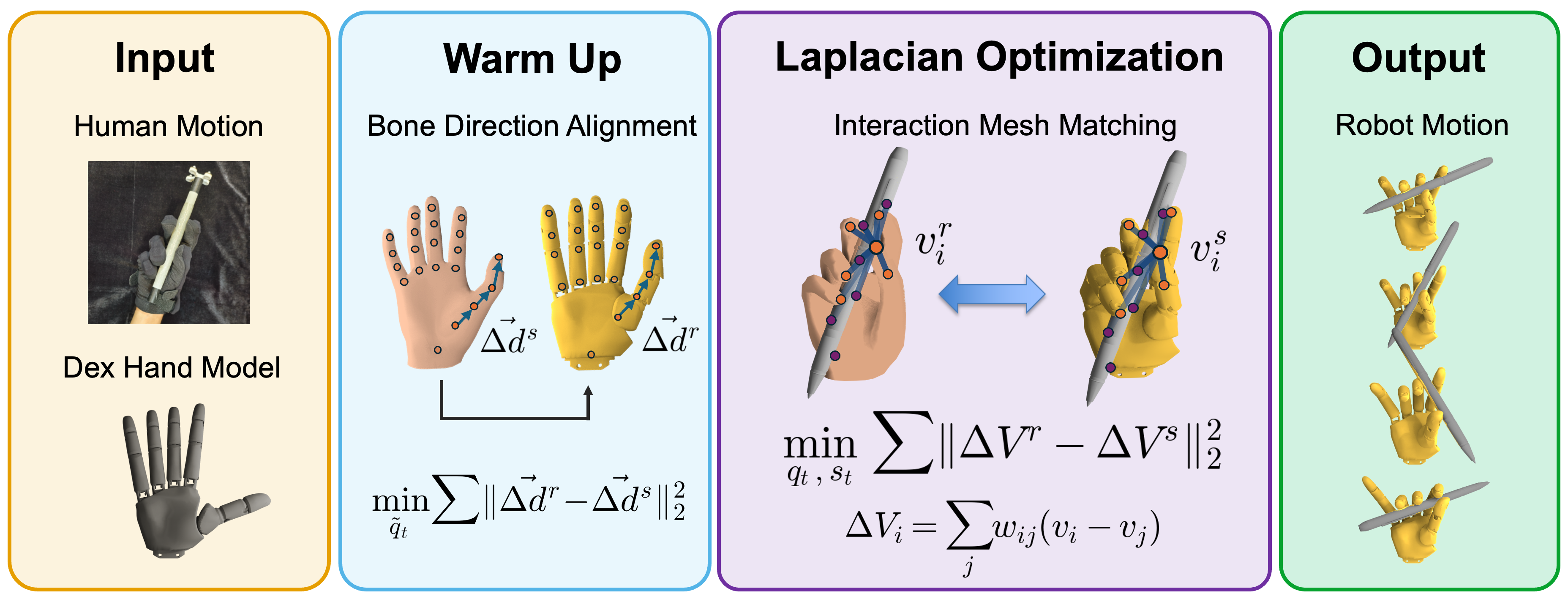
3.1 Notation Definition
Inputs are a 21-keypoint human-hand trajectory, an object-pose trajectory, the object mesh and the target robot hand model. The output includes a floating robot base pose and finger joints. These are structured motion/geometry inputs, rather than raw RGB alone. The source and robot keypoints must be put into corresponding semantic order for the shared mesh comparison to have the intended meaning.
Original mathematical definitions, controller details and evaluation protocol
We formulate hand-object retargeting as a constrained optimization problem. The inputs are a human-hand trajectory , an object pose trajectory , and an object mesh . Here, denotes the MediaPipe [28] hand keypoints at time , and denotes the trajectory length. The goal is to compute an optimal robot base-pose trajectory and a robot joint trajectory . We write and use for in single-frame objectives.
3.2 Relative Bone-Direction Initialization
Equation 1 matches differences between adjacent unit bone directions expressed in the wrist frame. It compares relative articulation rather than absolute finger lengths. Equation 2 combines that loss with a previous-frame warm start to limit temporal jitter. Initialization uses its own weights; the final optimization retains a smaller bone prior. Matching local direction differences is useful for shape transfer but does not itself enforce contact forces or dynamic balance.
Original mathematical definitions, controller details and evaluation protocol
We first compute an initial guess for the robot-hand configuration by matching local finger articulation between the source and robot hands. For each non-terminal finger keypoint , define as the unit vector from keypoint to its child keypoint along the same finger. Let and denote the source and robot bone directions at frame , expressed in their respective wrist-centered hand frames, and let contain adjacent bone pairs along each finger. The bone-direction mismatch is defined as

Original selectable mathematical display
Equation 1
| (1) |
Original mathematical definitions, controller details and evaluation protocol
The initial estimate for frame is

Original selectable mathematical display
Equation 2
| (2) |
Original mathematical definitions, controller details and evaluation protocol
The first term encourages the robot hand to reproduce the source hand’s relative bone directions, while the second term promotes temporal consistency with the previous initial estimate. The scalar weights and balance these two objectives. We use for the initialization-stage bone-direction weight.
3.3 Interaction Mesh Construction
Each frame joins 21 hand vertices with 50 sampled object vertices, making 71 vertices. Delaunay tetrahedralization on the source supplies connectivity reused for the robot. This shared graph lets the objective compare corresponding neighborhoods. Scaling the object or changing the hand rebuilds geometry and weights. Here 'topology' describes graph neighborhood structure; the paper does not establish a topological invariant or a contact-state preservation certificate.
Original mathematical definitions, controller details and evaluation protocol
At each frame , we build source and robot hand-object vertex sets from the human keypoints , the corresponding robot keypoints , and object surface samples drawn from the mesh posed by :
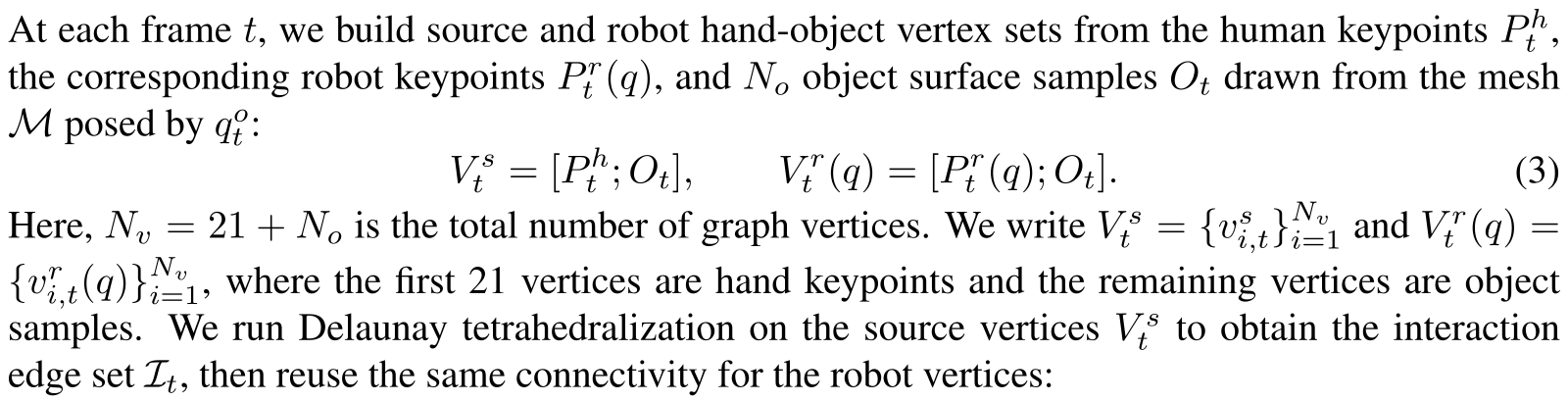
Original selectable mathematical display
Equation 3
| (3) |
Original mathematical definitions, controller details and evaluation protocol
Here, is the total number of graph vertices. We write and , where the first 21 vertices are hand keypoints and the remaining vertices are object samples. We run Delaunay tetrahedralization on the source vertices to obtain the interaction edge set , then reuse the same connectivity for the robot vertices:

Original selectable mathematical display
Equation 4
| (4) |
Original mathematical definitions, controller details and evaluation protocol
This shared graph lets the refinement compare the demonstrated and retargeted configurations under the same local hand-object neighborhood structure. It also supports augmentation across object scales and hand embodiments: after scaling or replacing the object, follows the new surface, and the rebuilt graph lets the same Laplacian refinement preserve local interaction without new contact targets.
3.4 Topology-Aware Laplacian Optimization
Equation 5 normalizes source-edge weights exp(−κ·distance), and Equations 6–7 match weighted Laplacian coordinates. Equation 8 adds bone and temporal/base regularization plus slack-penalized signed-distance constraints on queried hand–object pairs. The soft penetration tolerance is 1 mm and the hard bound is 30 mm, with slack penalty 10⁵. Those allowances and sampled queries do not certify collision-free continuous motion of the full mesh. The complete objective and constraints are preserved with their original notation.
Original mathematical definitions, controller details and evaluation protocol
Starting from , we refine the robot configuration by matching topology-aware Laplacian coordinates on the shared interaction graph. Let be the neighbors of vertex in . For each interaction edge , we compute source-frame distance-aware weights

Original selectable mathematical display
Equation 5
| (5) |
Original mathematical definitions, controller details and evaluation protocol
Here, is a spatial decay parameter. The weights are computed on the source configuration and reused for the robot configuration. For a vertex set , its weighted Laplacian coordinate at vertex is

Original selectable mathematical display
Equation 6
| (6) |

Original selectable mathematical display
Equation 7
| (7) |

Original selectable mathematical display
Equation 8
| (8) | ||||
Original mathematical definitions, controller details and evaluation protocol
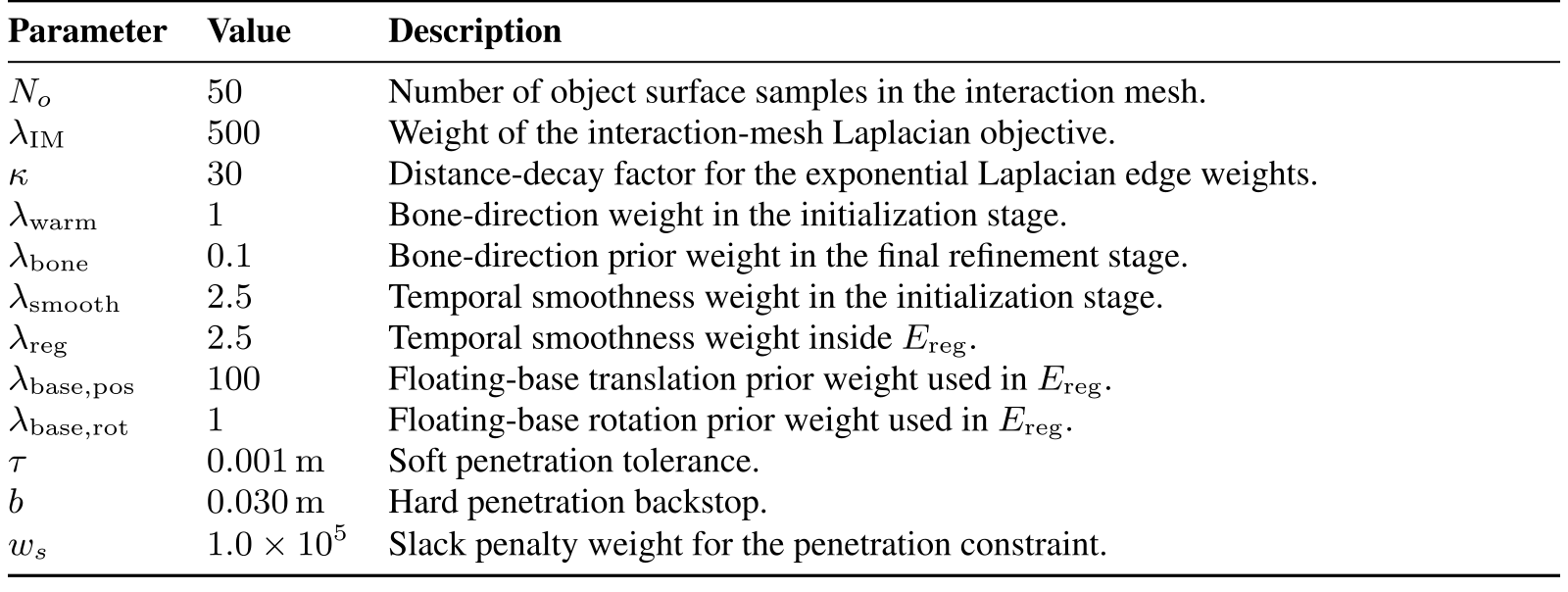
Here, the terms are scalar weights, maintains the demonstration’s local hand-object interaction, keeps the initialization bone-direction prior, and regularizes smoothness. denotes the refinement-stage bone-direction prior weight. The implementation of and the fixed parameter values are given in Appendix A.1. We use one fixed parameter setting across our experiments rather than performing extensive per-case tuning; detailed parameter values are provided in Table 3. The query set contains hand-object pairs checked at frame ; for pair , is the signed distance, is the slack variable, is the soft tolerance, is the hard bound, and is the slack penalty weight.
4 Minimal RL Tracking Controller
PPO learns residual finger targets around the active reference pose. The actor observes joint positions/velocities, previous action, object-axis points encoding pose, and current/lookahead reference features. It therefore uses object-state information. Resets sample a reference frame and initialize both hand and object there; reaching the reference end without termination counts as success. This protocol can begin partway through a clip. It differs from evaluating every full trajectory from its original beginning, and hardware object-pose estimation is not described sufficiently to infer a vision-only deployment stack.
Original mathematical definitions, controller details and evaluation protocol
We use a minimal reinforcement-learning setup to track the retargeted trajectories. We formulate the hand-object tracking task as a finite-horizon Markov decision process (MDP) and optimize the policy with Proximal Policy Optimization (PPO) [29]. Each reference clip is , where denotes the joint component of the retargeted configuration , denotes the object pose expressed in the robot base frame, and denotes the base-frame positions of the tracked hand links. Expressing object and link references in the base frame makes the controller focus on relative hand-object interaction rather than global motion.
Original mathematical definitions, controller details and evaluation protocol
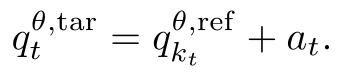
Action space. At each control step , the policy tracks the active reference frame using a residual action, .
Original mathematical definitions, controller details and evaluation protocol
Observation. The observation is , where contains the joint state and previous action, contains object-axis points, and contains lookahead joint, object, and hand-link references in the robot base frame.
Original mathematical definitions, controller details and evaluation protocol
Reference initialization and sampling. We use reference-state initialization: at reset, a start frame is sampled uniformly from the reference trajectory, and each environment is initialized with the corresponding hand and object states.
Original mathematical definitions, controller details and evaluation protocol
Reward. The reward is , where the four terms track object pose, hand-link positions, finger joints, and smoothness, respectively; the weights are listed in Appendix A.5.
5 Experiments
Experiments measure geometric retargeting quality, downstream RL tracking and augmentation across hand embodiments/object scales. Baselines share human references and object geometry when applicable. ContactPose results and policy-success results answer different questions. Retargeting latency covers the optimizer, while capture, training and deployment perception are separate costs.
5.1 Interaction-Preserving Retargeting Quality
On 25/28 ContactPose grasps, contact-position error is 7.71 mm and contact-link orientation error 15.67°, versus 14.15 mm/30.80° for OmniRetarget. 'Contact precision' is an object-relative displacement error, not a precision fraction; alignment is bone orientation, not surface-normal agreement. Maximum sampled penetration is 1.07 mm with no frames above 2 mm, compared with 1.15 mm/0% for OmniRetarget. The three deep-concavity cases are excluded because all methods fail. At 4.70 ms/frame, TopoRetarget is about 8.7× faster than OmniRetarget's 40.96 ms, while Mink 4.37, DexPilot 1.74 and GeoRT 1.17 ms are faster still.
Original mathematical definitions, controller details and evaluation protocol
To answer Q1, we compare different retargeting algorithms in terms of their ability to preserve local contact information in hand-object interaction. We treat source in-contact bone segments as the key interaction units and evaluate preservation of object-relative positions and directions after retargeting. We report two metrics on the ContactPose Dataset [26]: , the mean object-relative position displacement of contact links, and , the mean object-relative orientation error of contact links. Lower values indicate better interaction preservation. Full definitions are given in Appendix A.3.

Accessible original table, complete values and grouped headers
| Metric | TopoRetarget (Ours) | OmniRetarget | Mink | DexPilot | GeoRT |
|---|---|---|---|---|---|
| Contact precision (mm) | 7.71 | 14.15 | 14.12 | 14.13 | 26.77 |
| Contact alignment (∘) | 15.67 | 30.80 | 37.36 | 33.71 | 25.74 |
| Max hand-object penetration (mm) | 1.07 | 1.15 | 20.12 | 11.87 | 22.22 |
| % frames with penetration 2 mm | 0.00 | 0.00 | 84.00 | 88.00 | 96.00 |
| Solve time (ms / frame) | 4.70 | 40.96 | 4.37 | 1.74 | 1.17 |
5.2 Downstream Tracking Policy Performance
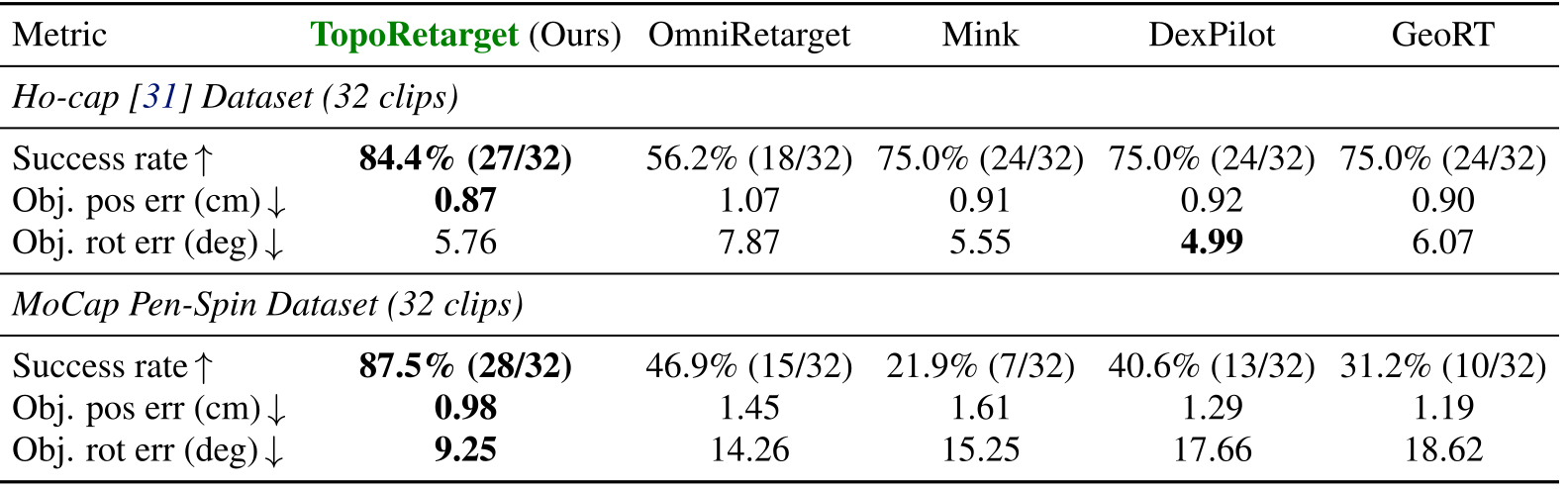
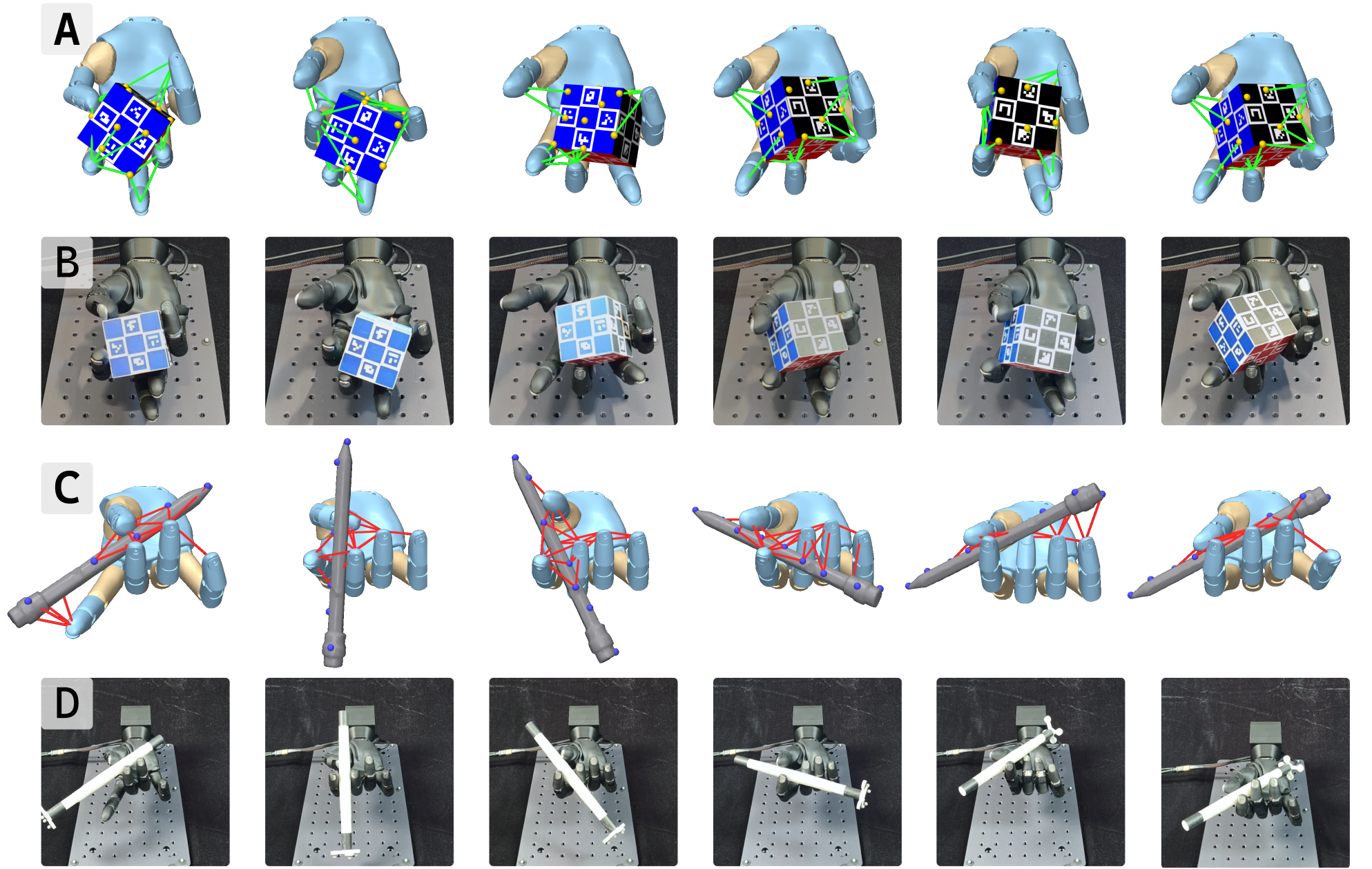
Separate tracking policies are trained for each method/dataset reference set. Ho-cap success is 27/32 clips (84.4%) versus 24/32 for the best hand-only baselines; Pen-Spin is 28/32(87.5%) versus 15/32(46.9%) for OmniRetarget. Ho-cap position error is best at 0.87 cm, but rotation 5.76° is worse than Mink 5.55° and DexPilot 4.99°. Pen-Spin position/rotation errors are 0.98 cm/9.25°. The 32-clip counts are not reported training-seed confidence intervals. Figure 4 and the project videos show zero-shot Wuji hardware cube/pen behavior qualitatively; a hardware trial count or success rate is not supplied.
Accessible original table, complete values and grouped headers
| Metric | TopoRetarget (Ours) | OmniRetarget | Mink | DexPilot | GeoRT |
|---|---|---|---|---|---|
| Ho-cap [31] Dataset (32 clips) | |||||
| Success rate | 84.4% (27/32) | 56.2% (18/32) | 75.0% (24/32) | 75.0% (24/32) | 75.0% (24/32) |
| Obj. pos err (cm) | 0.87 | 1.07 | 0.91 | 0.92 | 0.90 |
| Obj. rot err (deg) | 5.76 | 7.87 | 5.55 | 4.99 | 6.07 |
| MoCap Pen-Spin Dataset (32 clips) | |||||
| Success rate | 87.5% (28/32) | 46.9% (15/32) | 21.9% (7/32) | 40.6% (13/32) | 31.2% (10/32) |
| Obj. pos err (cm) | 0.98 | 1.45 | 1.61 | 1.29 | 1.19 |
| Obj. rot err (deg) | 9.25 | 14.26 | 15.25 | 17.66 | 18.62 |
5.3 Generalization and Augmentation without Per-Case Retuning
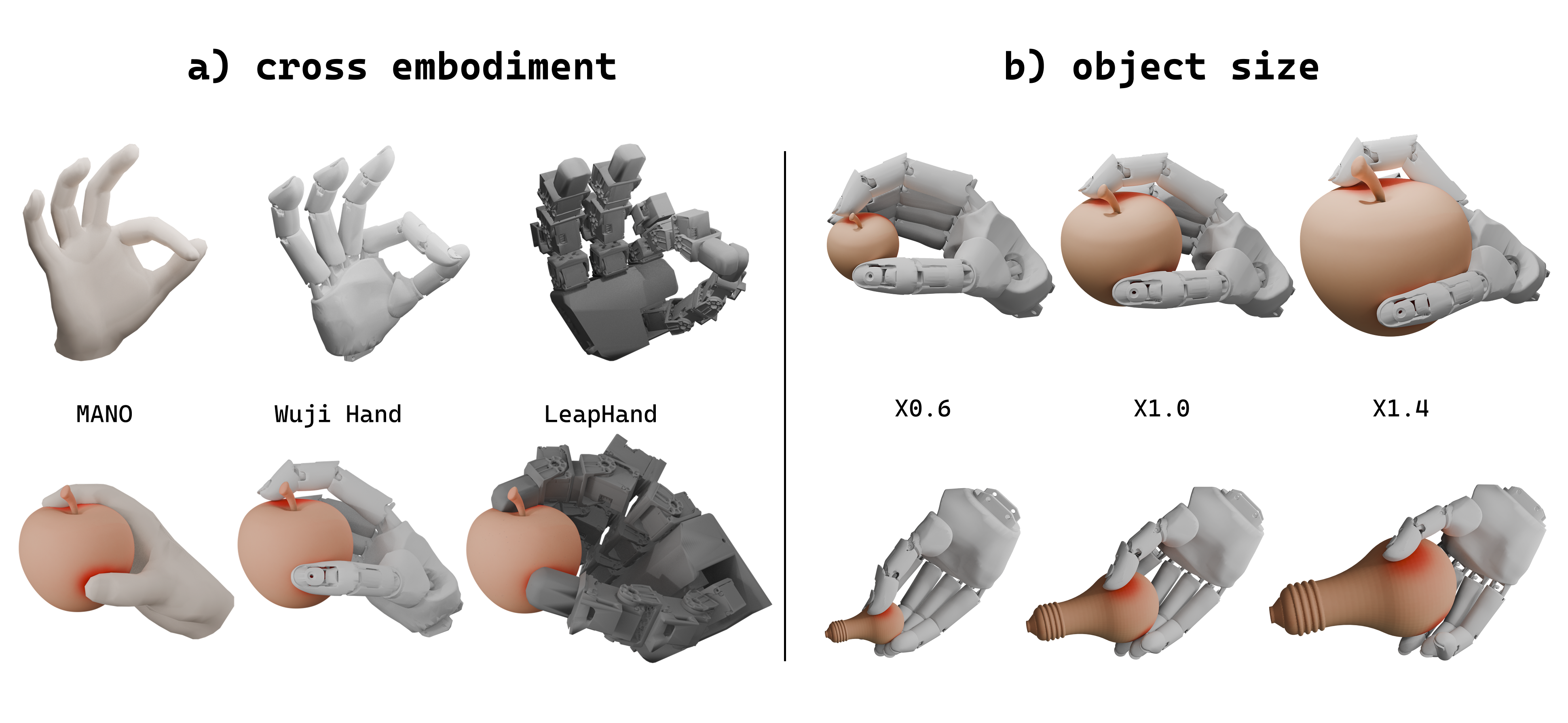
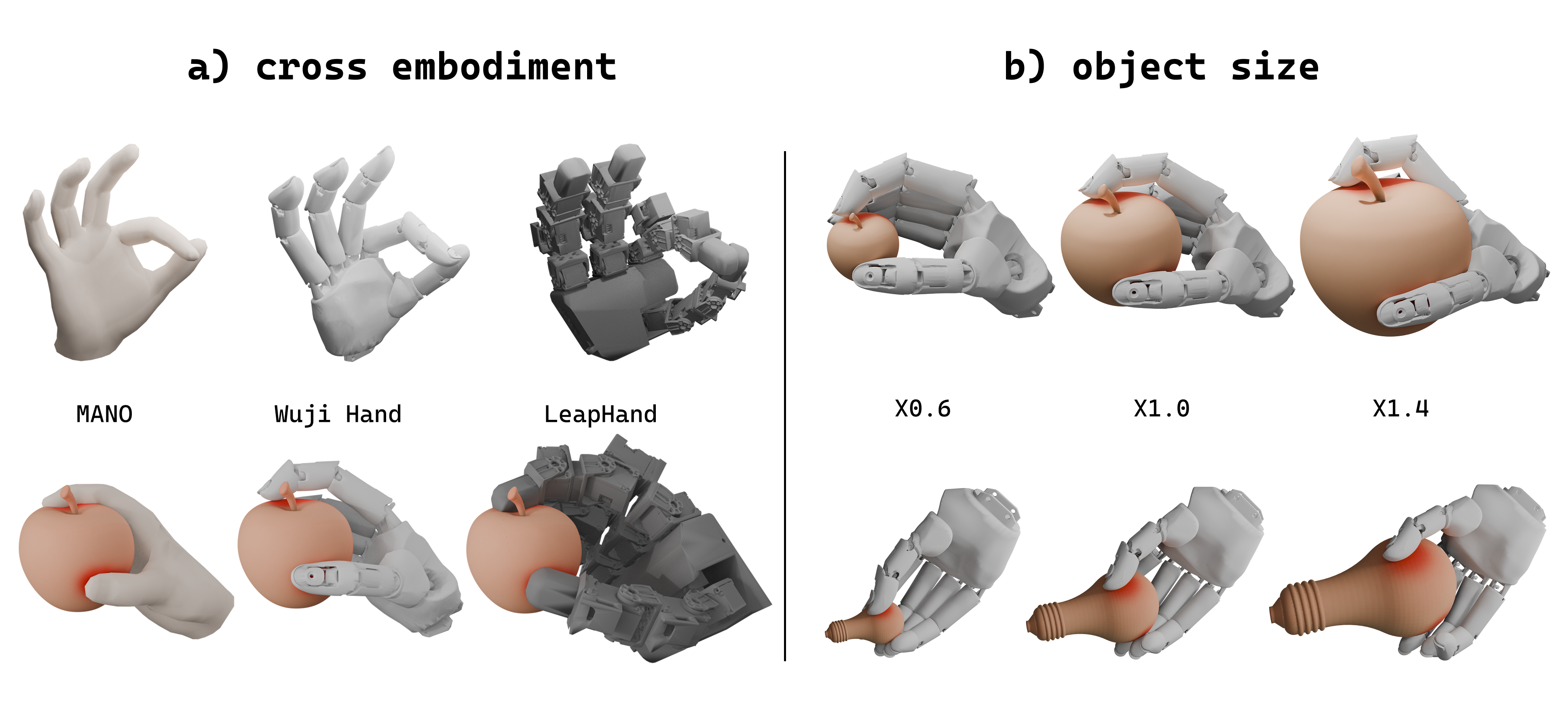
Figure 5 retargets the same demonstrations to different hands and object scales with fixed optimizer parameters. This supports reference augmentation without per-case retuning in the illustrated settings. It does not demonstrate one unchanged RL checkpoint handling arbitrary hands, scales, object physics or new tasks. Source contact fidelity and correspondence quality still constrain the output.
6 Conclusion
The evidence supports local interaction-aware reference generation, improved reported contact errors and stronger downstream success on the two 32-clip datasets. Complete numeric tables retain exceptions, including faster hand-only optimizers and better Ho-cap rotation errors for some baselines. Simulation-to-real videos add a qualitative deployment example. General-purpose policy transfer and continuous collision/dynamic feasibility remain outside the demonstrated result.
7 Limitations and Future Work
The method depends on upstream motion quality. It can correct some penetration distortions, but a source finger near an object without actually touching may encode a virtual contact that the optimizer cannot resolve. Automatically correcting such contacts is proposed future preprocessing. Object mesh/pose quality, selected collision queries, sampled time steps and the excluded concave-object cases limit how broadly the geometric results can be applied.
Acknowledgments
The paper thanks colleagues for discussion and people who helped with capture/system setup. These acknowledgments add no evaluation trials or quantitative evidence; the complete author bibliography remains available below.
Original retargeting and hardware recordings
All nineteen original project MP 4 files and three project figures are stored locally with unchanged source bytes, plus derived poster frames. They include the overview, contact/hand comparisons, four cube clips, four pen clips, hardware stability and a shortened overview. Repeated views and alternative edits are demonstrations, not additional independently counted trials. The full paper's five figures remain separately preserved at their original decoded dimensions.
Appendix A Appendix
The appendix specifies regularization, fixed retargeting hyperparameters, the adapted OmniRetarget baseline, contact/penetration metrics, datasets and the full PPO controller. All six tables and every appendix display remain accessible alongside the condensed notes. These implementation details clarify the paper's measured scope and the information available to the policy.
A.1 Retargeting Details
Equation 9 expands regularization into previous-frame optimizer-coordinate smoothness plus floating-base translation/rotation priors. Table 3 gives 50 object samples, interaction weight 500,κ30, initialization warm/smooth weights 1/2.5, refinement bone/regularization weights 0.1/2.5, base position/rotation weights 100/1, soft tolerance 0.001 m, hard backstop 0.030 m and slack weight 10⁵. These are fixed optimization settings, rather than evidence that one controller works unchanged across all embodiments.
Original mathematical definitions, controller details and evaluation protocol
Implementation detail for . In the implementation, the regularization term in the final refinement is expanded as

Original selectable mathematical display
Equation 9
| (9) |
Original mathematical definitions, controller details and evaluation protocol
The first term enforces temporal smoothness in the optimizer coordinates, while the last two terms are a lightweight base-pose prior for floating-base retargeting. Here, and denote the translational and rotational components of the robot base pose , respectively.
Accessible original table, complete values and grouped headers
| Parameter | Value | Description |
|---|---|---|
| Number of object surface samples in the interaction mesh. | ||
| Weight of the interaction-mesh Laplacian objective. | ||
| Distance-decay factor for the exponential Laplacian edge weights. | ||
| Bone-direction weight in the initialization stage. | ||
| Bone-direction prior weight in the final refinement stage. | ||
| Temporal smoothness weight in the initialization stage. | ||
| Temporal smoothness weight inside . | ||
| Floating-base translation prior weight used in . | ||
| Floating-base rotation prior weight used in . | ||
| Soft penetration tolerance. | ||
| Hard penetration backstop. | ||
| Slack penalty weight for the penetration constraint. |
A.2 OmniRetarget Baseline
The OmniRetarget comparison keeps its interaction objective but substitutes MediaPipe hand keypoints. It jointly optimizes the wrist instead of anchoring it and replaces human/whole-body collision handling with full-hand signed-distance queries, including intermediate phalanges and palm. This is a hand-specific adaptation of the original method. Its weaker results should be attributed to this implemented baseline/configuration rather than every possible OmniRetarget system.

Original selectable mathematical display
Equation
Original mathematical definitions, controller details and evaluation protocol
where denotes the source MediaPipe hand keypoints and are the sampled object points under the source and retargeted object poses.
Original mathematical definitions, controller details and evaluation protocol
We make two hand-specific changes. First, the wrist is not fixed as a root anchor; it is included in and optimized jointly with the other hand joints. Second, collision handling is applied to the full hand geometry rather than to a sparse humanoid contact set, since dexterous manipulation may contact the object with fingertips, intermediate phalanges, finger sides, or the palm.
A.3 Retargeting Metrics
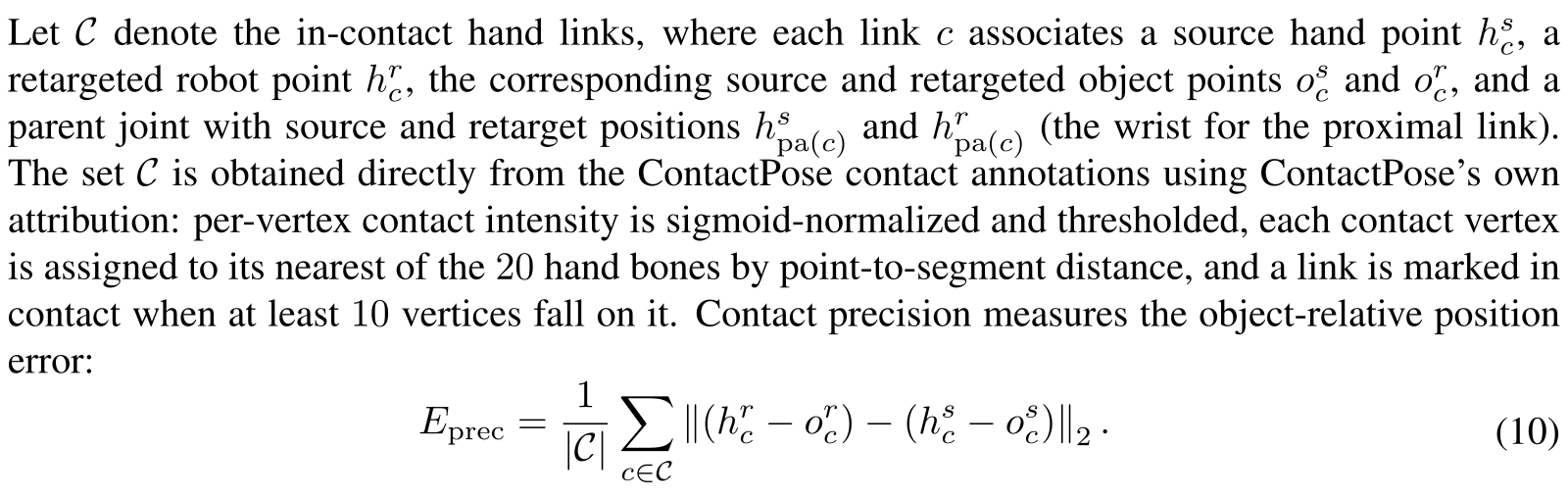
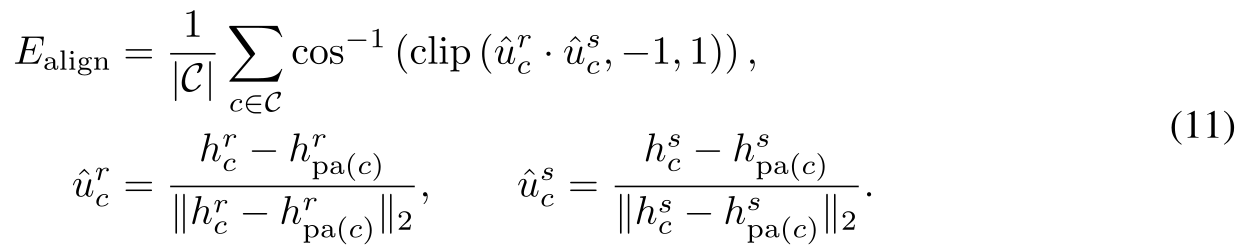
ContactPose intensities are sigmoid-normalized and thresholded; contact vertices are assigned to their nearest of 20 hand bones, with at least 10 vertices marking an in-contact link. Equation 10 averages object-relative point displacement, Equation 11 averages source/robot bone-direction angles, and Equation 12 reports maximum sampled hand-surface penetration and the fraction of frames above 2 mm. These geometric measurements do not measure contact force, frictional stability or continuous swept collision clearance.
Original mathematical definitions, controller details and evaluation protocol
Let denote the in-contact hand links, where each link associates a source hand point , a retargeted robot point , the corresponding source and retargeted object points and , and a parent joint with source and retarget positions and (the wrist for the proximal link). The set is obtained directly from the ContactPose contact annotations using ContactPose’s own attribution: per-vertex contact intensity is sigmoid-normalized and thresholded, each contact vertex is assigned to its nearest of the hand bones by point-to-segment distance, and a link is marked in contact when at least vertices fall on it. Contact precision measures the object-relative position error:
Original selectable mathematical display
Equation 10
| (10) |
Original selectable mathematical display
Equation 11
| (11) | ||||
Original mathematical definitions, controller details and evaluation protocol
For penetration, let be sampled robot-hand surface points and let denote the posed object mesh with signed distance , positive outside the object. We report the maximum penetration depth and the fraction of frames whose maximum penetration exceeds :

Original selectable mathematical display
Equation 12
| (12) | ||||
A.4 Experimental Setup
ContactPose uses 25 of 28 grasps, excluding mug, scissors and Utah teapot because deep concavities defeat all compared methods. Ho-cap supplies 32 randomly chosen single-hand clips from its training split. A Wuji Glove captures 32 pen-spinning demonstrations averaging 12.4 s. The methods share references/geometry when applicable; success means reaching the final reference frame without object-instability termination. The reset distribution, dataset construction and absence of fully specified training-repeat counts matter when comparing the headline rates.
A.5 RL Training
The finite-horizon task tracks finger-joint, object-pose and hand-link references in the robot base frame. All original mathematical definitions are retained, including the source's unparsed reference-trajectory display through its exact PDF view. Tracking a provided sequence is a narrower problem than selecting a new goal or generating a new manipulation plan from arbitrary observations.

Original selectable mathematical display
Equation
Original mathematical definitions, controller details and evaluation protocol
where denotes the reference finger joint positions, denotes the object pose expressed in the base frame, and denotes the reference positions of the tracked hand links. We use the base frame for reference quantities so that the policy learns the relative hand-object interaction instead of a global trajectory.
A.5.1 State and action
The simulator includes full hand, actuator, contact and object states; the policy observes a subset. Actions are residual finger-joint positions added to the current reference target, with a low-level joint controller executing them. This reference-centered action space supplies a strong demonstration prior. It does not imply that the policy observes contacts or the complete simulator state.
Original mathematical definitions, controller details and evaluation protocol
The simulator state contains the hand joint state, actuator state, contact state, and object pose and velocity. The policy does not observe the full state. At each control step , the active reference index is . The action is a residual joint-position command for the right-hand finger joints. The low-level target is centered at the current reference pose,
Original selectable mathematical display
Equation
A.5.2 Observation
The actor gets proprioception, current object pose encoded by a small set of object-axis points, and reference joint/object/link features. Reference lookahead is 1,3 and 5 control steps. Observation noise perturbs proprioception and object pose during training. Avoiding a particular quaternion representation does not remove pose information from the actor, and the paper leaves the hardware pose-estimation pipeline insufficiently detailed for a stronger claim.
A.5.3 Reference initialization and sampling
Every reset samples a reference start frame uniformly and initializes the simulated hand and object to that state, optionally with small reset noise. The reference index then advances once per control step. This exposes the policy to all clip phases and avoids overfitting the beginning. It also means reported success can refer to a suffix of the clip rather than a complete execution from its first frame.
Original mathematical definitions, controller details and evaluation protocol
We use reference initialization at every reset. A start frame is sampled uniformly from the reference trajectory, and the simulator is reset to the corresponding reference hand pose and object pose. The reference index then advances with the simulator control steps, . Uniform sampling over the trajectory exposes the policy to all phases of the manipulation and avoids overfitting to the beginning of the clip. We optionally apply small reset noise to the object pose around the sampled reference state.
A.5.4 Reward
The printed Gaussian kernel is exp(−‖e/σ‖²). Object tracking averages six axis-point distances with scale 0.04 and weight 8; link tracking uses scale 0.025 and weight 1; joint errors are normalized by joint range with scale 0.1 and weight 1. Action first/second differences carry weight−0.01. Table 4 terminates at 20 s, object height below 0.06 m, speed above 10 m/s or 500 rad/s, position/axis-point error above 0.05 m, or rotation error above 45°. These are simulator evaluation rules, not a proof of physical safety.
Original mathematical definitions, controller details and evaluation protocol
The reward is dominated by tracking terms for the object, hand links, and joints. For an error and scale , we use a Gaussian tracking kernel

Original selectable mathematical display
Equation

Original selectable mathematical display
Equation
Original mathematical definitions, controller details and evaluation protocol
where and are current and reference object axis points in the base frame. The hand-link term tracks the positions of the palm and finger links,
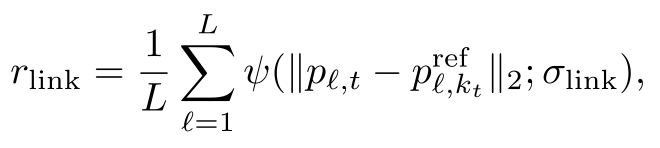
Original selectable mathematical display
Equation
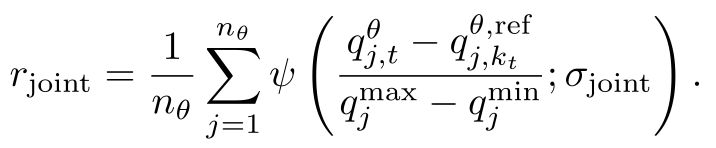
Original selectable mathematical display
Equation

Original selectable mathematical display
Equation
Original mathematical definitions, controller details and evaluation protocol
where . In practice, the largest weight is assigned to object tracking, followed by link, joint, and smoothness terms.
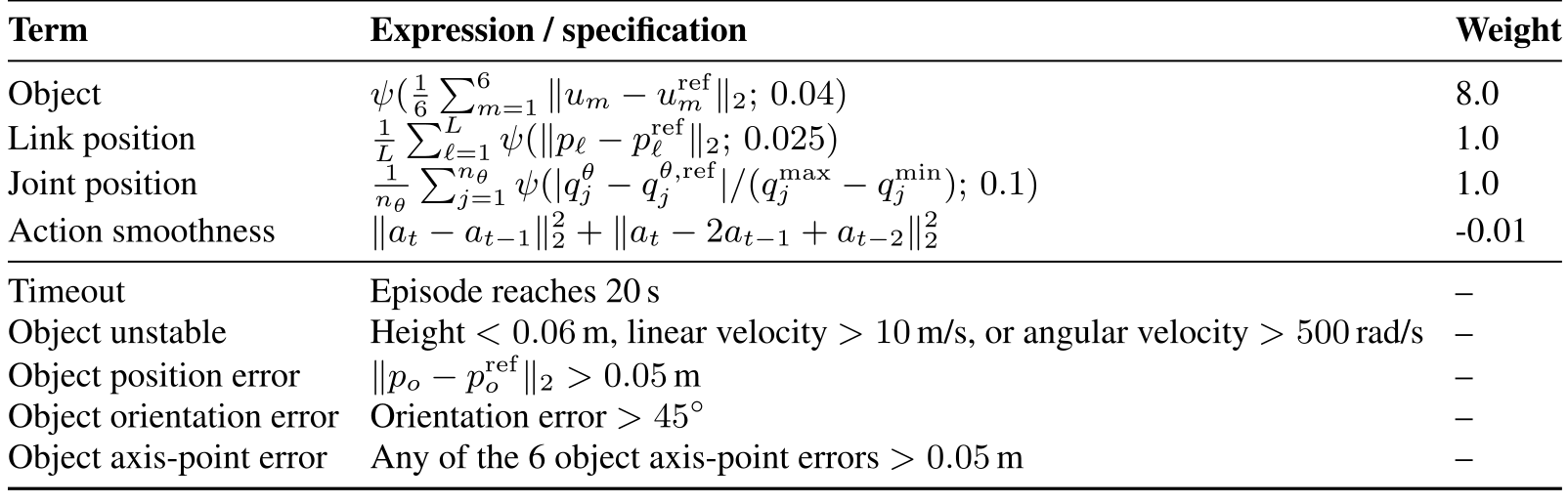
Accessible original table, complete values and grouped headers
| Term | Expression / specification | Weight |
| Object | 8.0 | |
| Link position | 1.0 | |
| Joint position | 1.0 | |
| Action smoothness | -0.01 | |
| Timeout | Episode reaches 20 s | – |
| Object unstable | Height m, linear velocity m/s, or angular velocity rad/s | – |
| Object position error | m | – |
| Object orientation error | Orientation error | – |
| Object axis-point error | Any of the 6 object axis-point errors m | – |
A.5.5 Domain randomization
Table 5 retains every randomization range and sampling mode. Observation noise,0–2-step action delay, reset perturbations,±3 mm object center-of-mass offsets, friction, collision scale, masses/inertias, PD gains and joint properties vary. Rollout disturbances are single-step forces up to±0.25 N every 0.6–1.8 s and torques up to±0.00375 N·m. Randomizing within these ranges improves robustness within the trained setup; it does not establish coverage of arbitrary hardware mismatch.
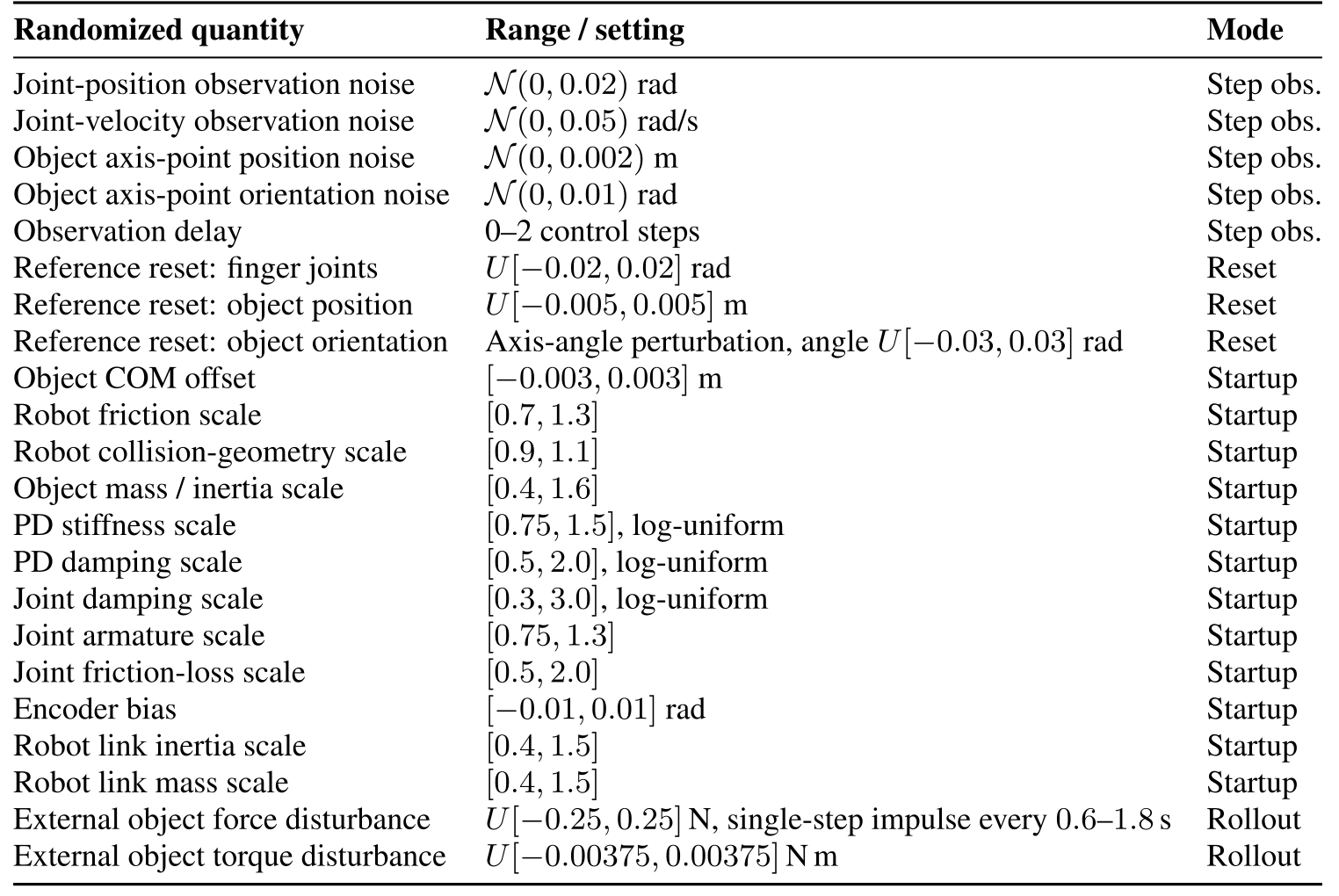
Accessible original table, complete values and grouped headers
| Randomized quantity | Range / setting | Mode |
|---|---|---|
| Joint-position observation noise | rad | Step obs. |
| Joint-velocity observation noise | rad/s | Step obs. |
| Object axis-point position noise | m | Step obs. |
| Object axis-point orientation noise | rad | Step obs. |
| Observation delay | 0–2 control steps | Step obs. |
| Reference reset: finger joints | rad | Reset |
| Reference reset: object position | m | Reset |
| Reference reset: object orientation | Axis-angle perturbation, angle rad | Reset |
| Object COM offset | m | Startup |
| Robot friction scale | Startup | |
| Robot collision-geometry scale | Startup | |
| Object mass / inertia scale | Startup | |
| PD stiffness scale | , log-uniform | Startup |
| PD damping scale | , log-uniform | Startup |
| Joint damping scale | , log-uniform | Startup |
| Joint armature scale | Startup | |
| Joint friction-loss scale | Startup | |
| Encoder bias | rad | Startup |
| Robot link inertia scale | Startup | |
| Robot link mass scale | Startup | |
| External object force disturbance | N, single-step impulse every – s | Rollout |
| External object torque disturbance | N m | Rollout |
A.5.6 Policy network and optimization
PPO uses 4,096 parallel environments,0.01 s simulation steps and decimation 5, giving 20 Hz control/reference updates. Episodes last 20 s/400 steps, and rollout length 40 produces 163,840 samples per collection. Actor widths are 512/256/128; critic 512/512/256/128, with ELU, normalized observations and a Softplus Gaussian action distribution. Adam learning rate is 10⁻⁴, with 4 epochs/32 minibatches, entropy 0.001,discount 0.99 and GAE 0.95. Retaining these settings separates optimizer latency from the substantially larger training pipeline.
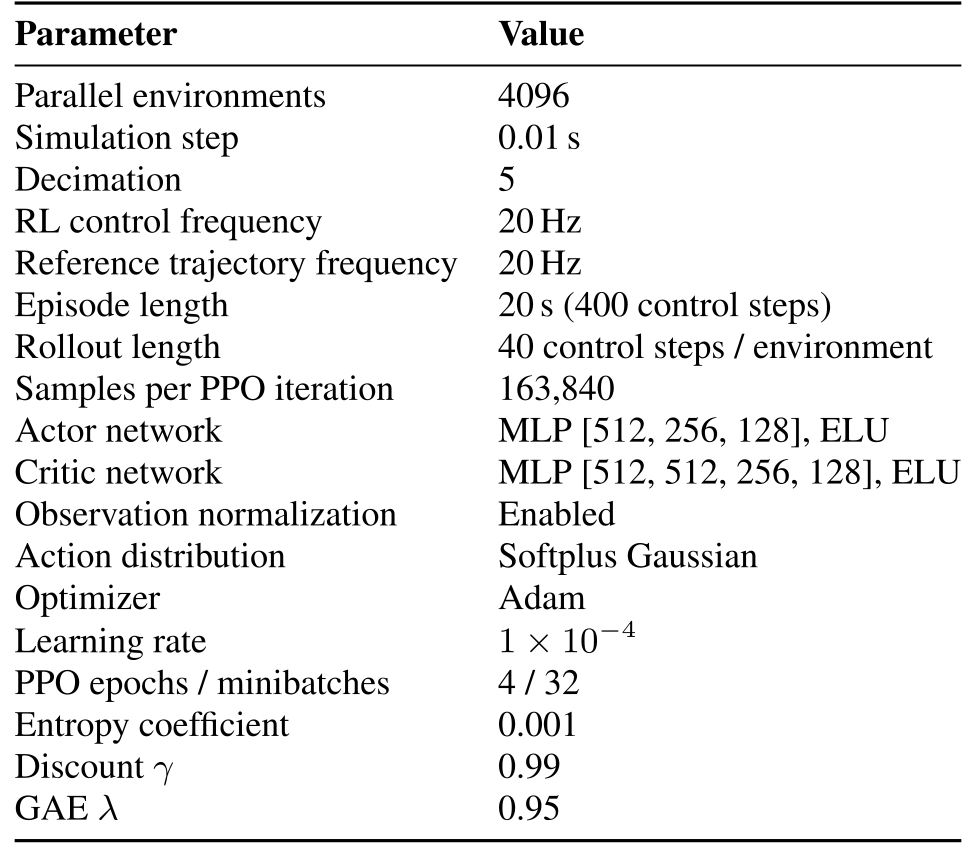
Accessible original table, complete values and grouped headers
| Parameter | Value |
|---|---|
| Parallel environments | 4096 |
| Simulation step | 0.01 s |
| Decimation | 5 |
| RL control frequency | 20 Hz |
| Reference trajectory frequency | 20 Hz |
| Episode length | 20 s (400 control steps) |
| Rollout length | 40 control steps / environment |
| Samples per PPO iteration | 163,840 |
| Actor network | MLP [512, 256, 128], ELU |
| Critic network | MLP [512, 512, 256, 128], ELU |
| Observation normalization | Enabled |
| Action distribution | Softplus Gaussian |
| Optimizer | Adam |
| Learning rate | |
| PPO epochs / minibatches | 4 / 32 |
| Entropy coefficient | 0.001 |
| Discount | 0.99 |
| GAE | 0.95 |