At a glance
HumanScore evaluates whether people in generated videos have consistent anatomy, feasible poses, and plausible motion over time. Its controlled benchmark contains 51 actions, two intensity variants per action, and six diagnostic metrics. Thirteen generators are evaluated on the same 102 prompts.
The scores depend on monocular reconstruction and calibrated thresholds. They are useful diagnostics of reconstructed motion, not direct measurements of physical feasibility. This edition follows the complete 48-page arXiv v2 PDF dated 3 November 2026, retaining all figures, tables, formulas, 102 prompts, and linked supplementary videos.
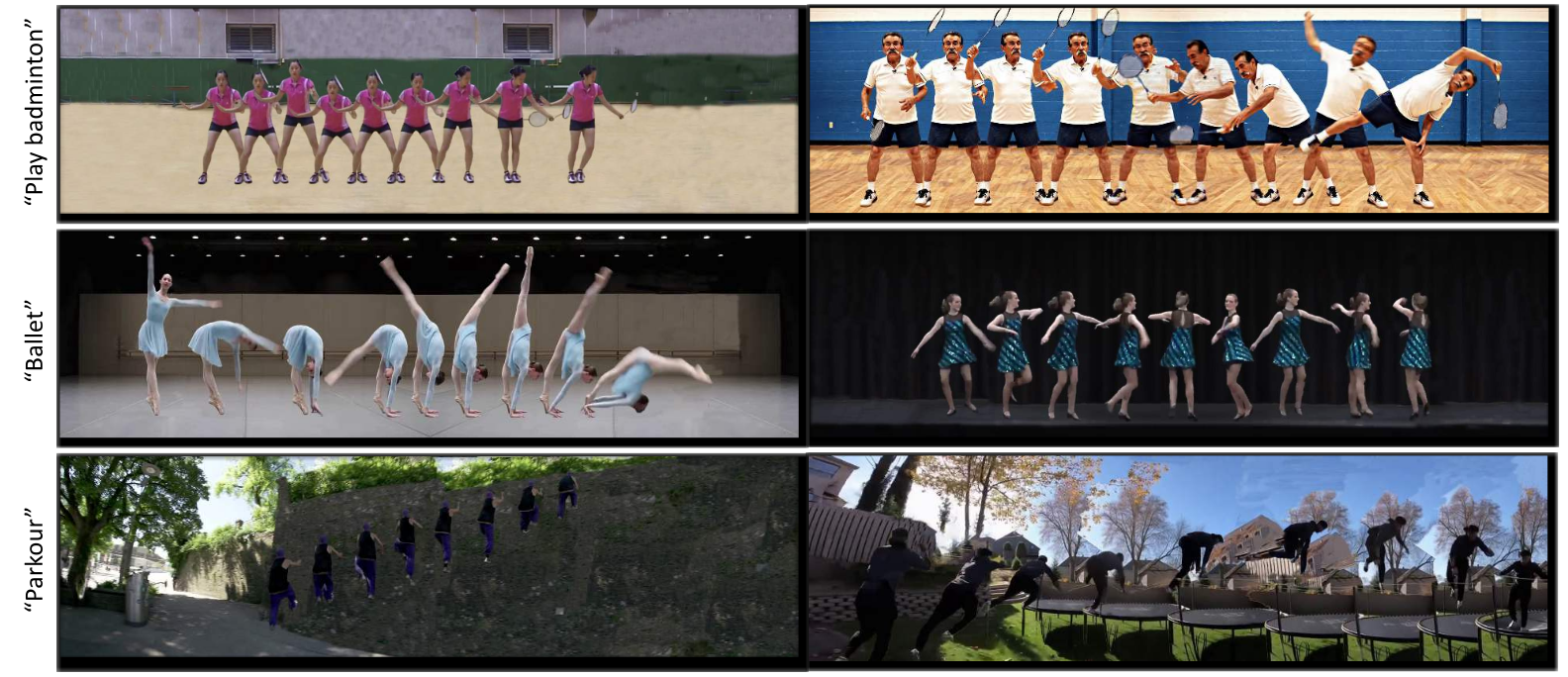
1. Introduction
Photorealistic frames can hide extra limbs, changing body proportions, impossible joints, and temporal jitter. HumanScore complements appearance and prompt-alignment metrics with measurements of reconstructed human motion [24] [63].
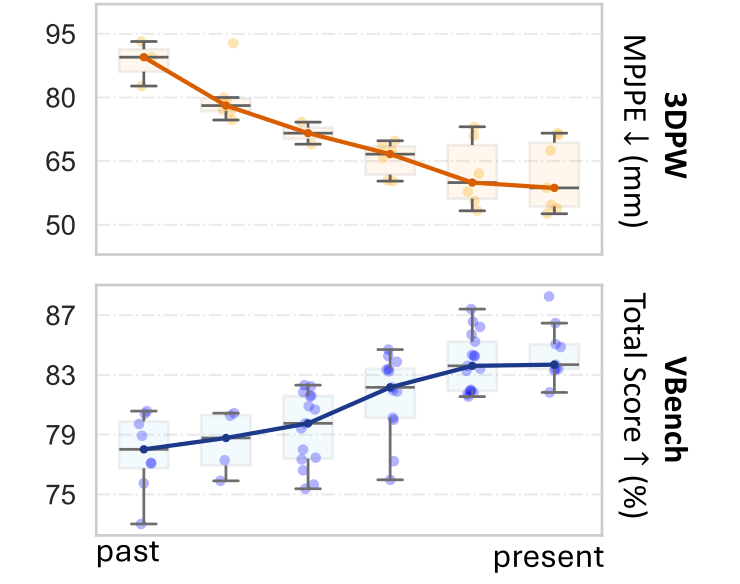
Figure 2 motivates the approach using improving pose-estimation and generation benchmarks. Good performance on those benchmarks does not establish that reconstruction is unbiased on generated bodies. The study therefore restricts scene conditions and examines sensitivity to estimation and scoring choices.
3. HumanScore
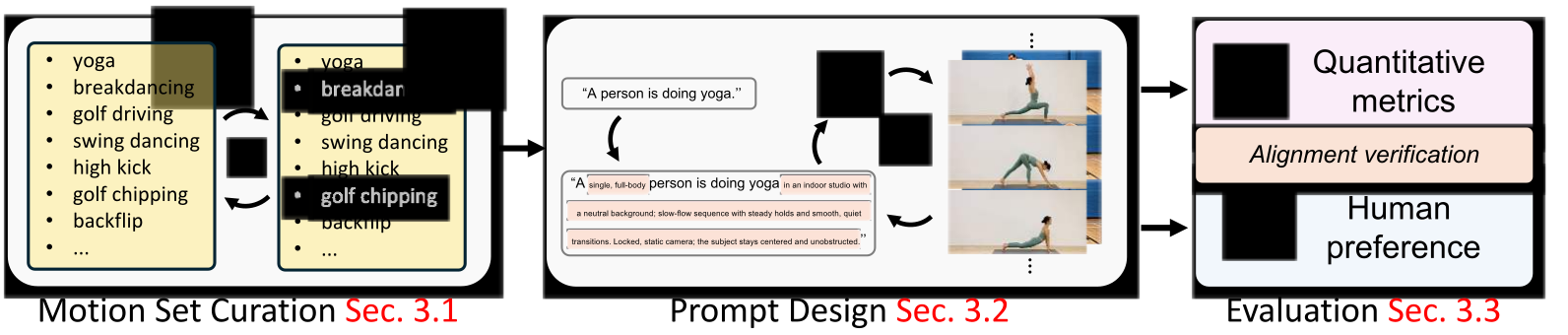
The pipeline curates actions, constructs common prompts, generates videos, fits bodies, and computes six scores. Human checks support action selection and quality control; a separate pairwise preference study evaluates agreement with viewers. Figure 3 preserves the full overview.
3.1 Motion set curation
Starting with Kinetics-700 actions, the authors use CLIP and sentence embeddings with farthest-point sampling to propose 120 candidates, then use a language model and manual review to cover motion families and body regions [10] [54] [56].
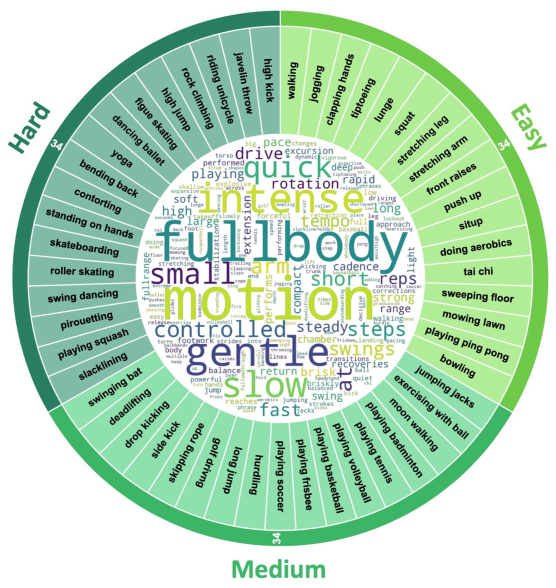
An empirical feasibility filter removes ambiguous actions and motions that generators consistently fail to express. The final set has 17 easy, 17 medium, and 17 hard actions, each with gentle and intense variants. This curation controls ambiguity but also conditions the benchmark on generatable motions; it is not an exhaustive sample of human activity.
3.2 Prompt design
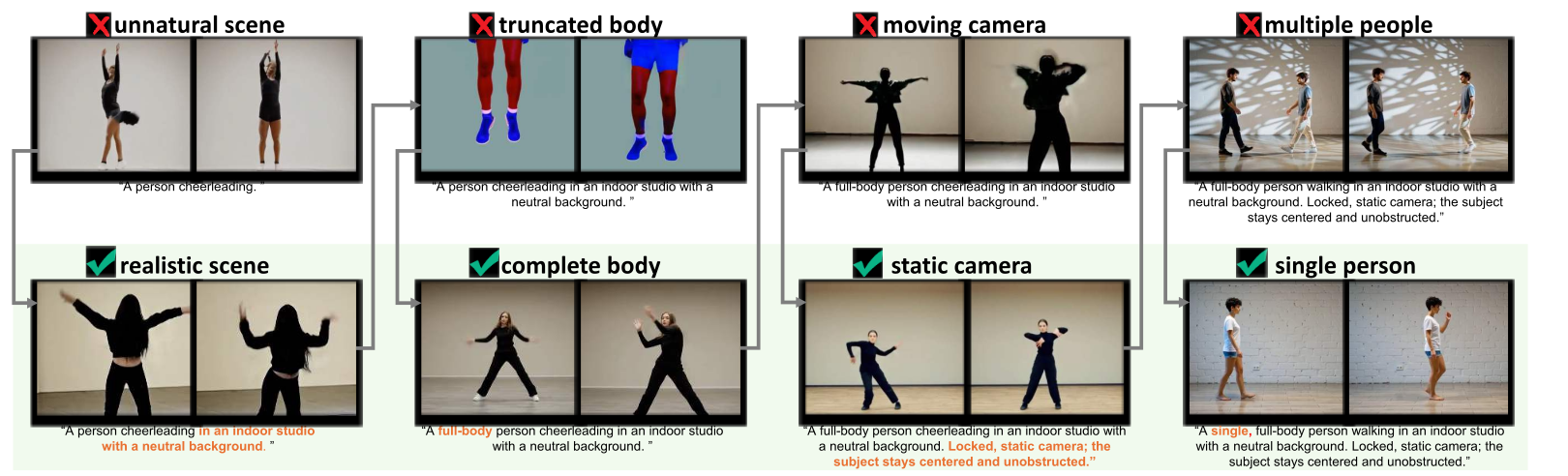
Each prompt specifies a scene, motion, intensity, detailed movement, and camera. A single fully visible person in a neutral indoor studio and a locked camera reduce reconstruction confounds. The same prompt is sent to every generator. Figure 5 retains the complete prompt-engineering examples.
Tables 5–10 preserve all 102 exact prompts, including wording exceptions such as the figure-skating scene. The protocol is controlled; its model ranking should not be generalized directly to crowds, moving cameras, severe occlusion, or arbitrary scenes.
3.3 Metric design
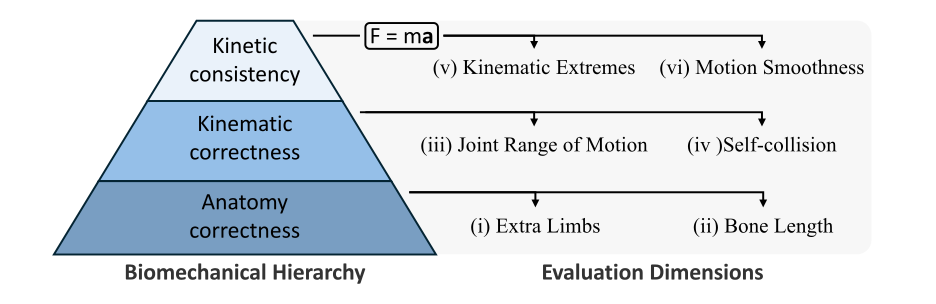
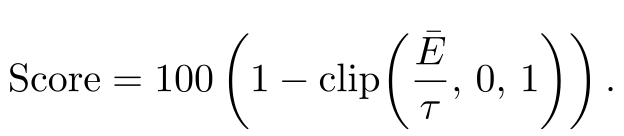
The hierarchy groups six measurements into anatomy, kinematics, and temporal plausibility. Five use violation frequency, severity, and longest-run persistence with weights 0.5, 0.3, and 0.2; bone length instead averages relative deviations. Scores are presented on a 0–100 scale, with higher values better.
Although the prose emphasizes reporting separate dimensions, Table 1 also reports tier means and an overall mean. The top tier is named “kinetic plausibility,” but it measures velocities and accelerations. No forces, torques, contacts, or inverse dynamics are estimated.
Version note: the released scorer documentation describes substantial changes to reconstruction and metrics, including a 24 Hz grid, different bone-length scoring, and penetration depth instead of colliding-face fraction. Its optional paper-score mode also differs from this PDF in some constants. The formulas below reproduce the PDF; they should not be assumed to describe current default software.
Equation

Anatomical correctness
Extra-limb detections measure topology anomalies directly in images. Bone-length consistency measures how much nine fitted skeleton segments change relative to their temporal medians. Fixed shared-shape reconstructions would hide these changes, so the paper allows segment scales to vary over time.
Kinematic correctness
Joint-range checks compare fitted angles with anatomical bounds plus tolerance. Self-collision checks nonlocal triangle intersections in a temporally coherent body mesh, filtering adjacent faces and small intersections. These scores assess estimated geometry; fitting mistakes can create violations or conceal real ones.
Kinetic plausibility
Kinematic extremes compare joint angular velocities and segment-center speeds with limits. Smoothness uses angular accelerations. Both use temporal finite differences and gap filtering. They remain surrogates for dynamics, and conservative or under-expressive motion can score well without matching the requested action.
4. Leaderboard
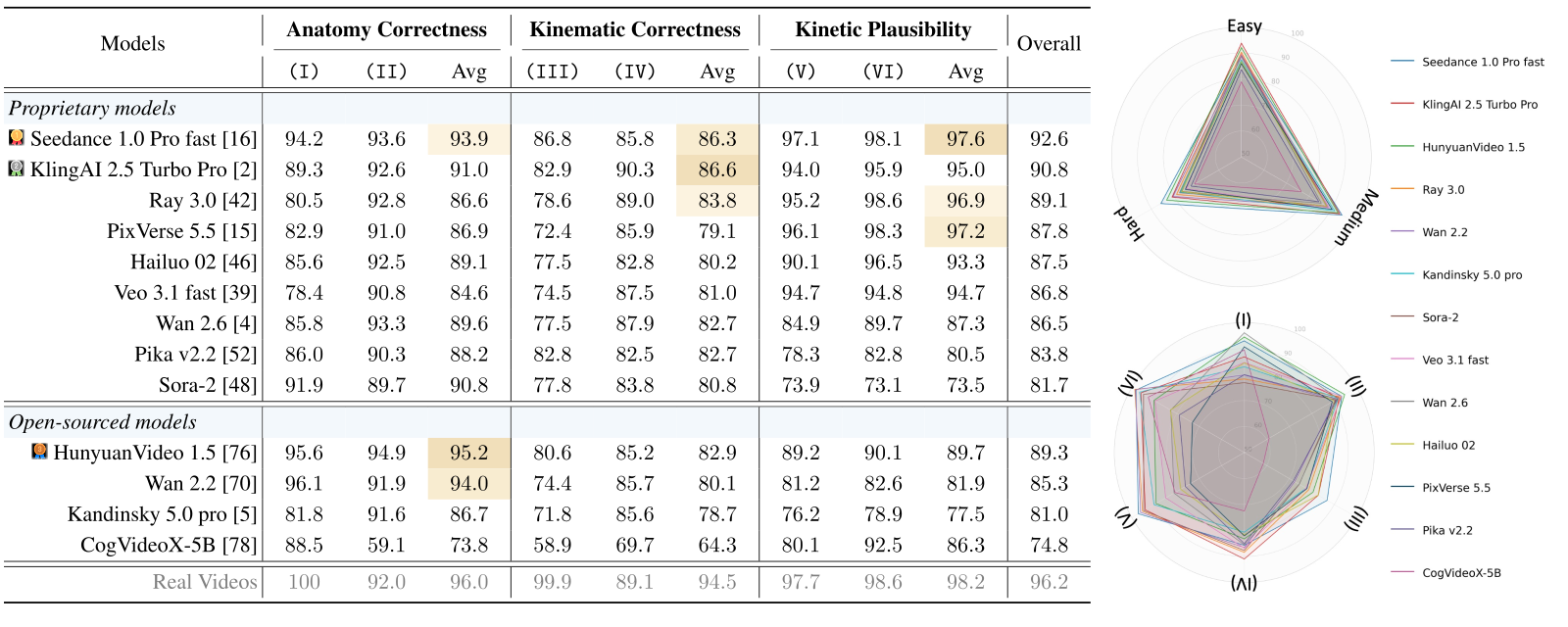
Table 1 retains all 13 models, six individual metrics, tier means, overall scores, real-video reference, and both radar charts. The PDF reports Seedance 1.0 Pro fast at 92.6, KlingAI 2.5 Turbo Pro at 90.8, HunyuanVideo 1.5 at 89.3, and Ray 3.0 at 89.1. The real-video mean is 96.2.
The project webpage displays different leaderboard values, including Seedance and HunyuanVideo tied at 91.1. This edition uses the v2 PDF consistently; close differences are not evidence of a strict ordering.
4.1 Verification on motion capture
Calibration uses 100 trials from 17 participants in AddBiomechanics, already represented as OpenSim trajectories from laboratory motion capture [74] [75]. The reported reference score is 99.77.
This reference is also used to calibrate tolerances, so its near-perfect score is not an independent held-out validation. Four skeleton metrics can consume these trajectories directly; extra-limb detection and mesh collision require different evidence and are not established by this check.
4.2 Video generation models
The main benchmark contains one generated video per prompt and model: 1,326 generated clips in total, from nine proprietary and four open-source systems. Distinct profiles emerge: some preserve anatomy better, while others produce more stable temporal motion.
Performance decreases with motion difficulty. The source illustrates joint inversion, abrupt falls, and extra limbs, but some qualitative examples use actions absent from the printed 51-action prompt tables. Those examples and tables are preserved without assuming they are identical benchmark subsets.
4.3 Human preference
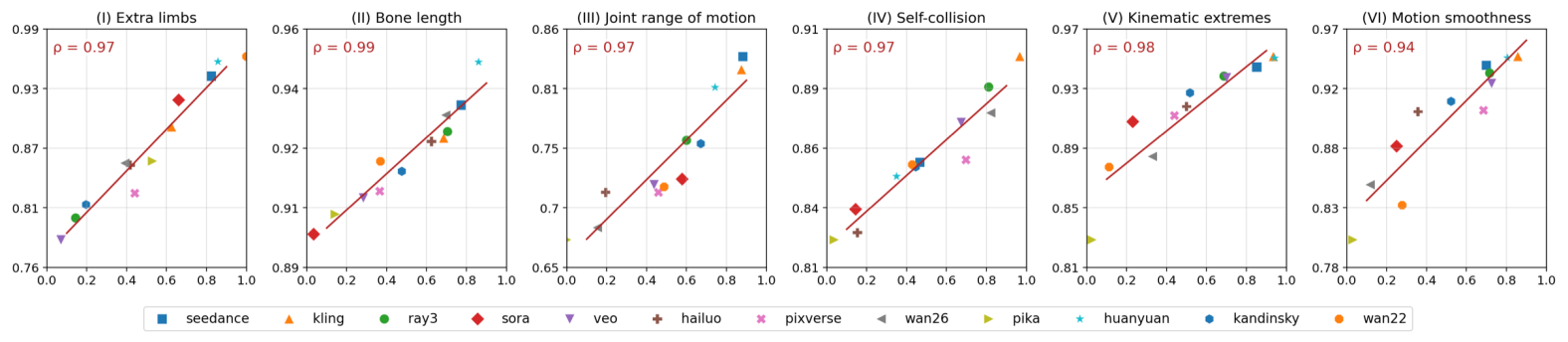
About 1,200 responses compare two models on the same prompt, with a randomly selected evaluation dimension and an A/B/tie judgment. Wins, ties, and losses contribute 1, 0.5, and 0 to model-level win rates. Figure 7 compares those rates with metric-based win rates.
The strong model-level rank agreement does not establish reliable judgments for every individual clip. The count is responses, not necessarily distinct participants. Pairs are not repeatedly annotated, so the experiment does not estimate inter-annotator agreement; the checklist also identifies missing participant instructions and study details.
4.4 Real or AI?
A second reference contains 51 internet videos, one per action, selected for full-body visibility, one person, and a stable camera. Actions are semantically matched, but intensity is not matched to gentle/intense prompts. Their mean score is 96.2.
The gap from the motion-capture reference combines reconstruction error with differences in motion, subjects, and collection. It does not isolate reconstruction error experimentally. The study does not establish an individual-video real/fake classifier or a universal ceiling of 96.2.
4.5 Existing benchmark metrics
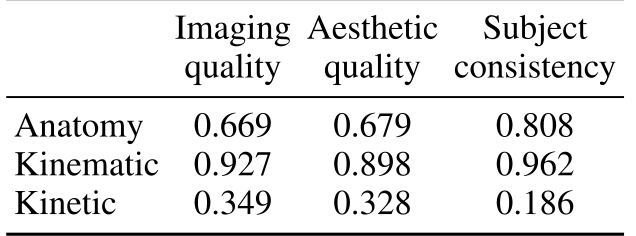
Table 2 compares the three biomechanical tiers with VBench imaging quality, aesthetic quality, and subject consistency. Kinematic correlations are high (0.898–0.962), while kinetic correlations are weaker (0.186–0.349).
This supports complementarity for the three tested appearance axes, especially temporal plausibility. It is not a comparison against every VBench metric or evidence that visual quality never predicts motion quality.
4.6 Robustness
The paper varies pose estimation, tolerance scales, and temporal aggregation weights. The main text reports unchanged top three, at most one rank position of change, Spearman correlation at least 0.95, and tier-score shifts within about two points. Appendices H.1–H.5 retain the narrower protocols and repeated-generation results.
4.7 Multimodal evaluators
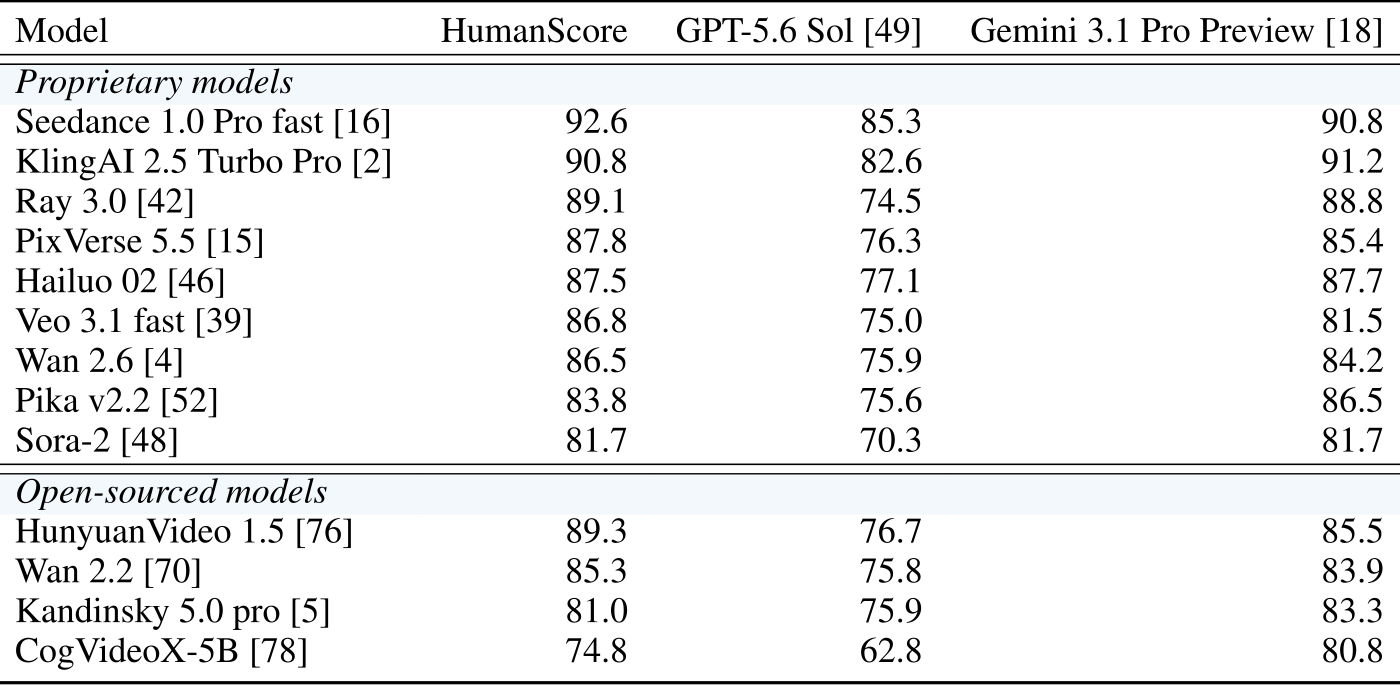
Model-level Spearman correlations with HumanScore are 0.715 for GPT-5.6 Sol and 0.797 for Gemini 3.1 Pro Preview; Pearson correlations are 0.880 and 0.782. Table 3 preserves all model means.
The evaluators receive different inputs: images for the former and native video for the latter. Gemini’s scores occupy a narrower range, 80.8–91.2. These comparisons concern agreement with HumanScore, not independent proof that either evaluator or HumanScore is correct.
5. Discussion and conclusions
The contribution is a controlled diagnostic benchmark that exposes motion failures hidden by convincing appearance. Its evidence supports broad model tiers and distinct failure profiles more strongly than precise ordering of nearby means.
Monocular errors remain entangled with generation errors. Static-camera, visible-body conditions limit generalization; acceleration thresholds cannot certify mechanical feasibility; and action alignment, object interactions, ground contact, and multi-person behavior remain incomplete. The paper’s motion-expression versus stability trade-off also cautions against optimizing these scores alone.
Acknowledgments
Support includes NIH grants R01AG089169 and P41EB027060, Panasonic, Stanford HAI and its graduate fellowship, Google Cloud research credits, and the Stanford Wu Tsai Human Performance Alliance.
B. Availability and broader usage
The authors describe extending metric computation to arbitrary motions and multiple tracked people. Such extensions require appropriate tracking, segmentation, fitting, and calibration; the reported leaderboard evaluates one fully visible person under controlled conditions. Open model interfaces do not remove those evidence requirements.
C. Qualitative fitting results
The project supplies paired high- and low-scoring fitting examples for 12 generators; all 24 clips are retained below with their published labels. These selected extremes illustrate failure modes rather than estimating their frequency. CogVideoX is absent from this showcase.
A distorted fit can arise from an implausible generated body or from reconstruction failure on valid motion. The paper explicitly warns that poor fit alone does not prove a generation error. Project clip labels and scores are retained as project-version examples, separately from the PDF leaderboard.
D. Motion-capture verification details
The reference is AddBiomechanics’ Tiziana2019_Formatted_With_Arm split. NimblePhysics reads the low-pass-filtered motion-capture processing pass from the binary files and exports OpenSim motion trajectories at roughly 61 Hz. No monocular fitting or SMPL conversion is required.
The four directly evaluated skeleton metrics are bone length, joint range, velocity extremes, and smoothness. Thresholds are calibrated on these same real motions, then frozen for generated and internet videos. This provides a validity anchor but not independent generalization evidence.
E. Real-world video collection
Candidate videos are retrieved from YouTube, Bilibili, and YouTube-8M by action name [1] [8]. Selection requires a visible full body, nondistracting background, stable viewpoint, and one person. Intensity is explicitly unmatched. The paper does not redistribute the underlying collected video dataset.
F. Fitting process
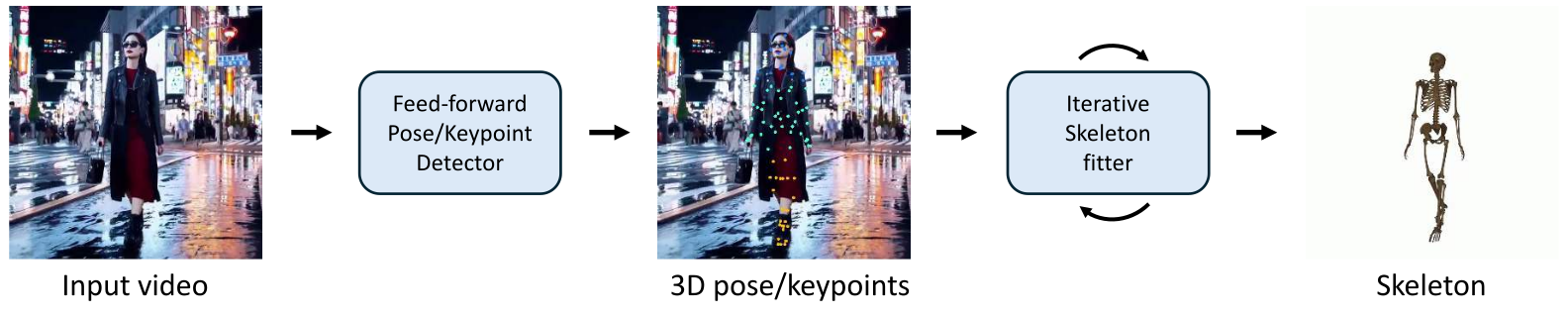
Three external pipelines supply the evidence: HADM for image anomalies, GVHMR for surface meshes, and MeTRAbs plus a biomechanical skeleton fit for joint trajectories. Improving a fitter can change the resulting scores, which makes estimator and parameter versions part of the evaluation protocol.
F.1 Anatomical anomaly detector
HADM is trained on annotated artifacts in generated images, including extra or missing limbs, with real-image training intended to reduce false positives [71]. Its detections are evidence of image anomalies; the HumanScore thresholds and aggregation turn them into a video score.
F.2 Mesh recovery
GVHMR estimates temporally coherent SMPL-X meshes and global trajectories [60]. The paper uses these meshes for bounding-volume-hierarchy triangle-intersection tests, aiming to reduce the spurious collisions caused by framewise reconstruction jitter.
F.3 Skeleton fitting
MeTRAbs-XL predicts 87 three-dimensional landmarks per frame. A skeleton initialized in a T-pose is optimized against matched landmarks using squared distances for 1,000 iterations per frame, reported as about five seconds per frame on one graphics processor [7] [59] [51].
The fitted coordinates are mapped to OpenSim with knee-sign corrections, axis reordering, and Euler-angle conversion for root pose. The 87 landmarks constrain segment orientation more richly than 17- or 24-point conventions, but they do not guarantee unique or correct anatomical recovery.
F.4 OpenSim skeleton
The Rajagopal model contains pelvis, head and torso, paired thigh, patella, shank, foot and toe segments, and paired upper-arm, forearm and hand segments [55]. The root has six degrees of freedom; hips and shoulders have three each; knees, ankles, subtalar joints, toes, elbows, and forearm rotation use their anatomical axes; lumbar and wrist joints add the listed rotational degrees of freedom. Per-joint coordinates permit interpretable range and derivative checks.
G.1 Metric calculation
The preserved formula combines frequency, summed severity divided by the flagged-frame count, and the longest flagged run divided by sequence length. Bone length is the exception. Default aggregation weights are 0.5, 0.3, and 0.2.
A formula caveat matters: several metrics allow nonzero severity below the flag threshold. Summing that severity over all frames while dividing only by flagged frames can exceed one, even if each frame’s severity lies in [0,1]. The PDF omits final clipping in some displayed scores. The released paper-metric documentation explicitly retains the all-frame sum and clips the final penalty; current default joint-range scoring instead averages severity over flagged frames.
Equation

G.1.I Extra limbs
The PDF multiplies maximum anomaly confidence by relative detection area after confidence ≥0.005 and area ≥0.01 gates. A ramp from 0.005 to 0.03 defines severity, with a corresponding flag. Frequency, severity, and persistence then produce the score.
The complete original formulas remain below. The released default detector aggregation uses confidence-based graded membership, and its paper-mode documentation also omits the PDF’s area product; reproducing the printed benchmark requires resolving that version difference.
Equations


G.1.II Bone length
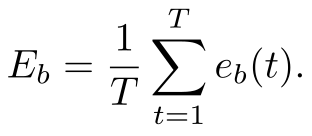
For each of nine segments, use the temporal median length as the reference and average absolute relative deviation with a small denominator stabilizer. Average segment errors, divide by tolerance 0.40, clip, and map to 0–100. The paper discards unreliable fits and requires at least ten valid frames per segment.
The released documentation instead gives 0.15 for its optional paper-score mode and 0.45 for a different default metric computed from 11 keypoint segments with scale removal and filtering. Those are different definitions, not interchangeable reproductions of this PDF.
Equations


G.1.III Joint range of motion
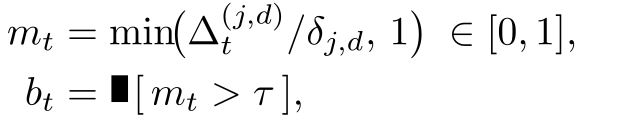
Each fitted angle is compared with its anatomical interval expanded by 15 degrees. Excess beyond that relaxed interval is normalized by half the original interval width and capped at one; severity above 0.05 is flagged. The original equations retain their per-joint notation.
The PDF does not fully specify how its per-joint quantities become a single frame severity. Released paper-mode documentation uses the mean over 21 scored coordinates; default software uses the worst joint plus angle-equivalence, flip, and observation corrections. This is another relevant implementation distinction.
Equations



G.1.IV Self-collision
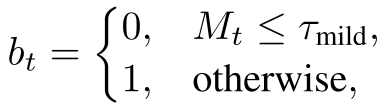
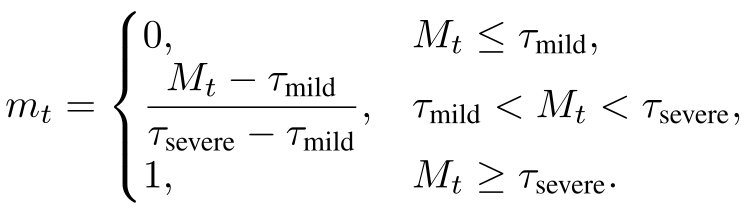
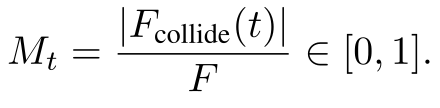
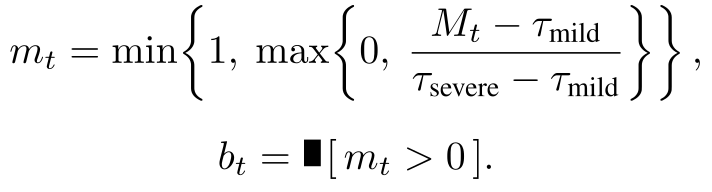
The PDF uses the fraction of SMPL-X faces in nonlocal intersections, with a 1% mild and 3% severe threshold. Severity and persistence use nonzero collision severity, while the frequency term counts severe frames. An optional mild-frequency term has zero default weight.
This is an estimated surface-intersection metric, not ground-contact physics. The released default implementation instead measures penetration depth, removes unobserved fingers and eyeballs, and uses 2 cm and 5 cm thresholds. The original face-fraction formulas are retained here.
Equations



G.1.V Kinematic extremes
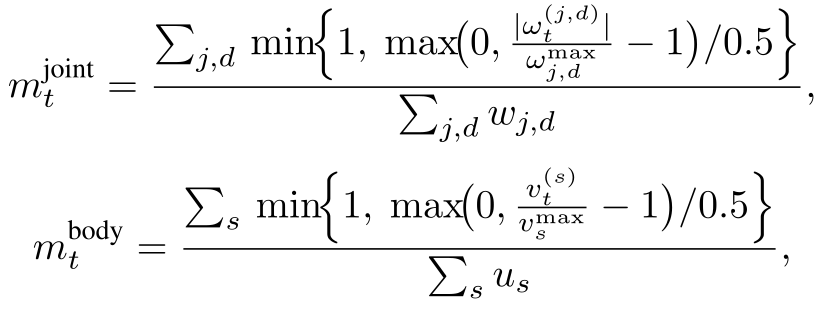
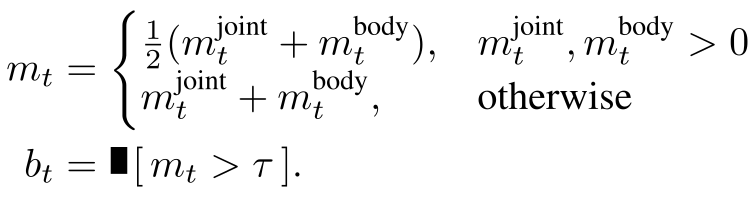
Joint angular velocities and segment-center linear speeds are computed from the fitted trajectory. Relative excess over each limit is divided by 0.5 and capped; the paper then combines joint and segment terms, thresholds at 0.05, and aggregates over time.
Two details prevent treating the PDF as executable pseudocode: its printed weighted means contain weights only in their denominators, and its fusion rule uses the single nonzero term when the other is zero. Released paper-mode documentation instead uses equal-weight means and averages both terms whenever a body model is available. It also uses central differences on a 24 Hz grid, rather than the PDF’s stated first-order differences.
The PDF cites reference 64 for biomechanical velocity limits, but that entry is a pose-regression paper. Specific threshold provenance therefore needs the released definitions and further source checking; the original citation is retained [64].
Equations


G.1.VI Motion smoothness
The PDF applies forward differences twice to joint angles, filters time gaps, normalizes acceleration excess by 0.5, and averages with anatomical weights before temporal aggregation. Its final displayed score clips the weighted penalty.
Despite references to optional jerk energy, the main defined metric is acceleration-based. Released software documents second central differences and equal coordinate weights, with jerk omitted. Filtering, frame rate, and reconstruction noise can materially affect derivative-based scores [6] [58] [62].
Equations

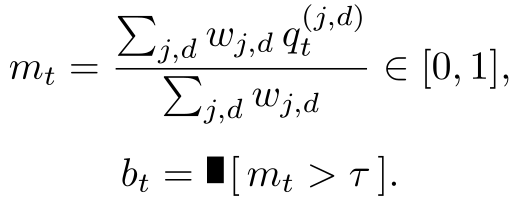


G.2 Alternative implementations
The appendix explains rejected implementations: instance counting can hide duplicated limbs; fixed shared-shape models hide stretching; framewise image models add collision jitter; learned pose priors mix plausibility with reconstruction assumptions; and two-dimensional joint angles depend on viewpoint.
Optical-flow speed and temporal error respond to camera or appearance changes. Reference-trajectory matching needs action-specific ground truth, while generic jerk measures depend strongly on sampling and can penalize legitimate fast movement. These are design rationales and preliminary observations, not a complete quantitative ablation of every alternative.
G.3 Additional metrics considered
Foot-contact checks were excluded because monocular scale and ground estimation were unreliable and violations contributed little separation in this setting. Inverse dynamics required uncertain contact-force allocation. Center-of-mass support-polygon tests confused valid aerial or dynamic motion with instability.
Consequently HumanScore does not assess all physically important failures, including reliable foot contact, external object interaction, or force feasibility.
H. Robustness analysis
Appendix H separates estimator substitutions, threshold sweeps, aggregation sweeps, reconstruction noise, and repeated-generation checks. Their scopes differ; a favorable result in one does not establish robustness to every scene or reconstruction failure.
H.1 Pose estimation
Temporal refinement of MeTRAbs and an alternative PromptHMR pipeline are compared [72]. The appendix reports identical rankings, whereas the main text allows changes of up to one rank. The conversion between the described SMPL alternatives and OpenSim-specific metrics is not fully specified.
H.2 Tolerance scales
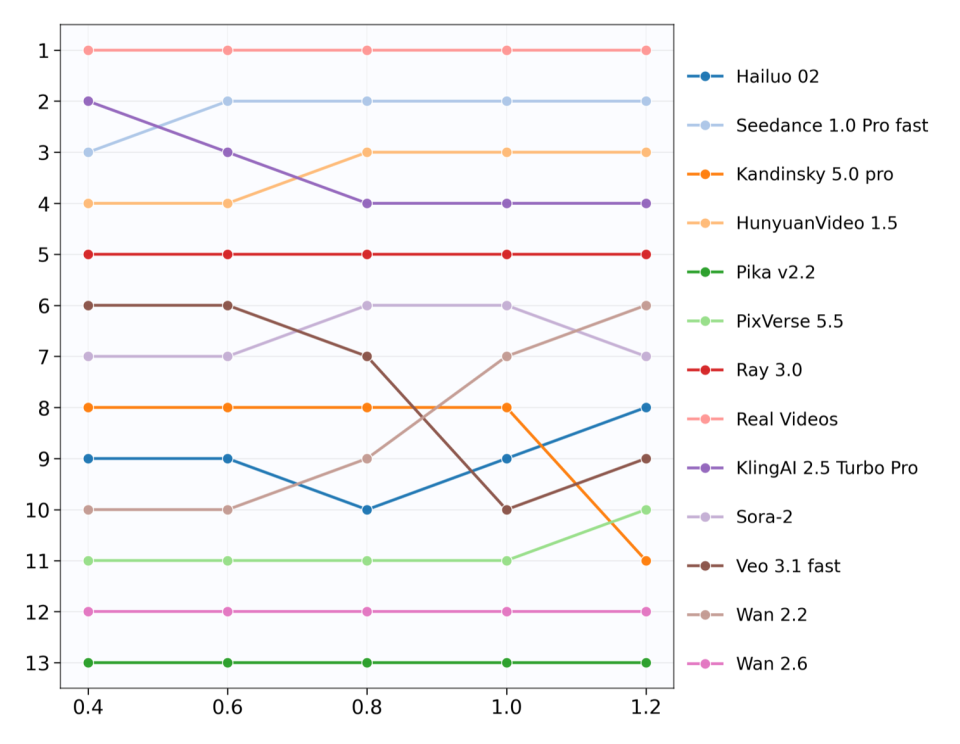
Figure 9 preserves model rankings over the tolerance-scale sweep. Its caption claims consistent rankings, but the plotted lines cross and several entries move by multiple ranks. Its labels and ordering also differ from the main leaderboard. These unresolved figure/text discrepancies prevent treating the plot as evidence of exact rank invariance.
Even a stable ordering within a particular sweep would not establish population-independent anatomical bounds or reliability outside the controlled benchmark.
H.3 Aggregation weights
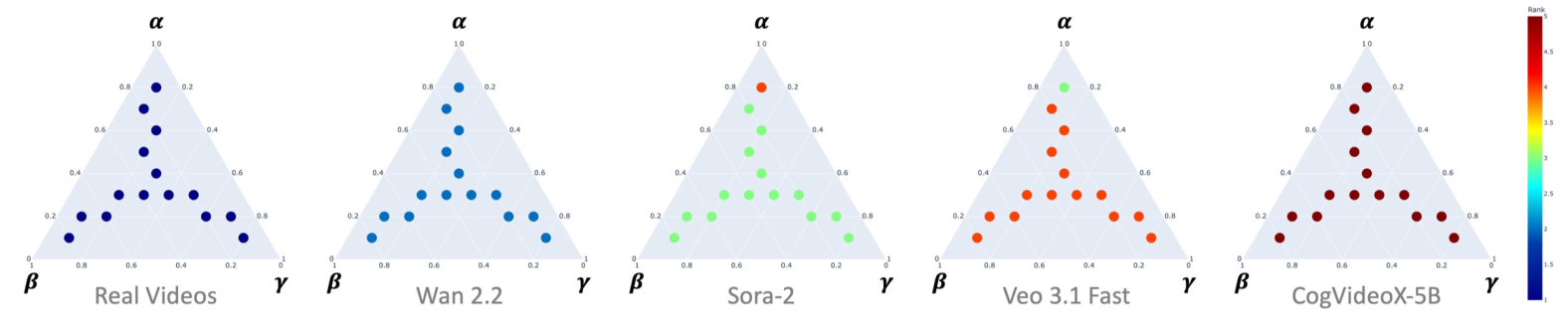
Figure 10 sweeps frequency/severity/persistence weights on the simplex. It includes four generators—Wan 2.2, CogVideoX, Sora-2, and Veo 3.1 fast—plus the real reference. Stable ordering for these plotted entries should not be described as an exhaustive 13-model aggregation sweep.
H.4 Reconstruction stress test
Adding Gaussian pose noise normalized by each coordinate’s 95th-to-5th percentile range gives real-reference scores 96.2, 96.4, 95.8, and 94.4 at noise scales 0, 0.01, 0.05, and 0.1. These remain above the strongest generator’s 92.6. This is an additive-noise test, not a test of occlusion, identity switches, or systematic fitting failures.
H.5 Repeated generation
On only 12 prompts and three generators, three seeds give 92.0±1.1 for Seedance, 90.2±1.4 for Ray, and 87.7±2.0 for HunyuanVideo. The deviations are across seed-level means. Ray and HunyuanVideo exchange order relative to the main table, reinforcing caution about nearby ranks.
I. Statistical results
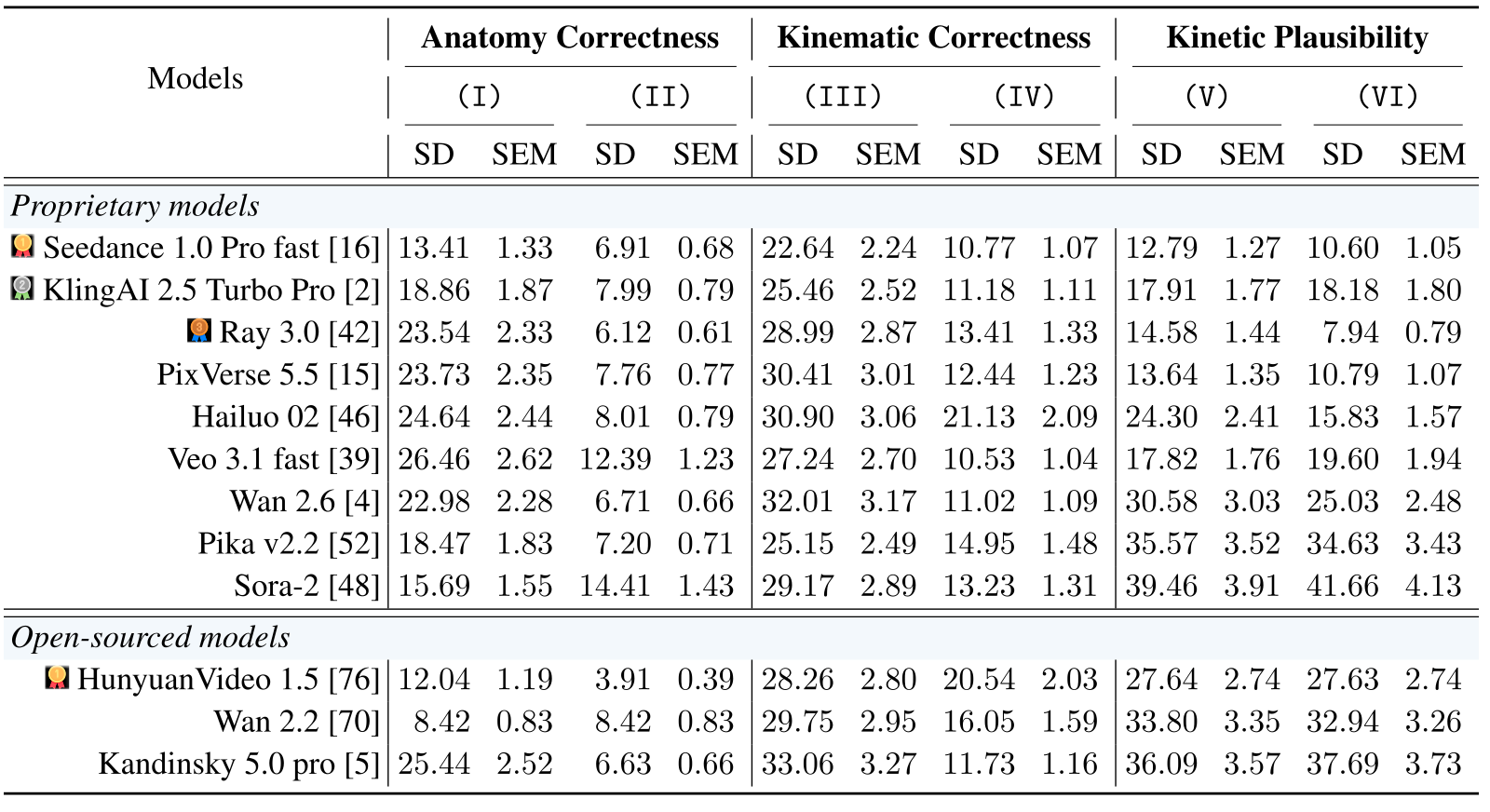
Table 4 retains standard deviations and standard errors across the 102 prompts. These describe variation over motions and intensities, not repeated generations. Approximate per-metric intervals use mean ±1.96 standard errors under an independent-prompt normal approximation.
The intervals are neither paired significance tests nor uncertainty intervals for the composite score. Table 4 lists 12 generators and omits CogVideoX, despite the 13-model main benchmark; that source omission is preserved.
J. Generator details
Appendix J identifies the exact model configurations and distinguishes open and proprietary services. These descriptions concern the paper’s evaluated versions; they are not a current product comparison.
J.1 Open-source models
The four open-source entries are HunyuanVideo 1.5, Kandinsky 5.0 Pro, Wan 2.2, and CogVideoX-5B [76] [5] [70] [78]. Model architecture and published capabilities vary, but the leaderboard uses the common controlled prompt suite.
J.2 Proprietary models
The nine proprietary entries are Ray 3.0, KlingAI 2.5 Turbo Pro, Seedance 1.0 Pro fast, Sora-2, Veo 3.1 fast, Hailuo 02, PixVerse 5.5, Wan 2.6, and Pika v2.2. The Seedance Pro Fast configuration is specifically an API-vendor preset. Changing endpoint presets or model versions could change the benchmark.
K. Future work
The authors propose using interpretable motion diagnostics as training or validation feedback. That is a prospective use: this paper evaluates generators and does not demonstrate improved generation through HumanScore optimization.
L. Broader impacts
Potential benefits include more plausible educational, accessibility, entertainment, and scientific visualization content. Better realism could also enable misleading synthetic media. The paper recommends provenance and evaluation tools rather than treating these scores as evidence of authenticity.
The bounds describe typical adults and can under-credit valid motion from children, athletes, older or atypical bodies, and people with disabilities. Population-specific calibration remains necessary. The real-video collection is used for evaluation without redistributing the original dataset.
M. Language-model usage
Language models assisted wording and grouped candidate actions into motion families; the authors reviewed the groupings and made final curation decisions. Separate multimodal models are evaluated as baselines. The paper states that language models did not fit, run, or interpret the six HumanScore metrics.
N. Full prompt list
All six original tables are retained below, including their continuation rows: 51 distinct actions, two intensity variants each, and 34 prompts at each of the three difficulty levels. Prompt wording is preserved rather than rewritten.
| Motion | Difficulty | Prompt |
|---|---|---|
| walking | easy | A single, full-body person walking in an indoor studio with a neutral background. Gentle motion; small, even steps and slow arm swing at an easy cadence. Locked, static camera; the subject stays centered and unobstructed. |
| walking | easy | A single, full-body person walking in an indoor studio with a neutral background. Intense motion; long, driving strides with vigorous arm swing at a quick pace. Locked, static camera; the subject stays centered and unobstructed. |
| jogging | easy | A single, full-body person jogging in an indoor studio with a neutral background. Gentle motion; short strides and relaxed arm drive at a light pace. Locked, static camera; the subject stays centered and unobstructed. |
| jogging | easy | A single, full-body person jogging in an indoor studio with a neutral background. Intense motion; extended stride length and forceful arm drive at a fast cadence. Locked, static camera; the subject stays centered and unobstructed. |
| jumping jacks | medium | A single, full-body person performs jumping jacks in an indoor studio with a neutral background. Gentle motion; low-amplitude jacks with soft landings and controlled arm travel at an easy tempo. Locked, static camera; the subject stays centered and unobstructed. |
| jumping jacks | medium | A single, full-body person performs jumping jacks in an indoor studio with a neutral background. Intense motion; high-amplitude jacks at a fast cadence, arms fully overhead with springy rebounds. Locked, static camera; the subject stays centered and unobstructed. |
| clapping hands | easy | A single, full-body person performs clapping hands in an indoor studio with a neutral background. Gentle motion; light, measured claps at a slow tempo, elbows near the torso and minimal body sway. Locked, static camera; the subject stays centered and unobstructed. |
| clapping hands | easy | A single, full-body person performs clapping hands in an indoor studio with a neutral background. Intense motion; rapid, forceful claps with wide arm swings and brisk cadence, pronounced accents. Locked, static camera; the subject stays centered and unobstructed. |
| tiptoeing | easy | A single, full-body person tiptoeing in an indoor studio with a neutral background. Gentle motion; small-amplitude steps and slow arm swing at an easy cadence. Locked, static camera; the subject stays centered and unobstructed. |
| tiptoeing | easy | A single, full-body person tiptoeing in an indoor studio with a neutral background. Intense motion; long strides with vigorous arm drive at a fast cadence. Locked, static camera; the subject stays centered and unobstructed. |
| lunge | easy | A single, full-body person lunge in an indoor studio with a neutral background. Gentle motion; short step length with slow, controlled lowering and rise. Locked, static camera; the subject stays centered and unobstructed. |
| lunge | easy | A single, full-body person lunge in an indoor studio with a neutral background. Intense motion; long step length with deep range and quick, forceful drive to stand. Locked, static camera; the subject stays centered and unobstructed. |
| squat | easy | A single, full-body person squat in an indoor studio with a neutral background. Gentle motion; shallow depth and slow, controlled tempo. Locked, static camera; the subject stays centered and unobstructed. |
| squat | easy | A single, full-body person squat in an indoor studio with a neutral background. Intense motion; deep range to strong lockout at a brisk, powerful tempo. Locked, static camera; the subject stays centered and unobstructed. |
| stretching leg | easy | A single, full-body person stretching leg in an indoor studio with a neutral background. Gentle motion; slow, controlled reps with small excursion and steady tempo. Locked, static camera; the subject stays centered and unobstructed. |
| stretching leg | easy | A single, full-body person stretching leg in an indoor studio with a neutral background. Intense motion; large, full-range reps performed briskly with strong drive and quick return. Locked, static camera; the subject stays centered and unobstructed. |
| stretching arm | easy | A single, full-body person stretching arm in an indoor studio with a neutral background. Gentle motion; slow, controlled reps with small excursion and steady tempo. Locked, static camera; the subject stays centered and unobstructed. |
| Motion | Difficulty | Prompt |
|---|---|---|
| stretching arm | easy | A single, full-body person stretching arm in an indoor studio with a neutral background. Intense motion; large, full-range reps performed briskly with strong drive and quick return. Locked, static camera; the subject stays centered and unobstructed. |
| front raises | easy | A single, full-body person front raises in an indoor studio with a neutral background. Gentle motion; slow, controlled reps with small excursion and steady tempo. Locked, static camera; the subject stays centered and unobstructed. |
| front raises | easy | A single, full-body person front raises in an indoor studio with a neutral background. Intense motion; large, full-range reps performed briskly with strong drive and quick return. Locked, static camera; the subject stays centered and unobstructed. |
| push up | easy | A single, full-body person push up in an indoor studio with a neutral background. Gentle motion; shallow range and slow tempo with steady alignment. Locked, static camera; the subject stays centered and unobstructed. |
| push up | easy | A single, full-body person push up in an indoor studio with a neutral background. Intense motion; chest-to-floor depth and strong lockout at a brisk tempo. Locked, static camera; the subject stays centered and unobstructed. |
| situp | easy | A single, full-body person situp in an indoor studio with a neutral background. Gentle motion; slow, controlled reps with small excursion and steady tempo. Locked, static camera; the subject stays centered and unobstructed. |
| situp | easy | A single, full-body person situp in an indoor studio with a neutral background. Intense motion; large, full-range reps performed briskly with strong drive and quick return. Locked, static camera; the subject stays centered and unobstructed. |
| exercising with ball | medium | A single, full-body person exercising with an exercise ball in an indoor studio with a neutral background. Gentle motion; slow, controlled reps with small excursion and steady tempo. Locked, static camera; the subject stays centered and unobstructed. |
| exercising with ball | medium | A single, full-body person exercising with an exercise ball in an indoor studio with a neutral background. Intense motion; large, full-range reps performed briskly with strong drive and quick return. Locked, static camera; the subject stays centered and unobstructed. |
| doing aerobics | easy | A single, full-body person doing aerobics in an indoor studio with a neutral background. Gentle motion; slow, controlled reps with small excursion and steady tempo. Locked, static camera; the subject stays centered and unobstructed. |
| doing aerobics | easy | A single, full-body person doing aerobics in an indoor studio with a neutral background. Intense motion; large, full-range reps performed briskly with strong drive and quick return. Locked, static camera; the subject stays centered and unobstructed. |
| tai chi | easy | A single, full-body person tai chi in an indoor studio with a neutral background. Gentle motion; slow, controlled reps with small excursion and steady tempo. Locked, static camera; the subject stays centered and unobstructed. |
| tai chi | easy | A single, full-body person tai chi in an indoor studio with a neutral background. Intense motion; large, full-range reps performed briskly with strong drive and quick return. Locked, static camera; the subject stays centered and unobstructed. |
| moon walking | medium | A single, full-body person moon walking in an indoor studio with a neutral background. Gentle motion; small, even steps and slow arm swing at an easy cadence. Locked, static camera; the subject stays centered and unobstructed. |
| moon walking | medium | A single, full-body person moon walking in an indoor studio with a neutral background. Intense motion; long, driving strides with vigorous arm swing at a quick pace. Locked, static camera; the subject stays centered and unobstructed. |
| sweeping floor | easy | A single, full-body person sweeping floor in an indoor studio with a neutral background. Gentle motion; short strokes and slow, careful pacing. Locked, static camera; the subject stays centered and unobstructed. |
| sweeping floor | easy | A single, full-body person sweeping floor in an indoor studio with a neutral background. Intense motion; long strokes at brisk tempo with assertive direction changes. Locked, static camera; the subject stays centered and unobstructed. |
| Motion | Difficulty | Prompt |
|---|---|---|
| mowing lawn | easy | A single, full-body person mowing lawn in an indoor studio with a neutral background. Gentle motion; small reach and careful pacing with compact, slow movements. Locked, static camera; the subject stays centered and unobstructed. |
| mowing lawn | easy | A single, full-body person mowing lawn in an indoor studio with a neutral background. Intense motion; long, fast reaches and broad trunk rotation with assertive pacing. Locked, static camera; the subject stays centered and unobstructed. |
| slacklining | hard | A single, full-body person walking slowly on a slackline and keep balance in an indoor studio with a neutral background. Gentle motion; short reaches and slow corrections focused on quiet stabilization. Locked, static camera; the subject stays centered and unobstructed. |
| slacklining | hard | A single, full-body person walking slowly on a slackline and keep balance in an indoor studio with a neutral background. Intense motion; large reaches and quick corrections with dynamic stabilization. Locked, static camera; the subject stays centered and unobstructed. |
| playing ping pong | easy | A single, full-body person playing ping pong in an indoor studio with a neutral background. Gentle motion; compact swings and short recoveries at slow pace. Locked, static camera; the subject stays centered and unobstructed. |
| playing ping pong | easy | A single, full-body person playing ping pong in an indoor studio with a neutral background. Intense motion; full swings with fast recoveries and quick footwork. Locked, static camera; the subject stays centered and unobstructed. |
| playing badminton | medium | A single, full-body person playing badminton in an indoor studio with a neutral background. Gentle motion; compact swings and short recoveries at slow pace. Locked, static camera; the subject stays centered and unobstructed. |
| playing badminton | medium | A single, full-body person playing badminton in an indoor studio with a neutral background. Intense motion; full swings with fast recoveries and quick footwork. Locked, static camera; the subject stays centered and unobstructed. |
| playing tennis | medium | A single, full-body person playing tennis in an indoor studio with a neutral background. Gentle motion; compact swings and short recoveries at slow pace. Locked, static camera; the subject stays centered and unobstructed. |
| playing tennis | medium | A single, full-body person playing tennis in an indoor studio with a neutral background. Intense motion; full swings with fast recoveries and quick footwork. Locked, static camera; the subject stays centered and unobstructed. |
| playing volleyball | medium | A single, full-body person playing volleyball in an indoor studio with a neutral background. Gentle motion; small steps and light swings at slow pace. Locked, static camera; the subject stays centered and unobstructed. |
| playing volleyball | medium | A single, full-body person playing volleyball in an indoor studio with a neutral background. Intense motion; big steps and forceful swings with rapid footwork. Locked, static camera; the subject stays centered and unobstructed. |
| playing basketball | medium | A single, full-body person playing basketball in an indoor studio with a neutral background. Gentle motion; small steps and light swings at slow pace. Locked, static camera; the subject stays centered and unobstructed. |
| playing basketball | medium | A single, full-body person playing basketball in an indoor studio with a neutral background. Intense motion; big steps and forceful swings with rapid footwork. Locked, static camera; the subject stays centered and unobstructed. |
| playing frisbee | medium | A single, full-body person catching and throwing frisbee in an indoor studio with a neutral background. Gentle motion; compact swings and small steps with slow, controlled trunk rotation. Locked, static camera; the subject stays centered and unobstructed. |
| playing frisbee | medium | A single, full-body person catching and throwing frisbee in an indoor studio with a neutral background. Intense motion; full-arc swings, big steps, and rapid trunk rotation at high intensity. Locked, static camera; the subject stays centered and unobstructed. |
| playing soccer | medium | A single, full-body person passing and kicking soccer ball in an indoor studio with a neutral background. Gentle motion; low chamber and slow extension with controlled balance. Locked, static camera; the subject stays centered and unobstructed. |
| Motion | Difficulty | Prompt |
|---|---|---|
| playing soccer | medium | A single, full-body person passing and kicking soccer ball in an indoor studio with a neutral background. Intense motion; high chamber and fast extension to end range with quick retraction. Locked, static camera; the subject stays centered and unobstructed. |
| playing squash | hard | A single, full-body person playing squash or racquetball in an indoor studio with a neutral background. Gentle motion; compact swings and short recoveries at slow pace. Locked, static camera; the subject stays centered and unobstructed. |
| playing squash | hard | A single, full-body person playing squash or racquetball in an indoor studio with a neutral background. Intense motion; full swings with fast recoveries and quick footwork. Locked, static camera; the subject stays centered and unobstructed. |
| hurdling | medium | A single, full-body person running fast and jumping over a waist-high hurdle with the lead leg high in an indoor studio with a neutral background. Gentle motion; smooth approach with controlled clearance, soft trail-leg recovery, and balanced landing. Locked, static camera; the subject stays centered and unobstructed. |
| hurdling | medium | A single, full-body person running fast and jumping over a waist-high hurdle with the lead leg high in an indoor studio with a neutral background. Intense motion; explosive takeoff with aggressive lead-leg drive, rapid trail-leg snap-down, and quick sprint out. Locked, static camera; the subject stays centered and unobstructed. |
| long jump | medium | A single, full-body person long jump in an indoor studio with a neutral background. Gentle motion; shortened run-up with a small hop and a quiet, balanced landing. Locked, static camera; the subject stays centered and unobstructed. |
| long jump | medium | A single, full-body person long jump in an indoor studio with a neutral background. Intense motion; powerful acceleration, explosive takeoff with driving knee, and a decisive landing. Locked, static camera; the subject stays centered and unobstructed. |
| golf driving | medium | A single, full-body person performing a golf drive in an indoor studio with a neutral background. Gentle motion; short backswings with relaxed tempo and a soft, controlled follow-through. Locked, static camera; the subject stays centered and unobstructed. |
| golf driving | medium | A single, full-body person performing a golf drive in an indoor studio with a neutral background. Intense motion; full backswing with explosive hip rotation and fast clubhead speed into a decisive follow-through. Locked, static camera; the subject stays centered and unobstructed. |
| skipping rope | medium | A single, full-body person jumping rope in an indoor studio with a neutral background. Gentle motion; small, rhythmic hops with compact wrist turns and steady cadence. Locked, static camera; the subject stays centered and unobstructed. |
| skipping rope | medium | A single, full-body person jumping rope in an indoor studio with a neutral background. Intense motion; rapid cadence with higher rebound and crisp wrist rotation. Locked, static camera; the subject stays centered and unobstructed. |
| pirouetting | hard | A single, full-body person lifting one foot and turning in place multiple times in an indoor studio with a neutral background. Gentle motion; soft, small arm phrases and short steps with slow body rotation. Locked, static camera; the subject stays centered and unobstructed. |
| pirouetting | hard | A single, full-body person lifting one foot and turning in place multiple times in an indoor studio with a neutral background. Intense motion; expansive arm lines, deep steps, and brisk torso rotation across the phrase. Locked, static camera; the subject stays centered and unobstructed. |
| swing dancing | hard | A single, full-body person doing swing steps with kicks, adding arm swings and small turns in an indoor studio with a neutral background. Gentle motion; soft, small arm phrases and short steps with slow body rotation. Locked, static camera; the subject stays centered and unobstructed. |
| swing dancing | hard | A single, full-body person doing swing steps with kicks, adding arm swings and small turns in an indoor studio with a neutral background. Intense motion; expansive arm lines, deep steps, and brisk torso rotation across the phrase. Locked, static camera; the subject stays centered and unobstructed. |
| side kick | medium | A single, full-body person performing a side kick in an indoor studio with a neutral background. Gentle motion; low chamber and slow extension with controlled balance. Locked, static camera; the subject stays centered and unobstructed. |
| side kick | medium | A single, full-body person performing a side kick in an indoor studio with a neutral background. Intense motion; high chamber and fast extension to end range with quick retraction. Locked, static camera; the subject stays centered and unobstructed. |
| Motion | Difficulty | Prompt |
|---|---|---|
| drop kicking | medium | A single, full-body person drop kicking in an indoor studio with a neutral background. Gentle motion; low chamber and slow extension with controlled balance. Locked, static camera; the subject stays centered and unobstructed. |
| drop kicking | medium | A single, full-body person drop kicking in an indoor studio with a neutral background. Intense motion; high chamber and fast extension to end range with quick retraction. Locked, static camera; the subject stays centered and unobstructed. |
| roller skating | hard | A single, full-body person roller skating in an indoor studio with a neutral background. Gentle motion; short, slow glides with compact arm swing. Locked, static camera; the subject stays centered and unobstructed. |
| roller skating | hard | A single, full-body person roller skating in an indoor studio with a neutral background. Intense motion; long, powerful strokes with wide arm drive at speed. Locked, static camera; the subject stays centered and unobstructed. |
| skateboarding | hard | A single, full-body person skateboarding in an indoor studio with a neutral background. Gentle motion; short pushes and slow deck work with compact stance. Locked, static camera; the subject stays centered and unobstructed. |
| skateboarding | hard | A single, full-body person skateboarding in an indoor studio with a neutral background. Intense motion; long pushes and quick transitions with dynamic deck work. Locked, static camera; the subject stays centered and unobstructed. |
| bowling | easy | A single, full-body person performs bowling in an indoor studio with a neutral background. Gentle motion; short approach, low arm speed, and a controlled release. Locked, static camera; the subject stays centered and unobstructed. |
| bowling | easy | A single, full-body person performs bowling in an indoor studio with a neutral background. Intense motion; full four-step approach with a high backswing and a fast roll into a firm follow-through. Locked, static camera; the subject stays centered and unobstructed. |
| deadlifting | medium | A single, full-body person deadlifting in an indoor studio with a neutral background. Gentle motion; light hinge with small range and slow return. Locked, static camera; the subject stays centered and unobstructed. |
| deadlifting | medium | A single, full-body person deadlifting in an indoor studio with a neutral background. Intense motion; full hip extension to lockout with a quick, powerful drive. Locked, static camera; the subject stays centered and unobstructed. |
| standing on hands | hard | A single, full-body person standing on hands in an indoor studio with a neutral background. Gentle motion; steady handstand holds with small balance corrections. Locked, static camera; the subject stays centered and unobstructed. |
| standing on hands | hard | A single, full-body person standing on hands in an indoor studio with a neutral background. Intense motion; brisk kick-ups to handstand with quick weight shifts and controlled exits. Locked, static camera; the subject stays centered and unobstructed. |
| contorting | hard | A single, full-body person slowly bending the body into extreme shapes and holding each pose for a few seconds in an indoor studio with a neutral background. Gentle motion; shallow ranges with unhurried transitions and steady breathing. Locked, static camera; the subject stays centered and unobstructed. |
| contorting | hard | A single, full-body person slowly bending the body into extreme shapes and holding each pose for a few seconds in an indoor studio with a neutral background. Intense motion; deep ranges with quick but controlled pose changes and firm stabilization. Locked, static camera; the subject stays centered and unobstructed. |
| bending back | hard | A single, full-body person bending back in an indoor studio with a neutral background. Gentle motion; shallow backbends with slow entries and exits for quiet stabilization. Locked, static camera; the subject stays centered and unobstructed. |
| bending back | hard | A single, full-body person bending back in an indoor studio with a neutral background. Intense motion; deep backbends with brisk transitions and a steady, controlled finish. Locked, static camera; the subject stays centered and unobstructed. |
| yoga | hard | A single, full-body person practicing yoga in an indoor studio with a neutral background. Gentle motion; a slow-flow sequence with steady holds and smooth, quiet transitions. Locked, static camera; the subject stays centered and unobstructed. |
| Motion | Difficulty | Prompt |
|---|---|---|
| yoga | hard | A single, full-body person practicing yoga in an indoor studio with a neutral background. Intense motion; large-amplitude poses with brisk, controlled transitions and strong lines. Locked, static camera; the subject stays centered and unobstructed. |
| dancing ballet | hard | A single, full-body person dancing ballet in an indoor studio with a neutral background. Gentle motion; soft, small arm phrases and short steps with slow body rotation. Locked, static camera; the subject stays centered and unobstructed. |
| dancing ballet | hard | A single, full-body person dancing ballet in an indoor studio with a neutral background. Intense motion; expansive arm lines, deep steps, and brisk torso rotation across the phrase. Locked, static camera; the subject stays centered and unobstructed. |
| figure skating | hard | A single, full-body person gliding on ice and performing small spins and crossovers. Gentle motion; short glides with light edge changes and slow rotations. Locked, static camera; the subject stays centered and unobstructed. |
| figure skating | hard | A single, full-body person gliding on ice and performing small spins and crossovers. Intense motion; faster strokes with stronger edge changes and quick spin entries. Locked, static camera; the subject stays centered and unobstructed. |
| high jump | hard | A single, full-body person high jump in an indoor studio with a neutral background. Gentle motion; short curved approach with a low, controlled takeoff and soft landing. Locked, static camera; the subject stays centered and unobstructed. |
| high jump | hard | A single, full-body person high jump in an indoor studio with a neutral background. Intense motion; fast curved approach with explosive takeoff and a pronounced arch over the bar path. Locked, static camera; the subject stays centered and unobstructed. |
| rock climbing | hard | A single, full-body person rock climbing in an indoor studio with a neutral background. Gentle motion; short reaches and slow pulls with controlled foot placements. Locked, static camera; the subject stays centered and unobstructed. |
| rock climbing | hard | A single, full-body person rock climbing in an indoor studio with a neutral background. Intense motion; long reaches and powerful pulls with rapid foot moves. Locked, static camera; the subject stays centered and unobstructed. |
| riding unicycle | hard | A single, full-body person riding unicycle in an indoor studio with a neutral background. Gentle motion; short reaches and slow corrections focused on quiet stabilization. Locked, static camera; the subject stays centered and unobstructed. |
| riding unicycle | hard | A single, full-body person riding unicycle in an indoor studio with a neutral background. Intense motion; large reaches and quick corrections with dynamic stabilization. Locked, static camera; the subject stays centered and unobstructed. |
| javelin throw | hard | A single, full-body person throwing a javelin in an indoor studio with a neutral background. Gentle motion; shortened approach with compact rotation and a soft, balanced release. Locked, static camera; the subject stays centered and unobstructed. |
| javelin throw | hard | A single, full-body person throwing a javelin in an indoor studio with a neutral background. Intense motion; rapid cross-steps, explosive hip–shoulder separation, and a decisive release. Locked, static camera; the subject stays centered and unobstructed. |
| swinging bat | medium | A single, full-body person swinging baseball bat and hitting baseball in an indoor studio with a neutral background. Gentle motion; small steps and light swings at slow pace. Locked, static camera; the subject stays centered and unobstructed. |
| swinging bat | medium | A single, full-body person swinging baseball bat and hitting baseball in an indoor studio with a neutral background. Intense motion; big steps and forceful swings with rapid footwork. Locked, static camera; the subject stays centered and unobstructed. |
| high kick | hard | A single, full-body person high kick in an indoor studio with a neutral background. Gentle motion; low chamber and slow extension with controlled balance. Locked, static camera; the subject stays centered and unobstructed. |
| high kick | hard | A single, full-body person high kick in an indoor studio with a neutral background. Intense motion; high chamber and fast extension to end range with quick retraction. Locked, static camera; the subject stays centered and unobstructed. |
Paper checklist
The checklist acknowledges that licenses and terms are not fully listed and that participant instructions, screenshots, compensation, annotation protocol, and institutional review status are missing. Its reproducibility and compute statements should be read alongside these gaps and the estimator/software version differences above.
The paper reports no theoretical theorems. Metric formulas define the benchmark; they do not prove biomechanical correctness or immunity to reconstruction error.