Overview
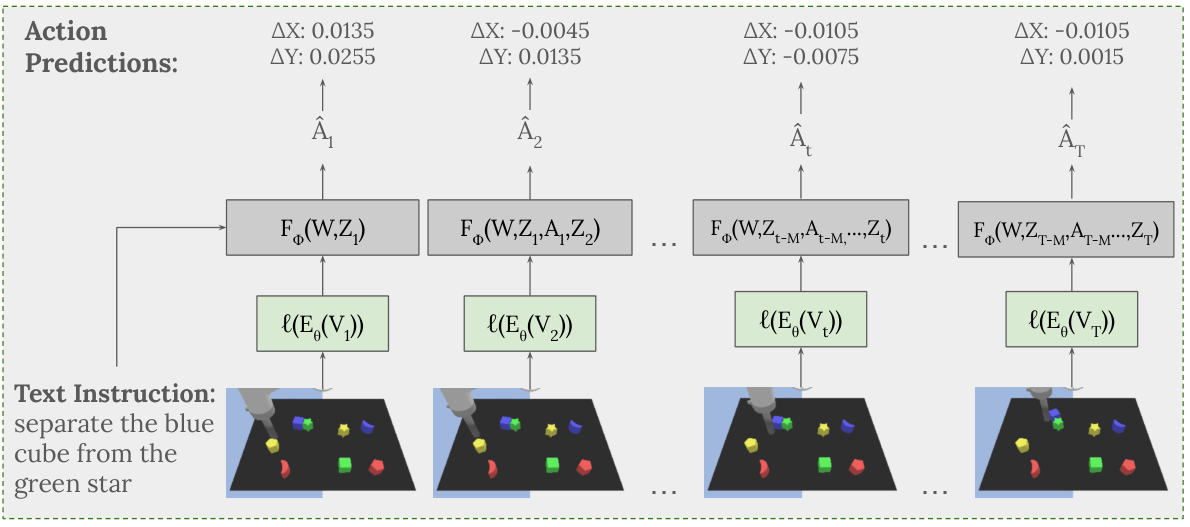
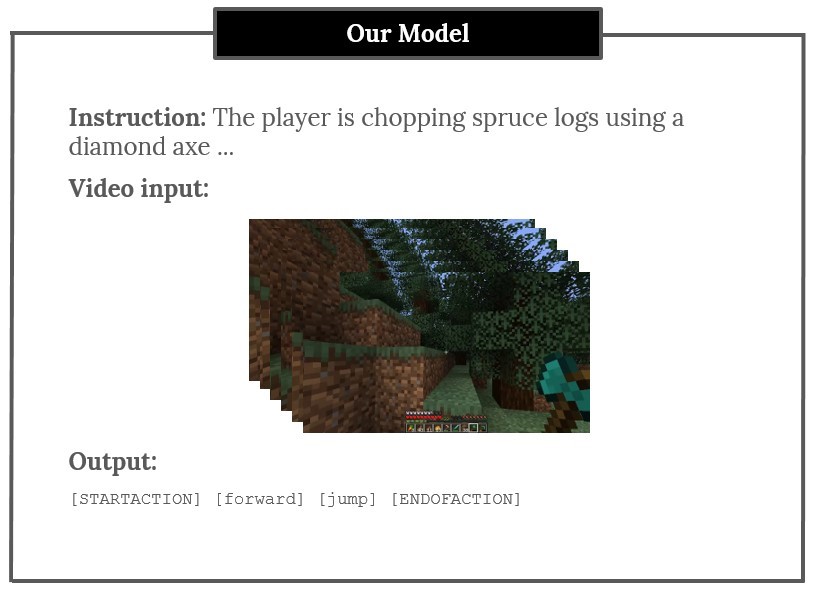
This edition condenses the entire paper and all five appendices while retaining twelve figures, nine numbered tables with every example panel, all five displayed equations, and the references. The loose introductory image is reunited with Figure 1. The figure captions preserve the authors’ original claims; the edited text distinguishes those aspirations from the experiments actually reported.
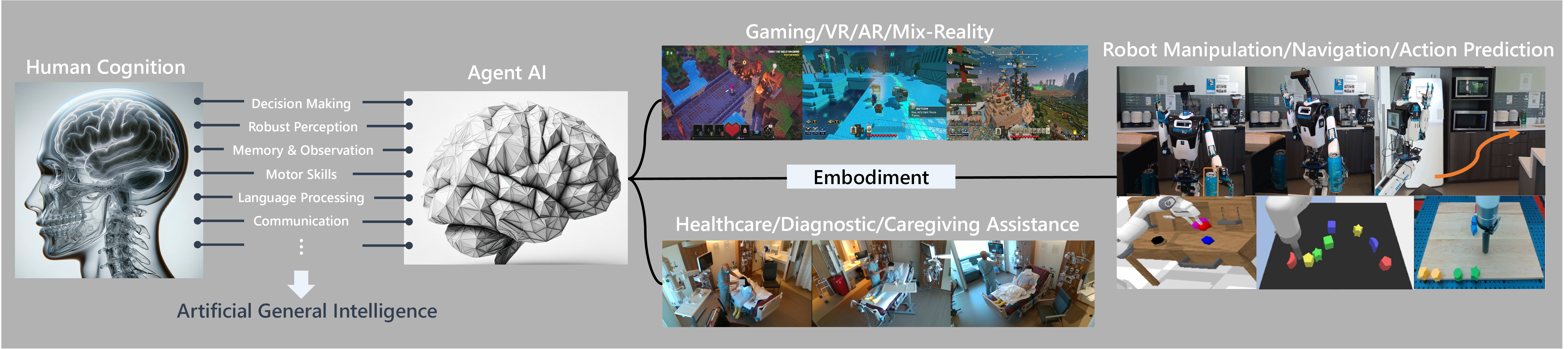
At a glance
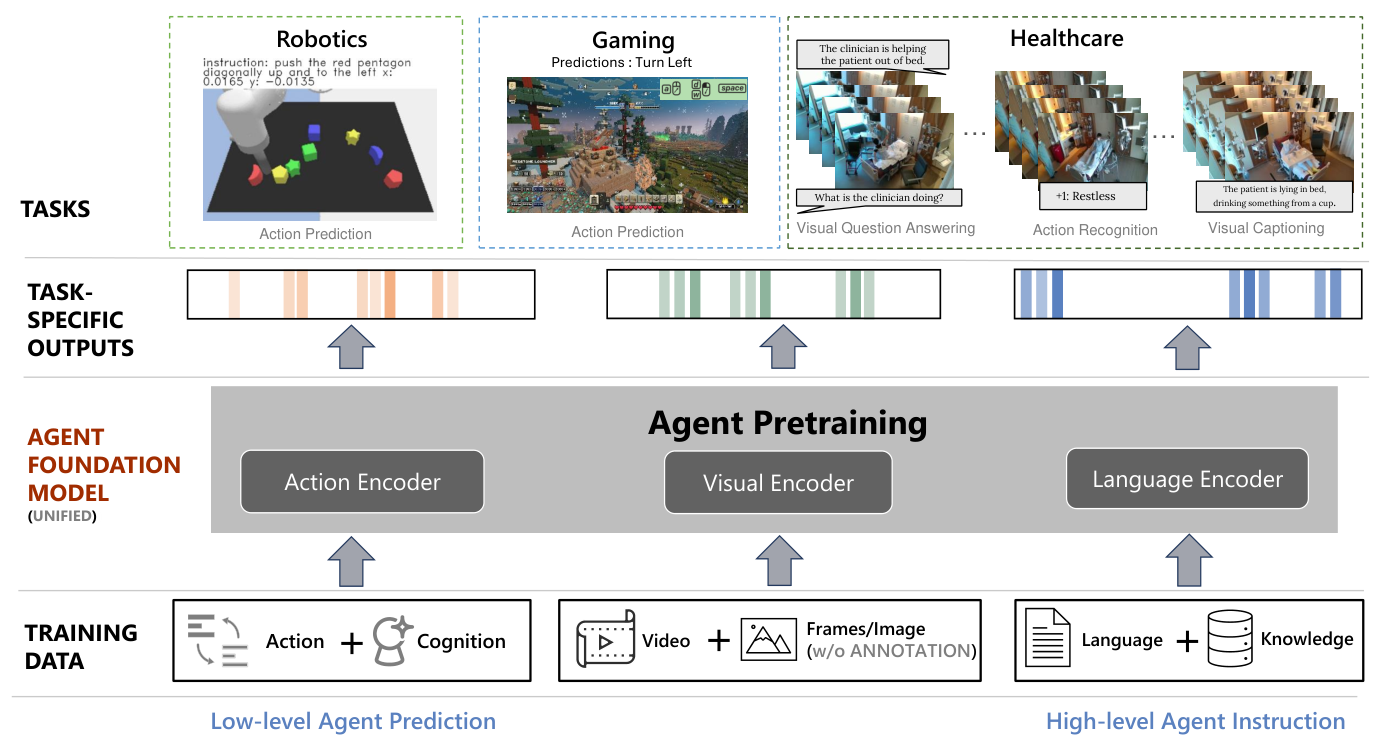
A 277-million-parameter model combines visual encoding, language modeling, and action-token prediction, first training on robotics and gaming and then adapting to domain-specific tasks. The shared training improves several robotic, game-action, and healthcare classification measures. Results support useful transfer across these evaluated tasks, rather than human-level general intelligence or a universal deployment-ready agent.
1 Introduction
Large vision-language models are often trained on images and text without learning the consequences of actions. This work adds robot and game trajectories to connect observations, instructions, and controls. A common architecture is fine-tuned for manipulation, game-action prediction, and healthcare video understanding. Reducing hallucinations through environmental grounding is a motivation; the paper does not report a comprehensive hallucination benchmark.
2 Related Work
2.1 Foundation Models
Foundation models reuse representations learned from broad data. Prior work includes language, vision, video, and embodied models. This paper seeks broader sharing of visual, textual, and action representations while retaining task-specific adaptation.
2.2 Multimodal Understanding
Multimodal models align language with images or video, often by connecting pretrained encoders and language models. The proposed system initializes from CLIP and OPT but jointly trains the visual encoder, projection, and decoder, adding explicit action tokens.
2.3 Agent-Based AI
Agent research spans simulated and physical environments, language-guided planning, and embodied interaction. Here the contribution is a multimodal pretraining recipe and experiments across three domains, rather than a complete implementation or validation of every capability associated with general agent intelligence.
3 Agent Paradigm
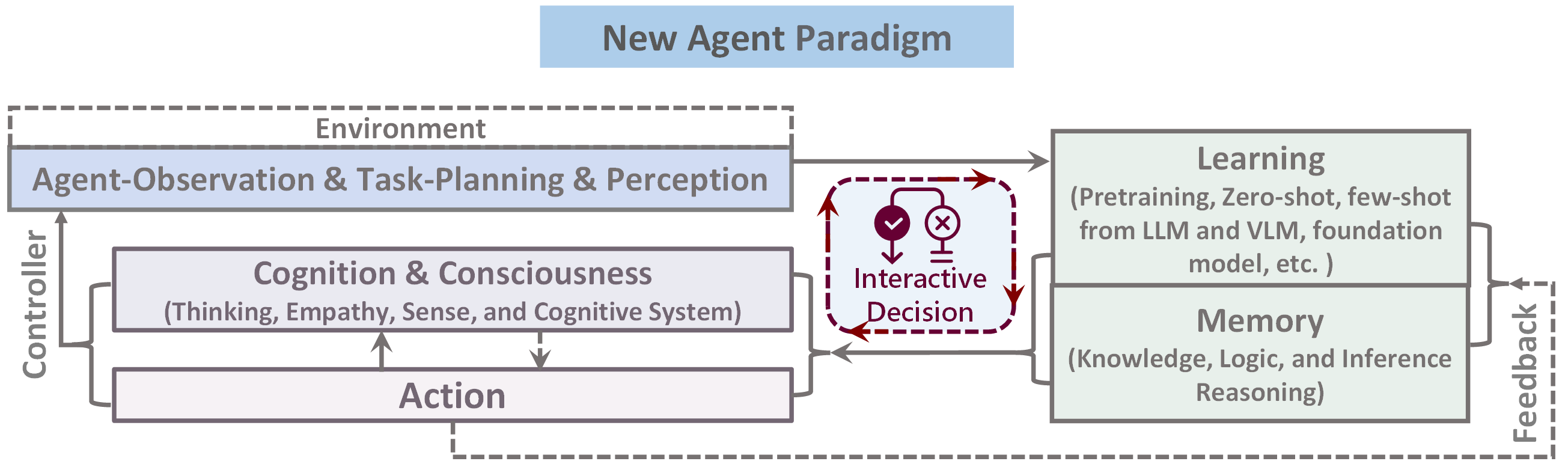
The conceptual paradigm groups perception and task planning, learning, memory, action, and cognition. The paper uses “consciousness” narrowly for awareness of an agent’s state and surroundings; it supplies no evidence of sentience. Perception, planning, and human/environment interaction are proposed requirements for collaborative embodied systems. Figure 2’s conceptual modules should not be mistaken for five independently evaluated components of the implemented network.
4 Agent Foundation Model
The model learns a shared representation of observations, instructions, and low-level controls. Task-specific fine-tuning turns the pretrained model into an action predictor or a video-understanding model. Sharing components can simplify the system, but the paper does not benchmark deployment cost against a complete collection of separate specialist systems.
4.1 Model Architecture
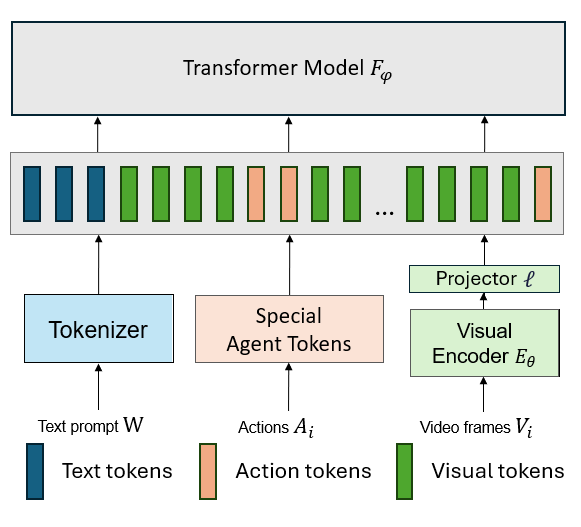
A CLIP ViT-B/16 visual encoder (Radford et al., 2021) maps frames to features; a linear projection passes them to an OPT-125M language/action transformer (Zhang et al., 2022). Text, visual tokens, and previous actions form a causal sequence for predicting the next action. A bounded sliding window limits memory cost. Sinusoidal positions support masked visual prediction, and all components are jointly trained rather than freezing the pretrained encoders. The full model has 277 million parameters.
Equation 1
| (1) |
4.2 Pre-Training Strategy
Three objectives share each sample: next-token prediction for instructions, masked image reconstruction, and autoregressive action-token prediction. The visual objective masks 75% of patches and measures squared pixel error on masked locations. The total loss normalizes the combined terms by the token count. Four-frame windows are used for robotics and nine-frame windows for gaming. The retained equations specify the original loss and conditioning notation.
Equations 2–5
| (2) |
| (3) |
| (4) |
| (5) |
5 Tasks
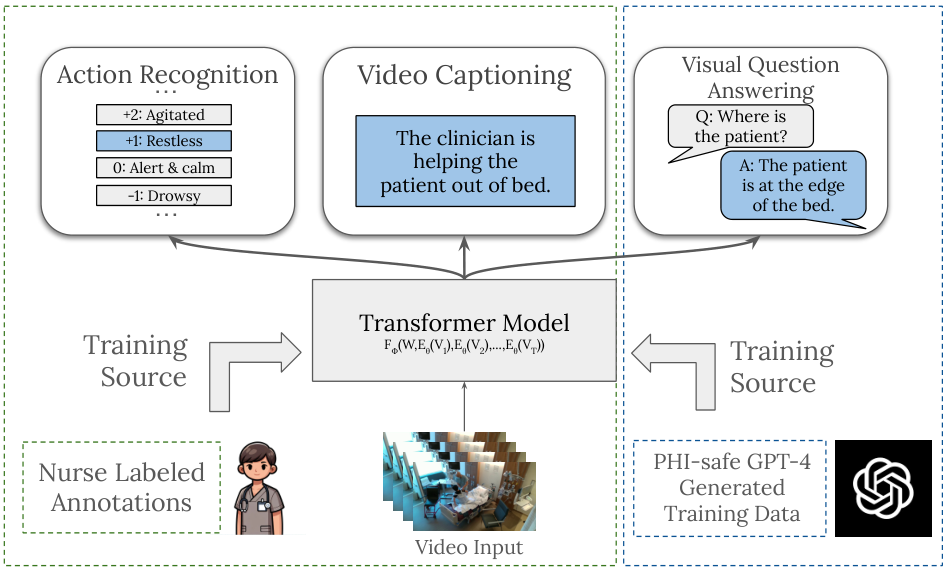
The tasks cover simulated manipulation, recorded game play, and hospital video understanding. The healthcare setting predicts descriptions, answers, and agitation/sedation categories; it does not control patient care.
5.1 Robotics Tasks
Language-Table supplies 4.93 million frames of simulated tabletop manipulation. The language-annotated CALVIN subset supplies 1.44 million frames of seven-degree-of-freedom robot manipulation. Both train instruction-conditioned actions, then evaluate task completion or consecutive task chains.
5.2 Gaming Tasks
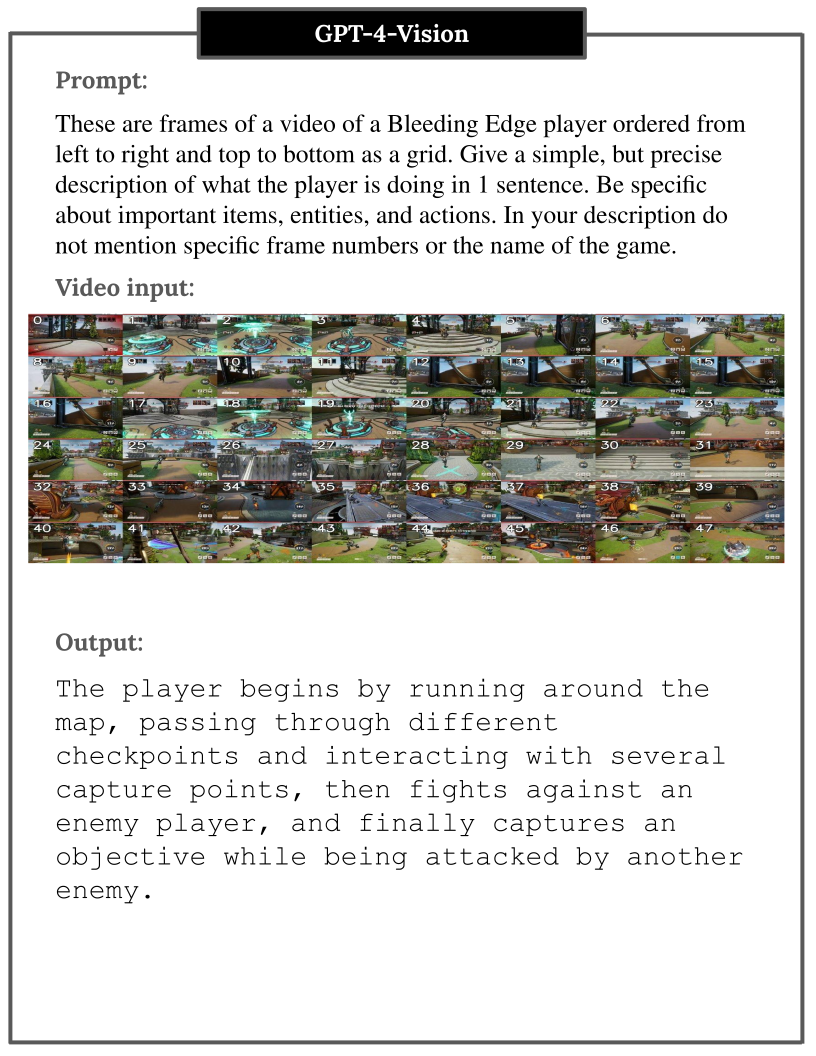
Minecraft contributes 4.7 million frames with recorded controls and inventory metadata; Bleeding Edge contributes 2.3 million frames from seven settings. The original demonstrations lack task instructions, so GPT-4V supplies descriptions. Minecraft inventory changes supplement visual prompting to reduce object and action misidentification. These generated labels are a source of supervision rather than verified human commands.
5.3 Healthcare Tasks
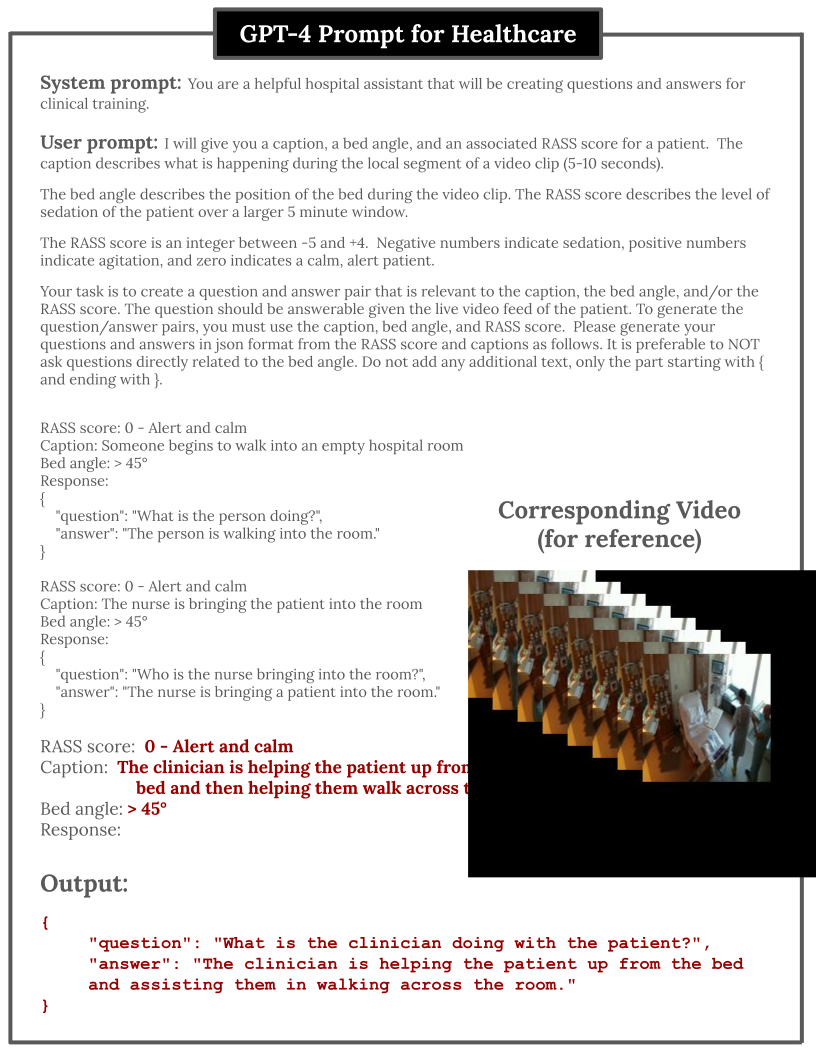
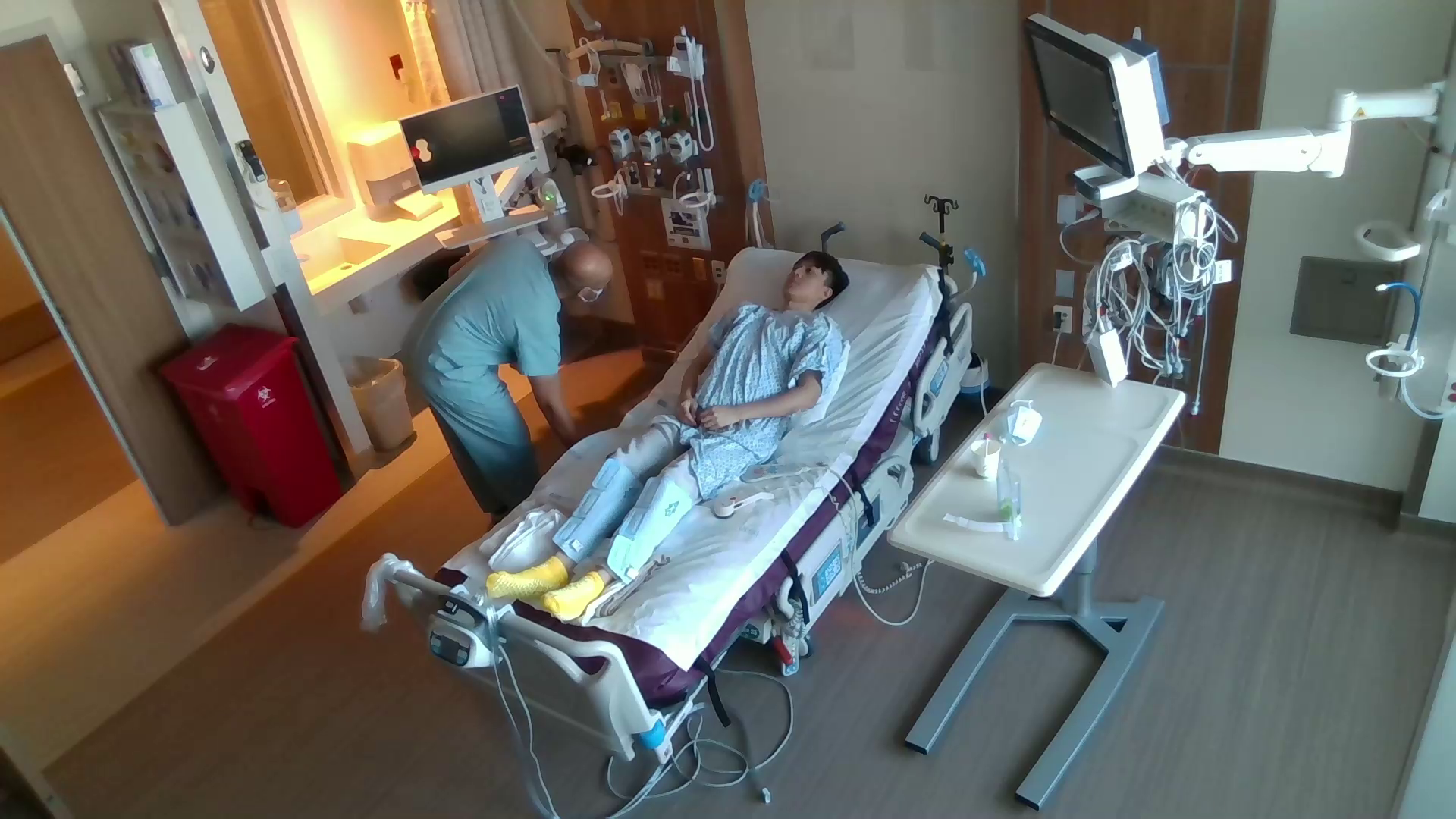
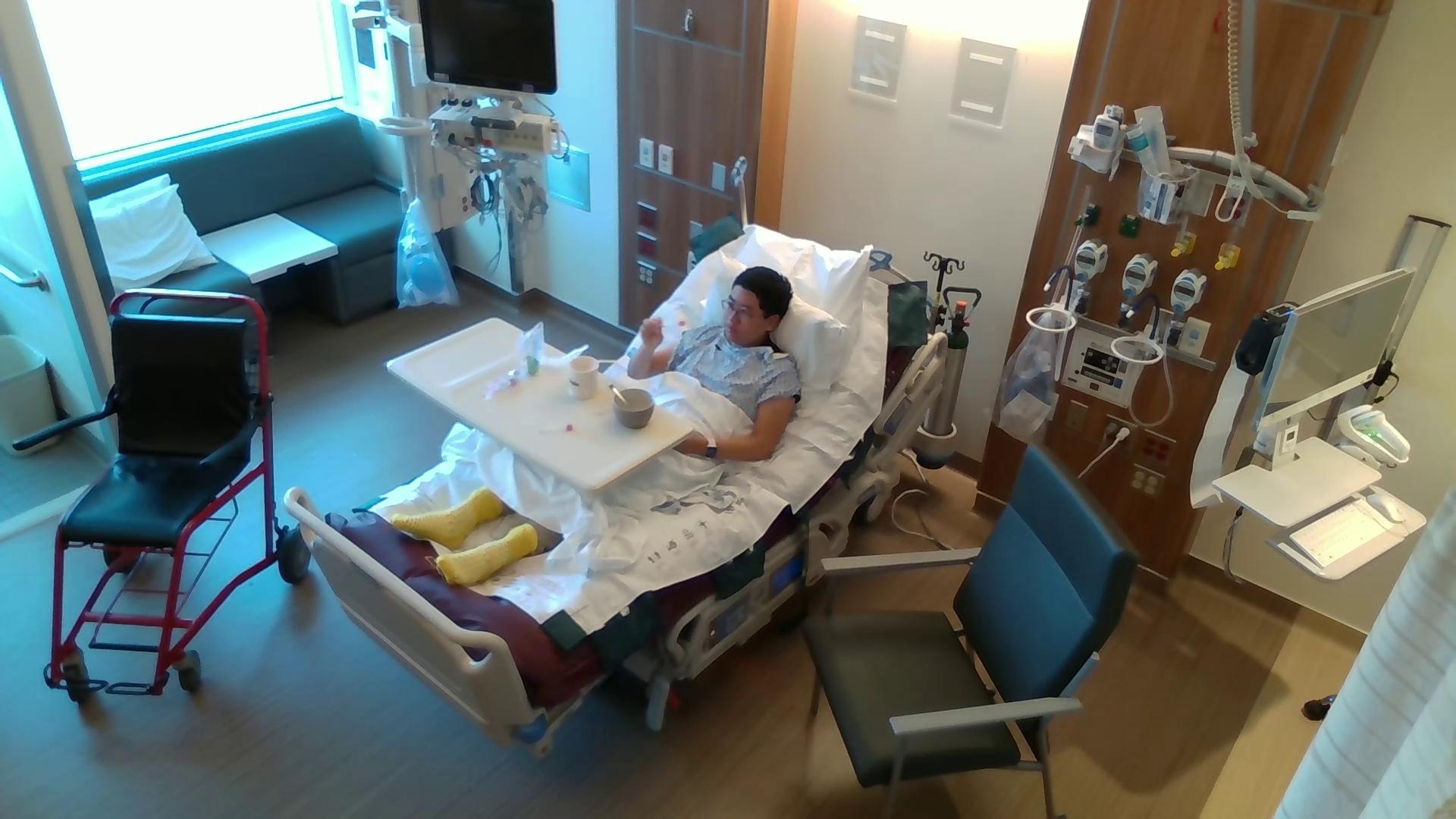
Wall-mounted cameras record ICU activity. Nurses caption short clips and document longer intervals, including RASS assessments and bed position. GPT-4 converts non-identifying captions and documentation into question-answer examples, avoiding direct patient video transfer in the described process. The paper’s privacy claim concerns that stated data-generation procedure; it does not present an independent privacy audit. Healthcare is absent from agent pretraining and used for later adaptation.
6 Experiments
Evaluation tests pretraining, subsequent adaptation, and comparisons with domain-specific or vision-language baselines. Robotics measures task success, gaming measures held-out action-token agreement, and healthcare reports text perplexity and RASS classification accuracy; these metrics answer different questions.
6.1 Pre-training Experiments
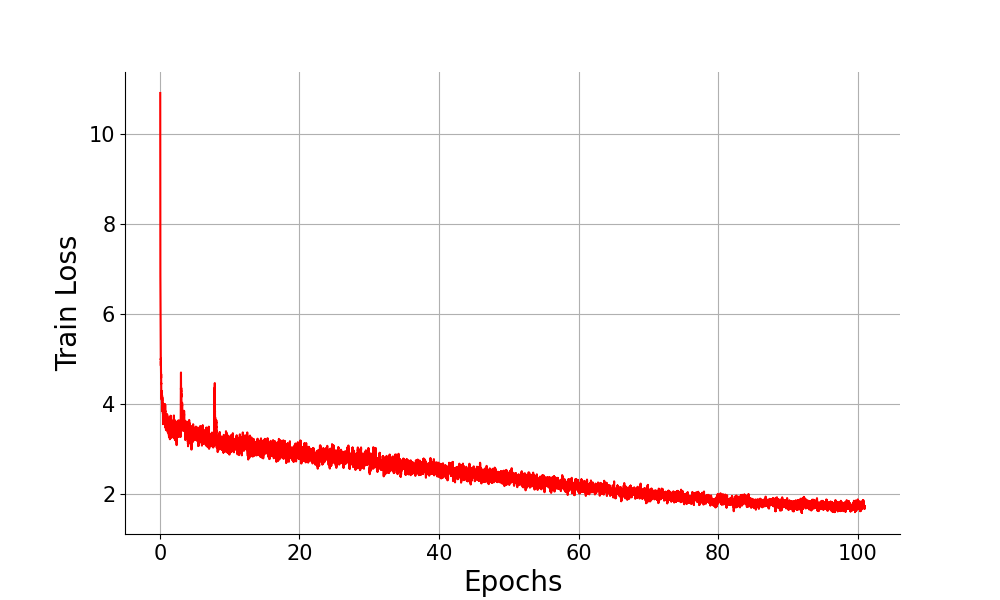
Pretraining uses 13,416,484 sampled frames: 1,233,659 four-frame Language-Table windows, 360,566 four-frame CALVIN windows, 525,309 nine-frame Minecraft windows, and 256,867 nine-frame Bleeding Edge windows. Training runs for 100 epochs on twelve nodes with sixteen V100 GPUs each, taking 175 hours. The initial learning rate is 0.0001 with warmup and cosine decay. Color augmentation changes brightness, saturation, and hue. New tokens encode actions and trajectory boundaries: Minecraft uses 23 buttons and 100 bins per mouse axis; Bleeding Edge uses eleven buttons and discretized joystick rotations and magnitudes. Robot translations, rotations, grippers, and proprioceptive state are also discretized. Figure 7 retains the complete aggregate loss curve.
6.2 Robotics Experiments
Robot models are fine-tuned separately on Language-Table and CALVIN, keeping the visual, language, and action losses. Image masking falls to 50% during fine-tuning and is removed at evaluation. “From scratch” in the comparisons means without the proposed agent pretraining, while retaining initialization from pretrained CLIP and OPT.
6.2.1 Language-Table
Language-Table training splits 181,020 trajectories into four-frame windows. Evaluation samples fifty trajectories for each of five subtasks and repeats three times. Agent pretraining improves success from 40.0% to 42.0%. The authors acknowledge that stronger previously published systems outperform their model; this experiment chiefly shows a modest benefit over their own baseline.
6.2.2 CALVIN
CALVIN evaluates consecutive language-instructed manipulation tasks under the ABCD-to-D setting, which includes environment D during training. Agent pretraining improves one-task success from 20.6% to 64.8% and average completed chain length from 0.214 to 1.127. The displayed MCIL baseline reaches 28.2% and 0.31, respectively. Only 1.9% of five-task chains succeed, so longer-horizon control remains difficult. The authors use the language-annotated subset, approximately 1% of the original CALVIN data, in this comparison.
| Model | MC (BLEU-4) | BE (BLEU-4) |
|---|---|---|
| Ours (from scratch) | 0.174 | 0.238 |
| Ours (pre-train only) | 0.170 | 0.249 |
| Ours (Pre-train and fine-tuned) | 0.272 | 0.411 |
| Task | Text instruction | Start frame | Predicted Action | Ground Truth Action |
|---|---|---|---|---|
| Minecraft | the player is using an iron_sword to attack and kill pigs in a forest… | 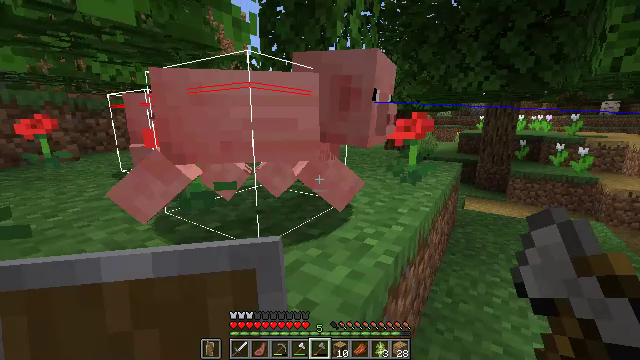 |
[STARTACTION] [attack] [ENDOFACTION] | [STARTACTION] [attack] [ENDOFACTION] |
| Bleeding Edge | the player is controlling a red robot … fighting other characters | 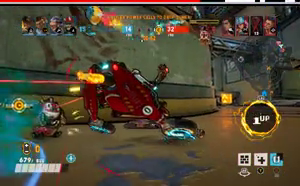 |
[STARTACTION] [lockon][meleeattack] [lrot162] [lmag4] [ENDOFACTION] | [STARTACTION] [lockon][meleeattack] [lrot160] [lmag4] [ENDOFACTION] |
6.3 Gaming Experiments
One hundred held-out videos per game evaluate action prediction with BLEU-4, not online game completion or reward. Pretraining plus fine-tuning raises scores from 0.174 to 0.272 for Minecraft and from 0.238 to 0.411 for Bleeding Edge. Fine-tuning overfits within five epochs, so its reported checkpoint is chosen by validation performance; the pretrained-only model uses its final epoch. These checkpoint and metric choices matter when interpreting the transfer benefit.
6.4 Healthcare Experiments
Healthcare adaptation covers captioning, visual question answering, and RASS classification. The best RASS accuracy comes from agent pretraining, whereas the lowest text perplexity comes from a frozen CLIP/OPT baseline. Thus the results support task-dependent transfer, not uniform improvement across healthcare outputs.
Healthcare Setting
Captioning and question answering train token likelihood; RASS is a ten-class prediction from a nine-frame video. Comparisons include frozen and unfrozen CLIP/OPT with a trained connector, and the proposed temporal architecture without agent pretraining. All are trained for twenty epochs on four V100 GPUs at a 0.00004 learning rate. The agent-pretrained model reaches 95.7% RASS accuracy versus 70.3% for its architecture without agent pretraining, but its perplexity is worse: 106.3 versus 100.0. Frozen CLIP/OPT obtains the best displayed perplexity, 93.3. The source does not establish prospective clinical effectiveness or live patient-care performance.
| Model | Perplexity | RASS Acc |
|---|---|---|
| CLIP + OPT (frozen) | 93.3 | 55.4 |
| CLIP + OPT (unfrozen) | 102.7 | 92.6 |
| Ours (from scratch) | 100.0 | 70.3 |
| Ours (Agent pre-trained) | 106.3 | 95.7 |
7 Ablations and Analysis
Pretraining Loss Curves:
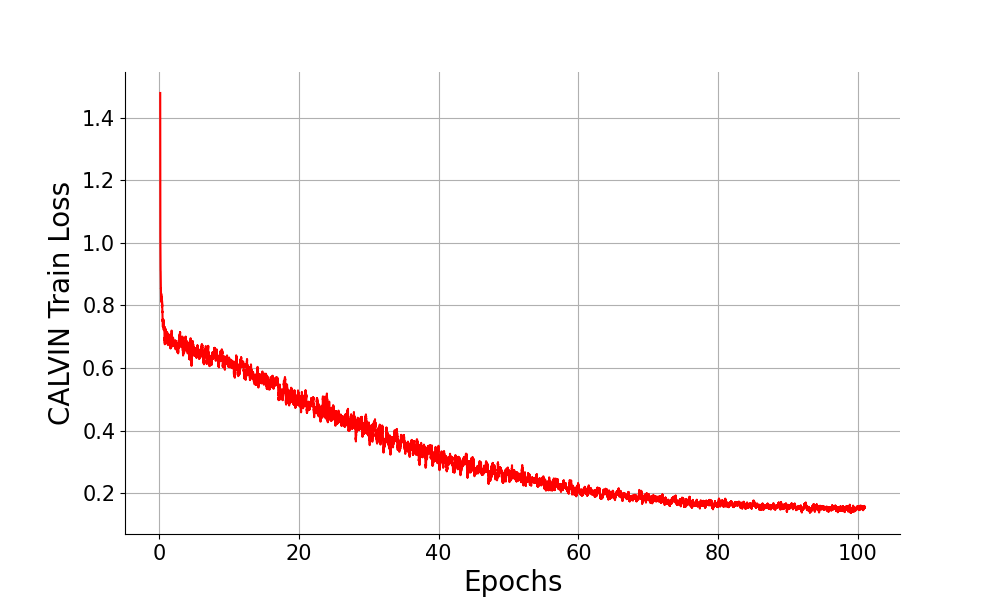
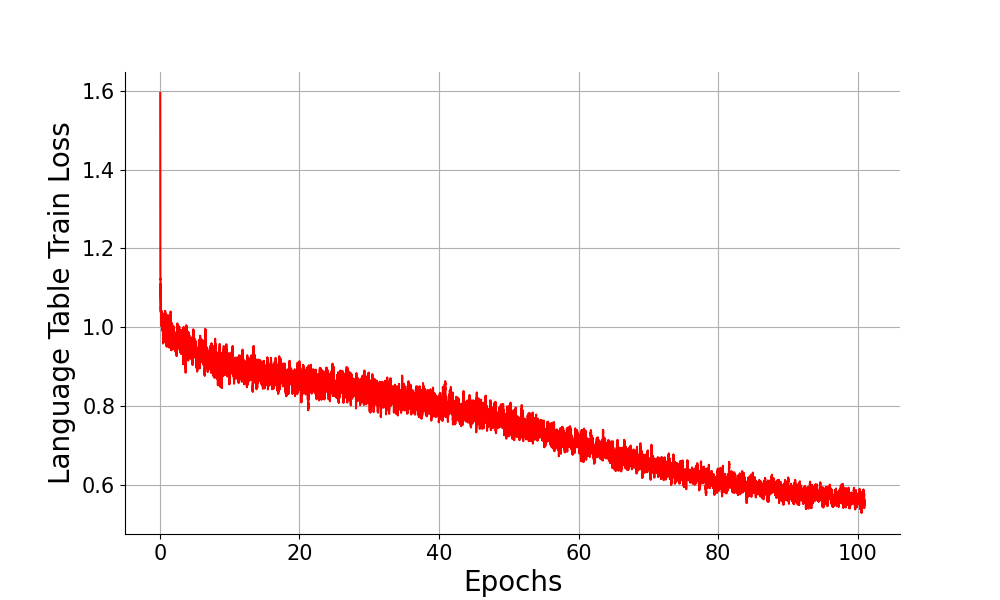
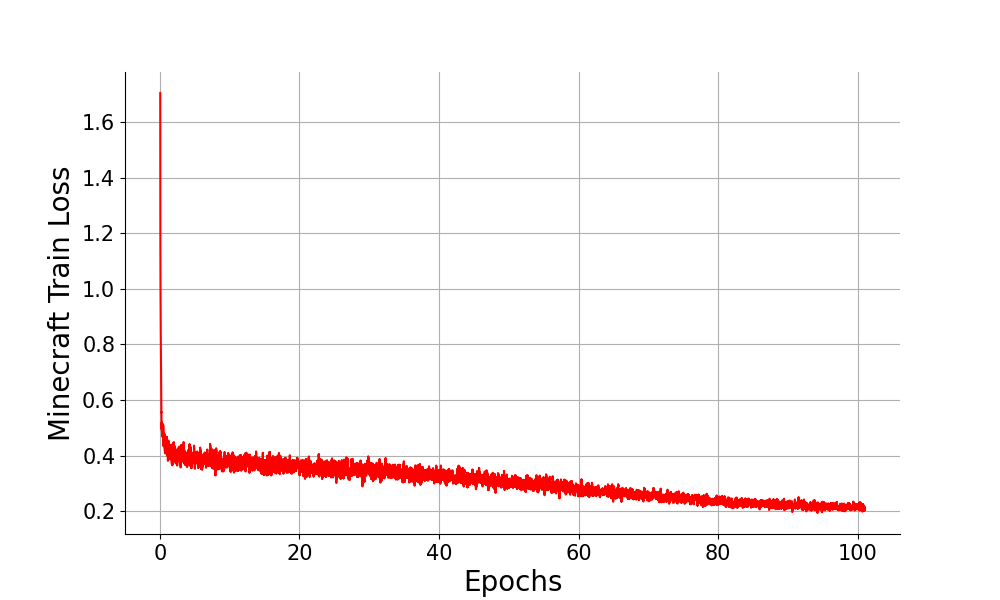
The total pretraining loss and five component/dataset curves decline over 100 epochs. They document optimization behavior, while downstream evaluations provide the evidence for transfer.
Comparisons with GPT-4V:
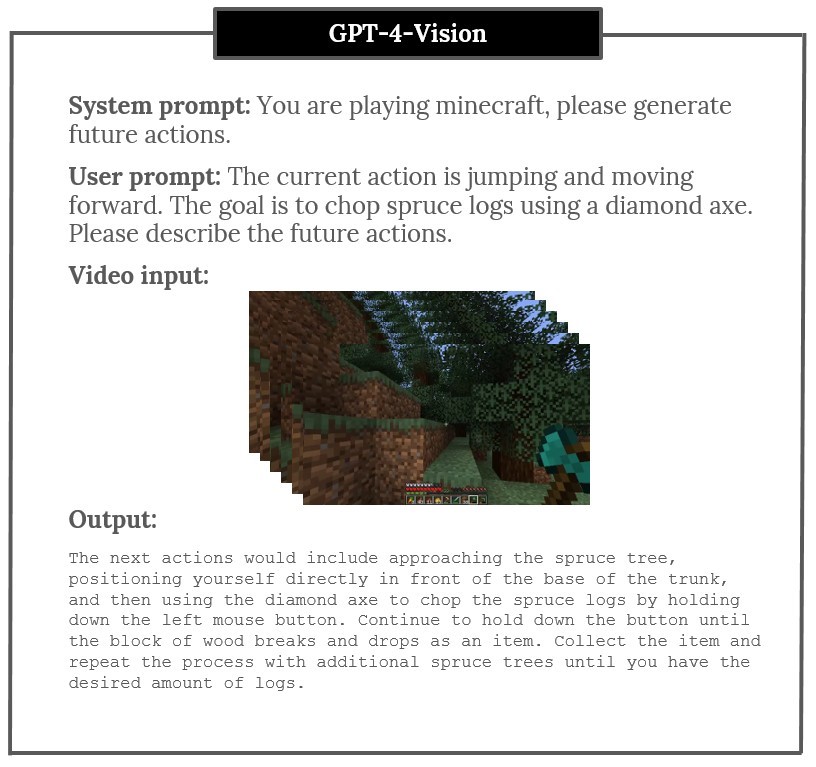
A selected Minecraft comparison shows GPT-4V producing plausible high-level advice while this model emits specific control tokens. This illustrates an interface difference and is not a comprehensive, controlled comparison of the systems’ planning abilities.
Effects of Agent Pre-Training:
The ablations favor prior agent training for game-action agreement and RASS classification, and joint adaptation over the frozen connector baseline for RASS. They also show that better action recognition does not necessarily yield better language generation. The retained tables expose this tradeoff directly.
8 Conclusion
Joint observation, language, and action training provides a reusable starting point for the evaluated tasks. The most convincing gains are in CALVIN task chains, game-action prediction, and RASS classification, with smaller Language-Table gains and no healthcare text-perplexity improvement. Generality remains bounded by the tested datasets, discretized action spaces, and task-specific fine-tuning.
9 Impact Statement
The authors identify limitations of deployment: real robots would require additional training and safety measures, and the healthcare models have not undergone live clinical validation and are not medical devices. They envision clinician-supervised assistance rather than self-prescription. Their discussion also considers gaming-related social withdrawal, addiction, and anthropomorphism. These are the paper’s stated implications, separate from its experimental claims.
Acknowledgements
The paper acknowledges its institutional support, collaborators, and contributors to the healthcare recordings and demonstrations.
Appendix A Architecture Details
The visual encoder starts from CLIP ViT-B/16 and adds temporal attention after spatial attention, using divided space-time processing. Video masking follows a tubelet pattern and an MAE decoder reconstructs masked pixels. Robotics and gaming expose a causal stream at each frame, whereas healthcare uses a video-level encoder to summarize the complete input clip.
Appendix B GPT-4 Prompting
The healthcare prompt generates questions from supplied non-identifying captions and clinical labels; Figure 8 retains the complete prompt and example output. For gaming, forty-eight numbered frames are arranged in a grid for GPT-4V, as shown in Figure 9. Figure 10 preserves both the GPT-4V response and the model’s action-token output for the same illustrated setting.
Appendix C Pre-training Loss Curves
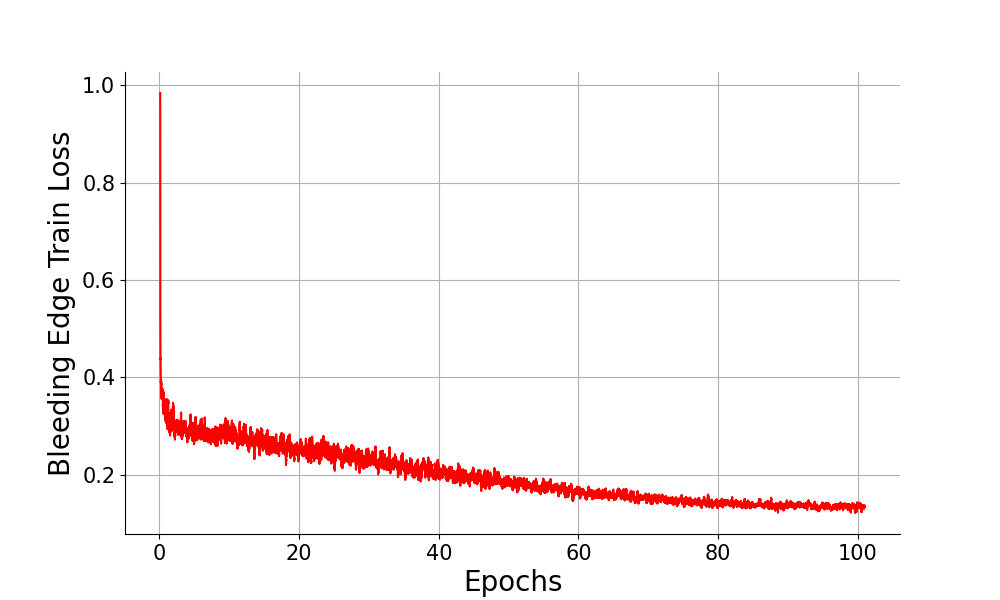
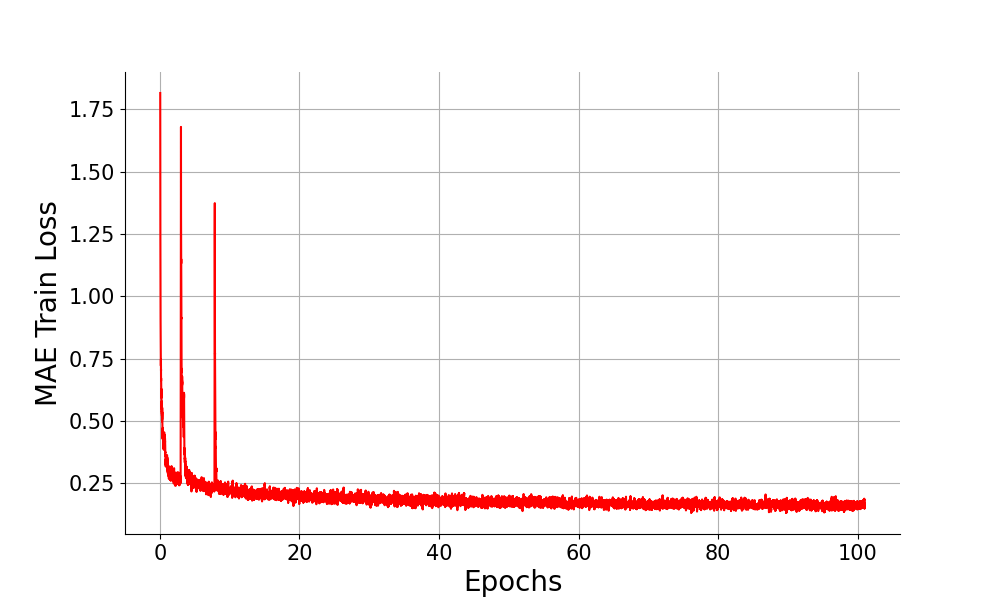
All five pretraining loss plots are preserved: CALVIN, Language-Table, Minecraft, Bleeding Edge, and masked image modeling. They share the 100-epoch training horizon; their different scales should not be read as directly comparable downstream task quality.
 |
 |
 |
 |
 | |
Appendix D Gaming Task Pipeline
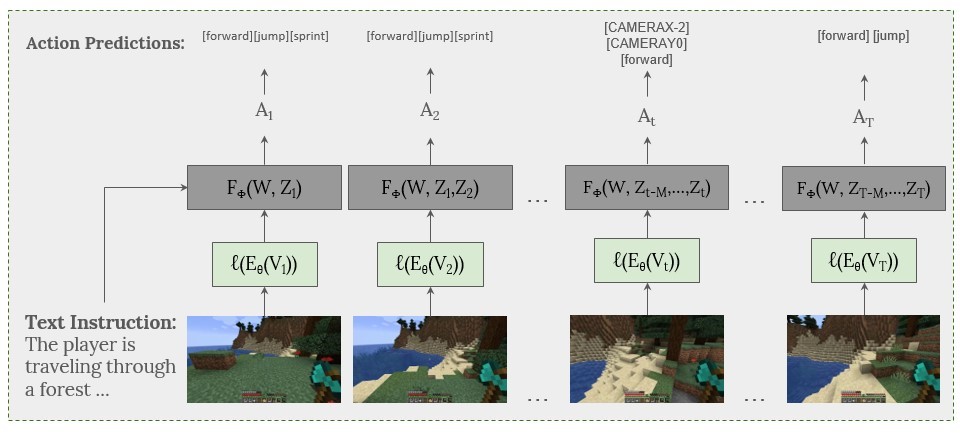
The gaming pipeline parallels robotics: each step combines the instruction, projected visual observations, and previous action history to predict low-level controls. Figure 12 retains the full four-stage Minecraft example.
Appendix E Example Outputs
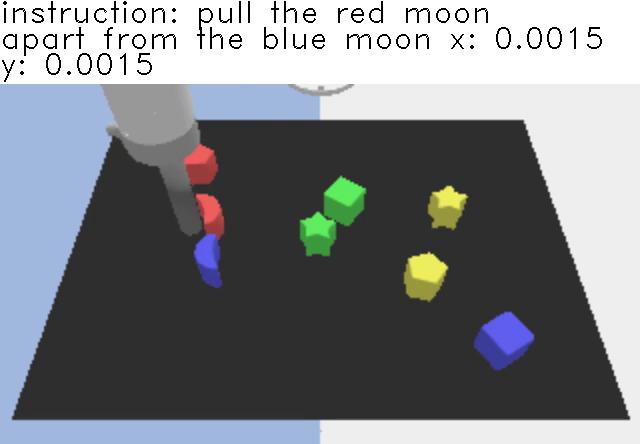
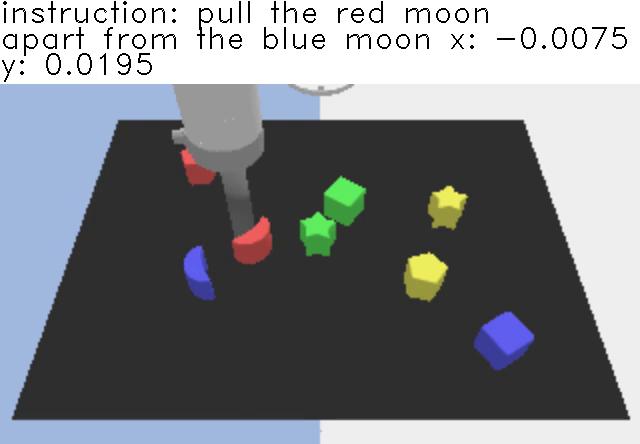
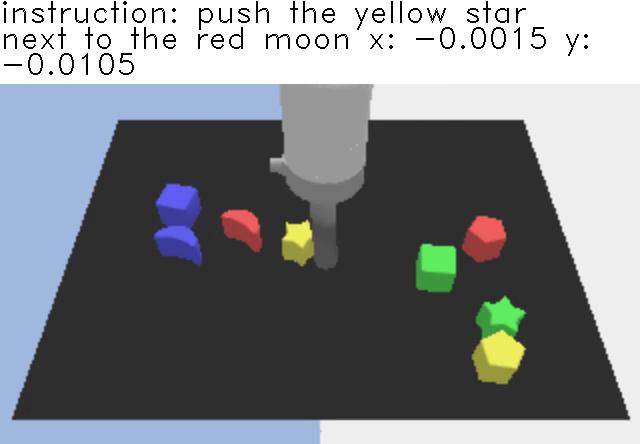
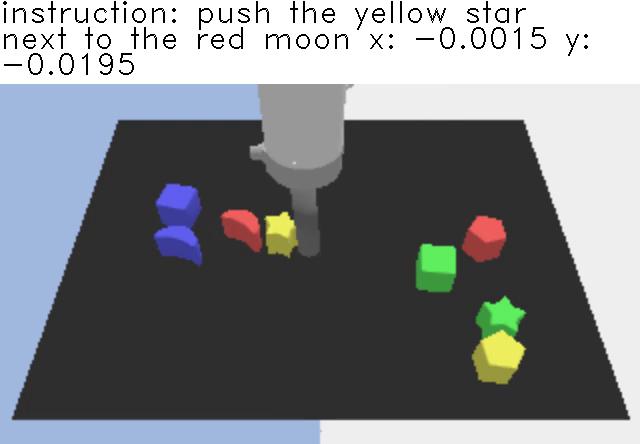
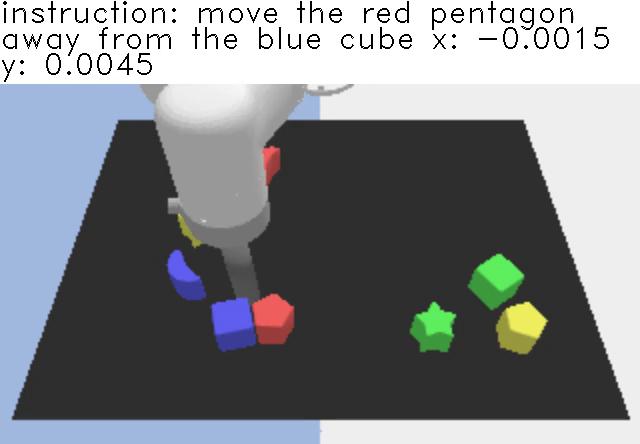
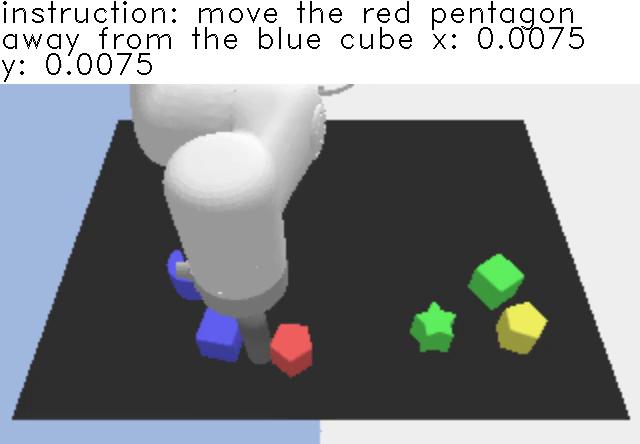
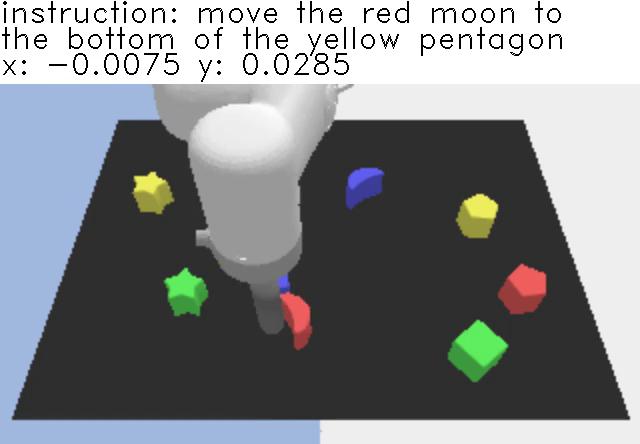
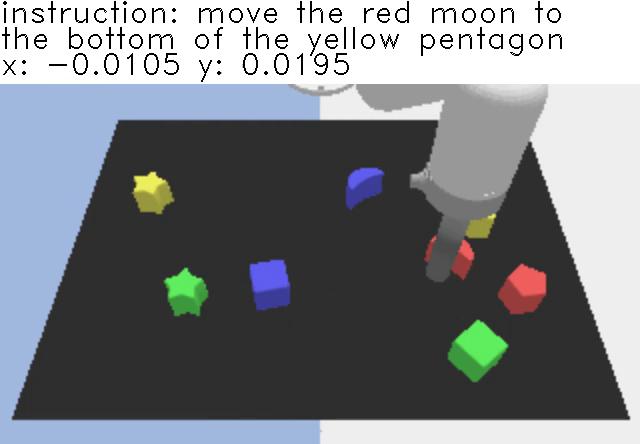
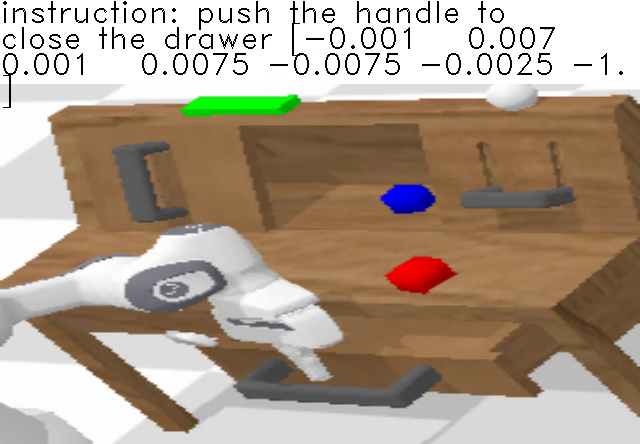
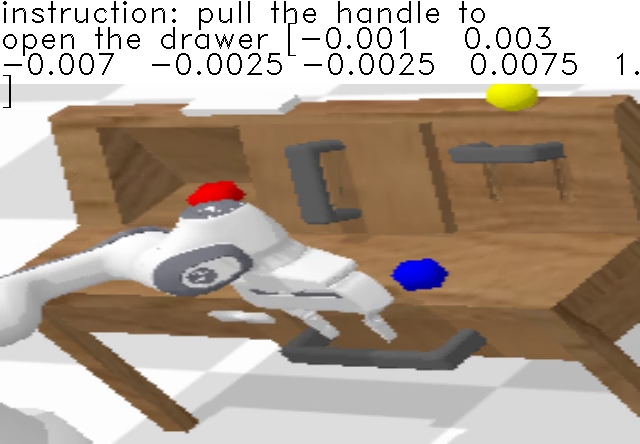
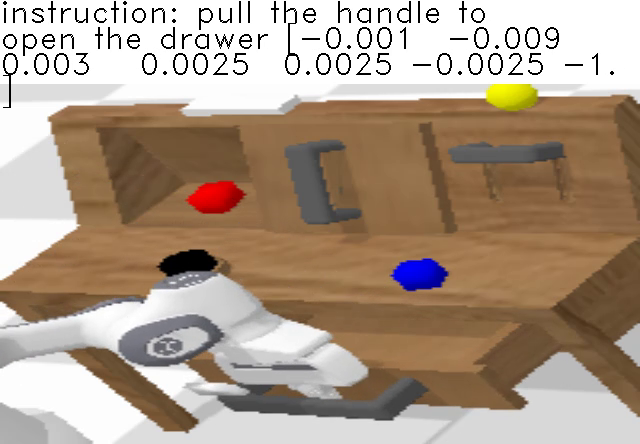
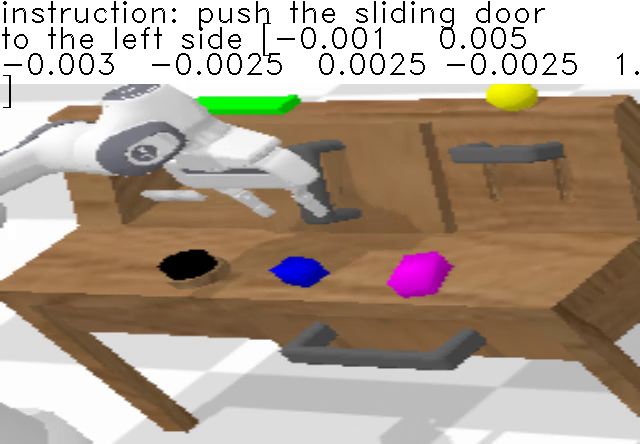
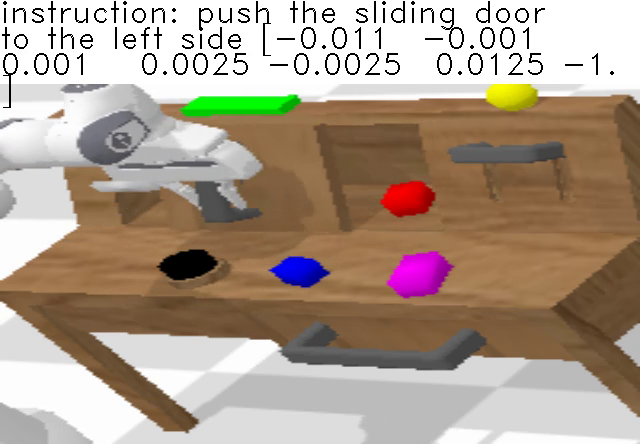
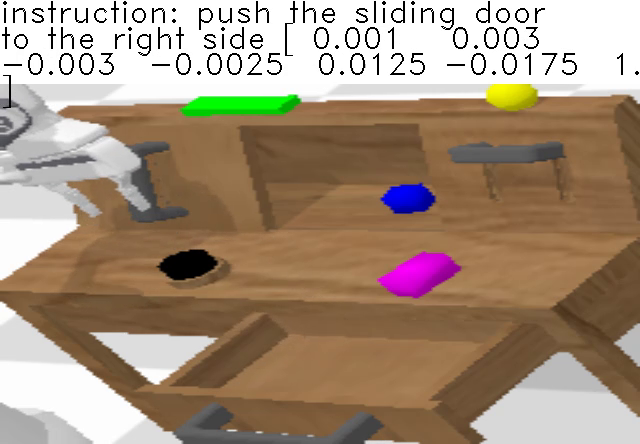
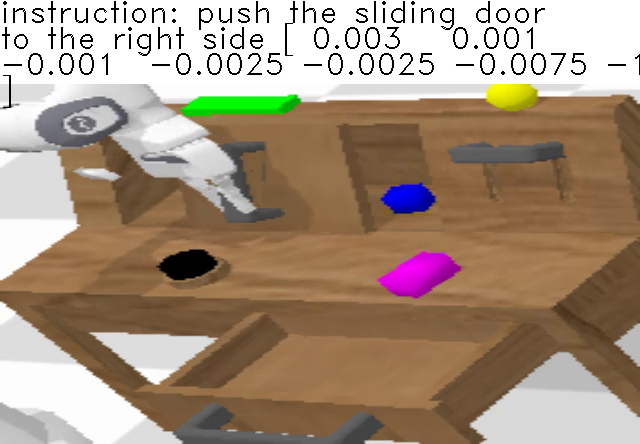
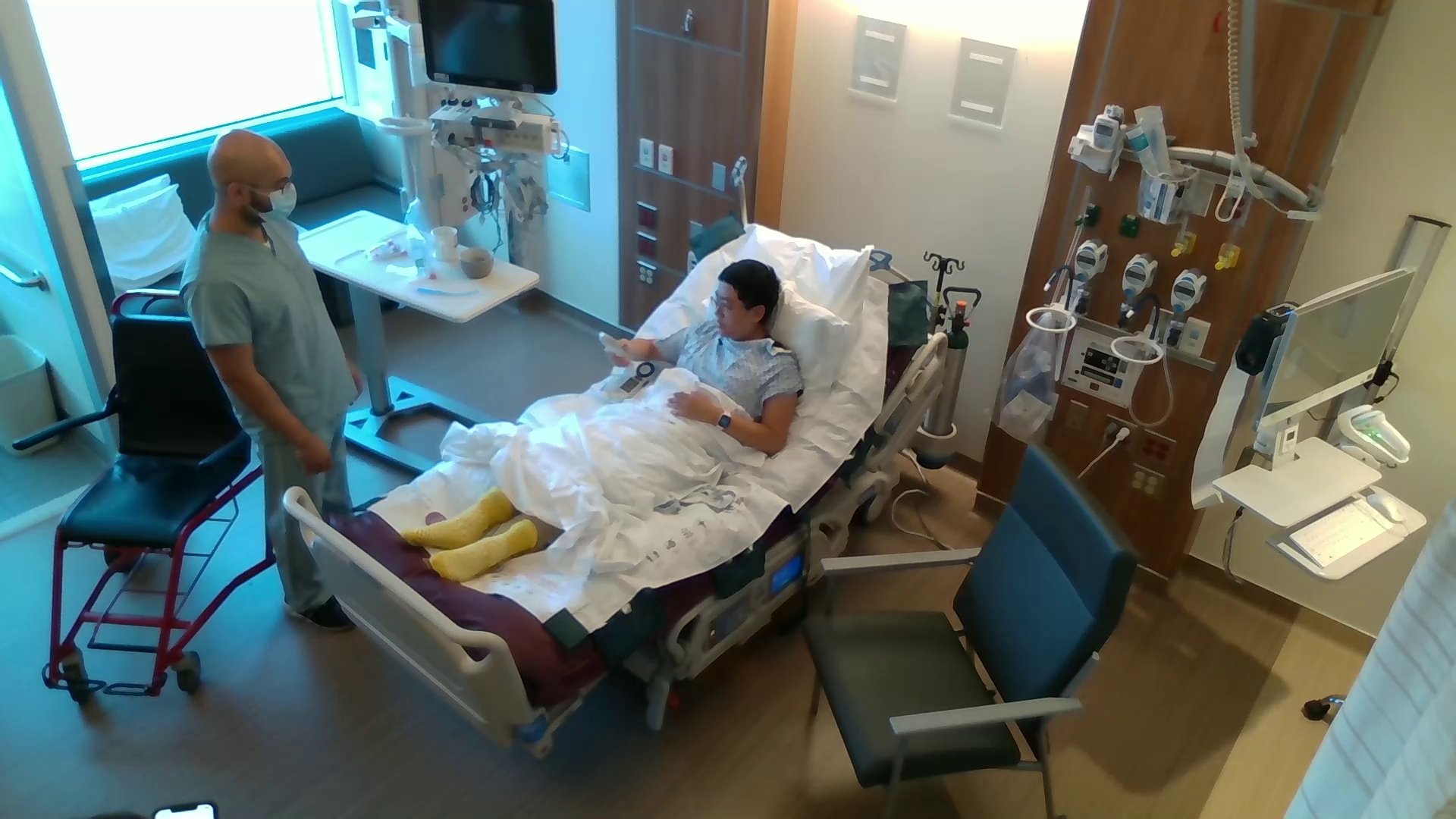
The appendix retains five Language-Table and five CALVIN trajectories, with start, middle, and end frames and predicted controls. Four actor-based healthcare examples cover captioning, question answering, and RASS; these illustrative actor clips mostly receive the calm/alert label, while roughly 60% of the training data has that label. The displayed question-answer example is visibly imperfect: a question about location receives a sedation assessment. Five examples per game compare predicted and recorded controls. Small camera or joystick differences and extra actions are common, and a recorded action is not always the only valid choice. These selected demonstrations illustrate behavior and failure modes rather than establish additional aggregate performance.
| Text instruction | Start frame | Middle frame | End frame | ||
|---|---|---|---|---|---|
| Pull the red moon apart from the blue moon. | 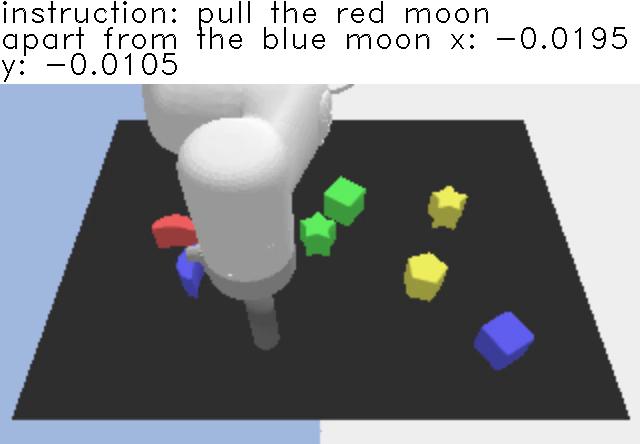 |
 |
 | ||
| Push the yellow start next to the red moon. | 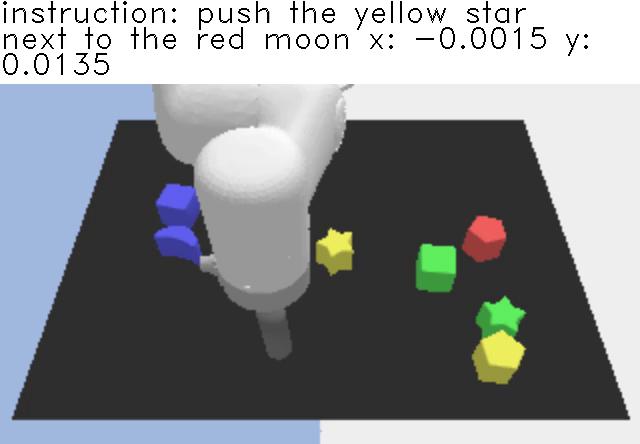 |
 |
 | ||
| Move the red pentagon away from the blue cube. | 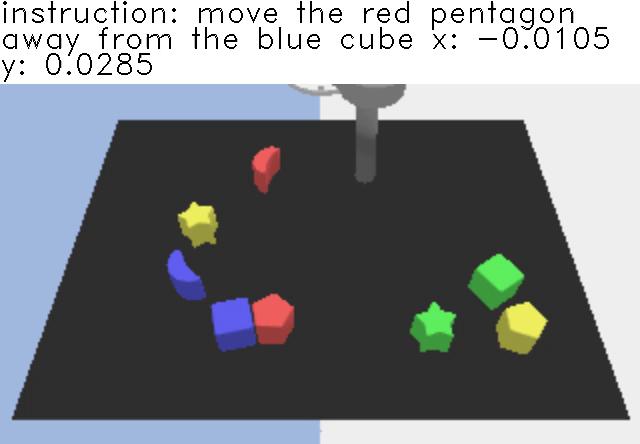 |
 |
 | ||
| Move the red moon to the bottom of the yellow pentagon. | 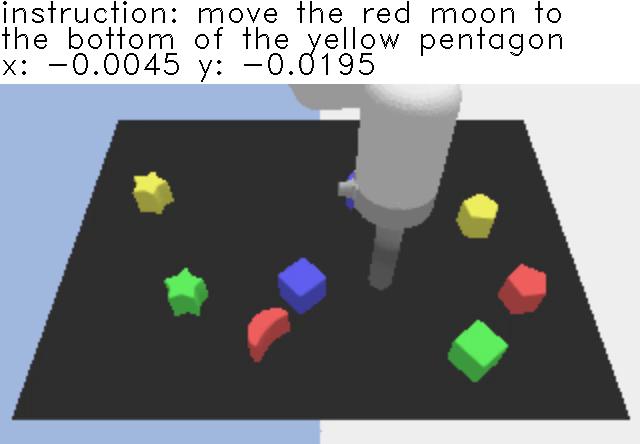 |
 |
 | ||
| Pull the red moon to the bottom left. | 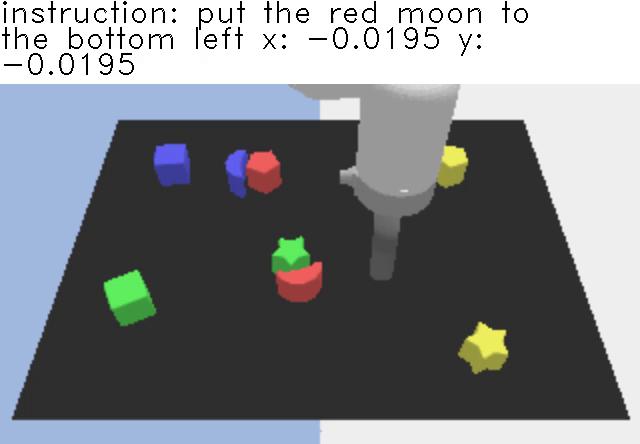 |
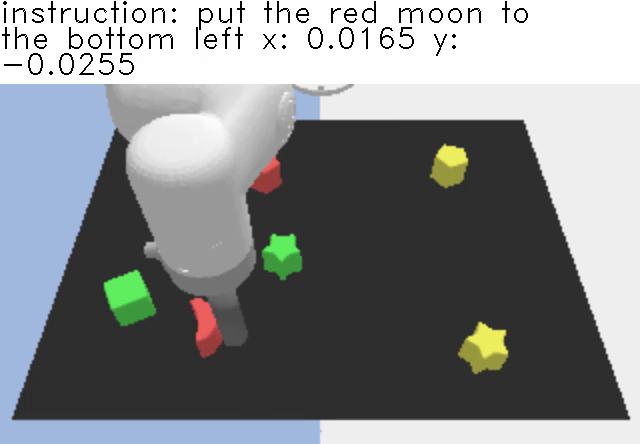 |
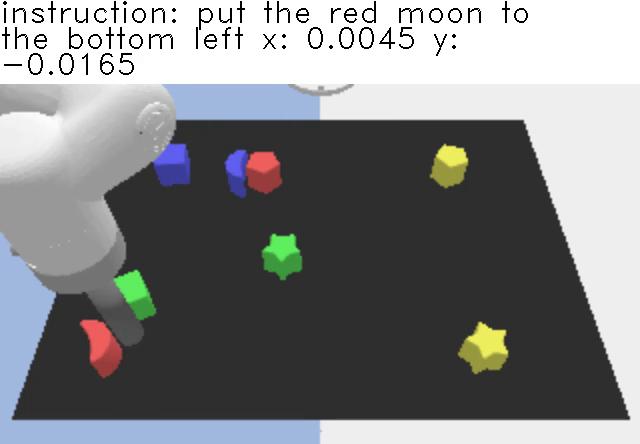 |
| Text instruction | Start frame | Middle frame | End frame | ||
|---|---|---|---|---|---|
| Push the handle to close the drawer. | 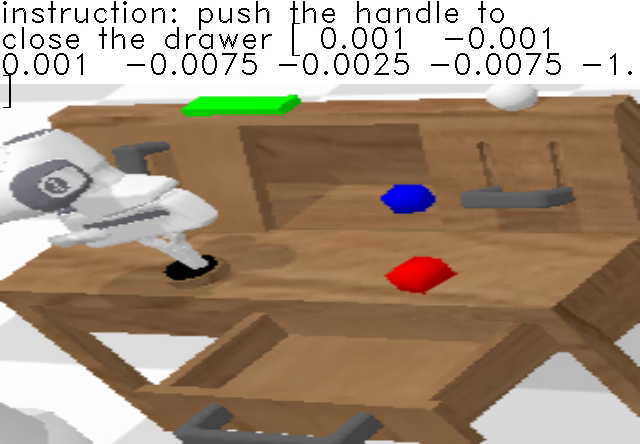 |
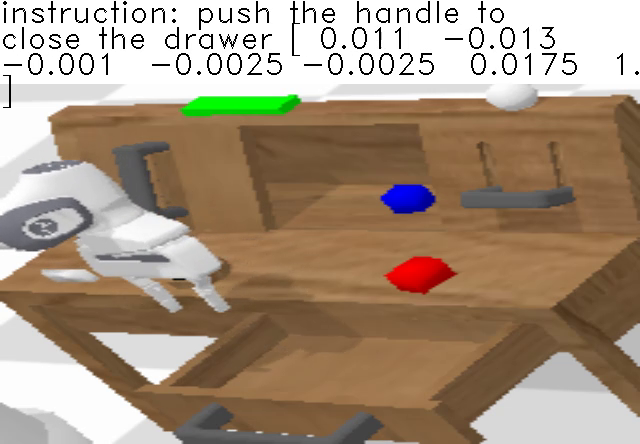 |
 | ||
| Lift the red block from the sliding cabinet. | 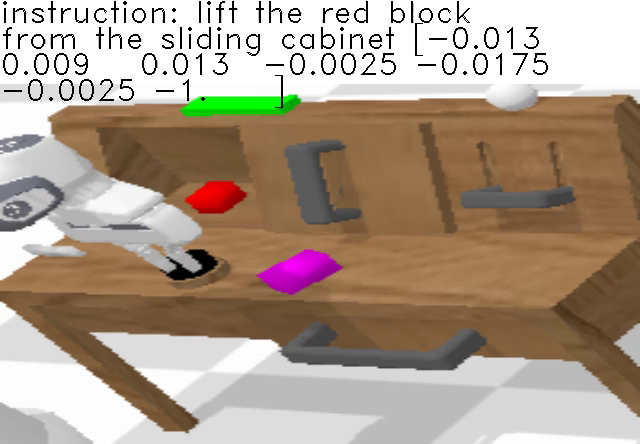 |
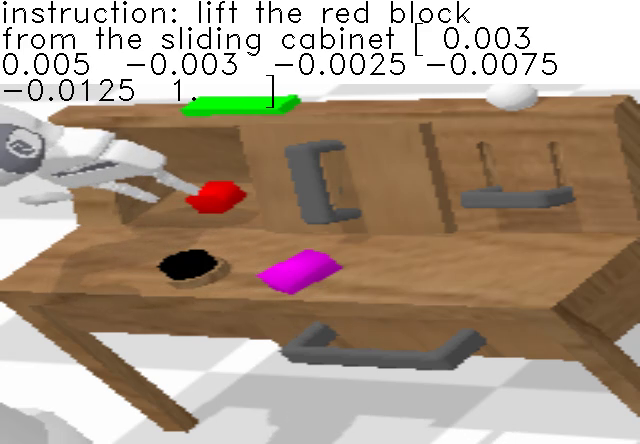 |
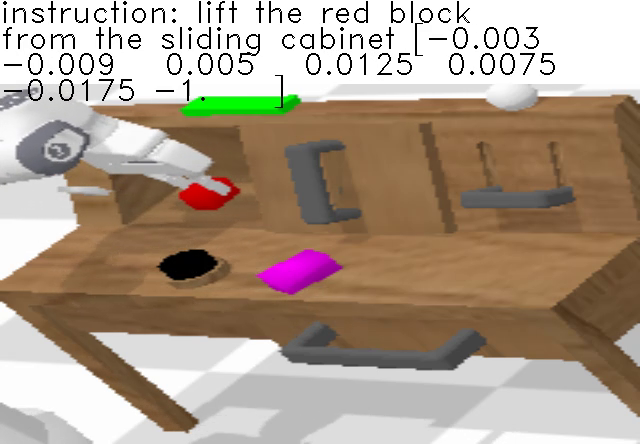 | ||
| Pull the handle to open the drawer. | 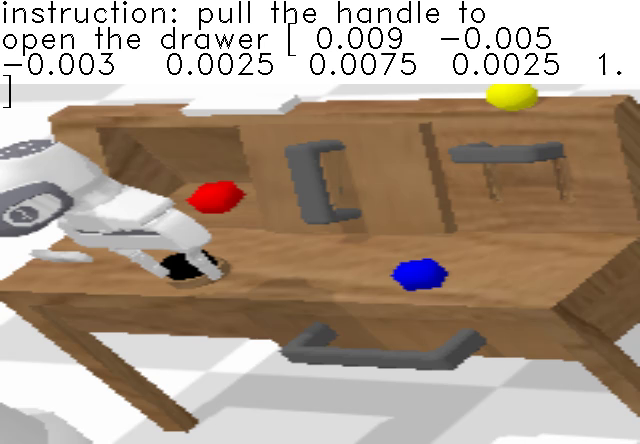 |
 |
 | ||
| Push the sliding door to the left side. | 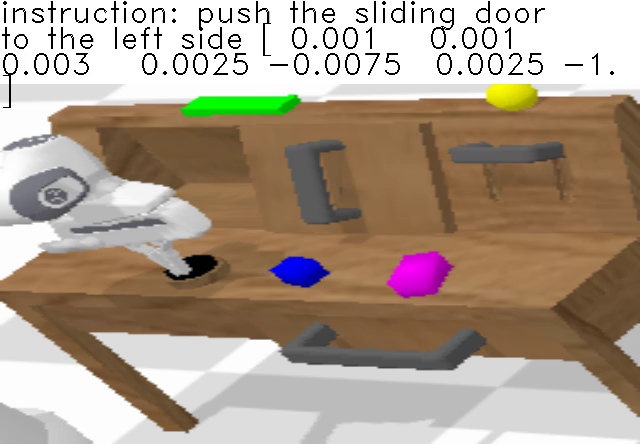 |
 |
 | ||
| Push the sliding door to the right side. | 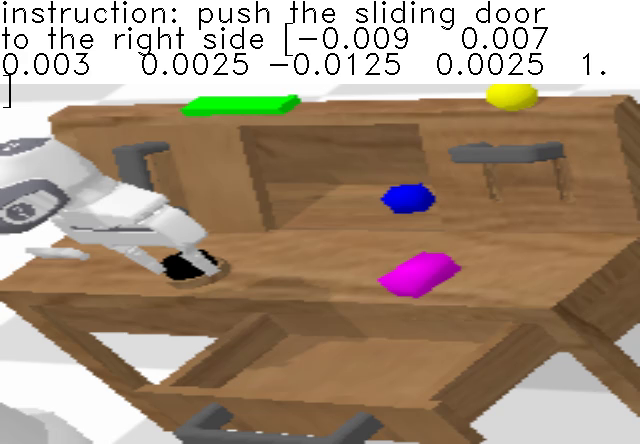 |
 |
 |
| Task | Start frame | End frame | Model Output |
|---|---|---|---|
| Video Captioning | 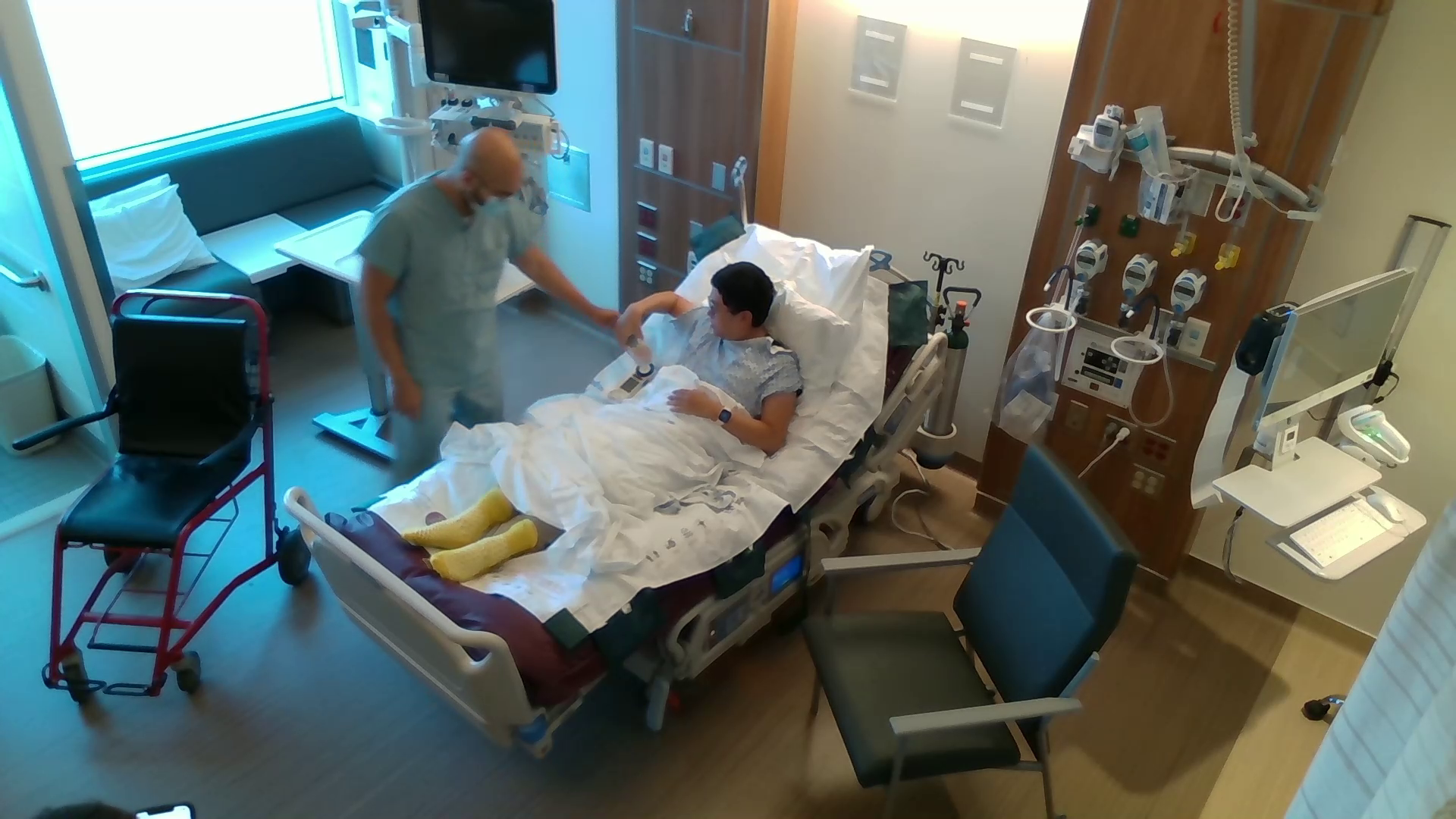 |
 |
The patient is awake and calm. The patient is cooperative. The patient is alert |
| Video Question Answering | 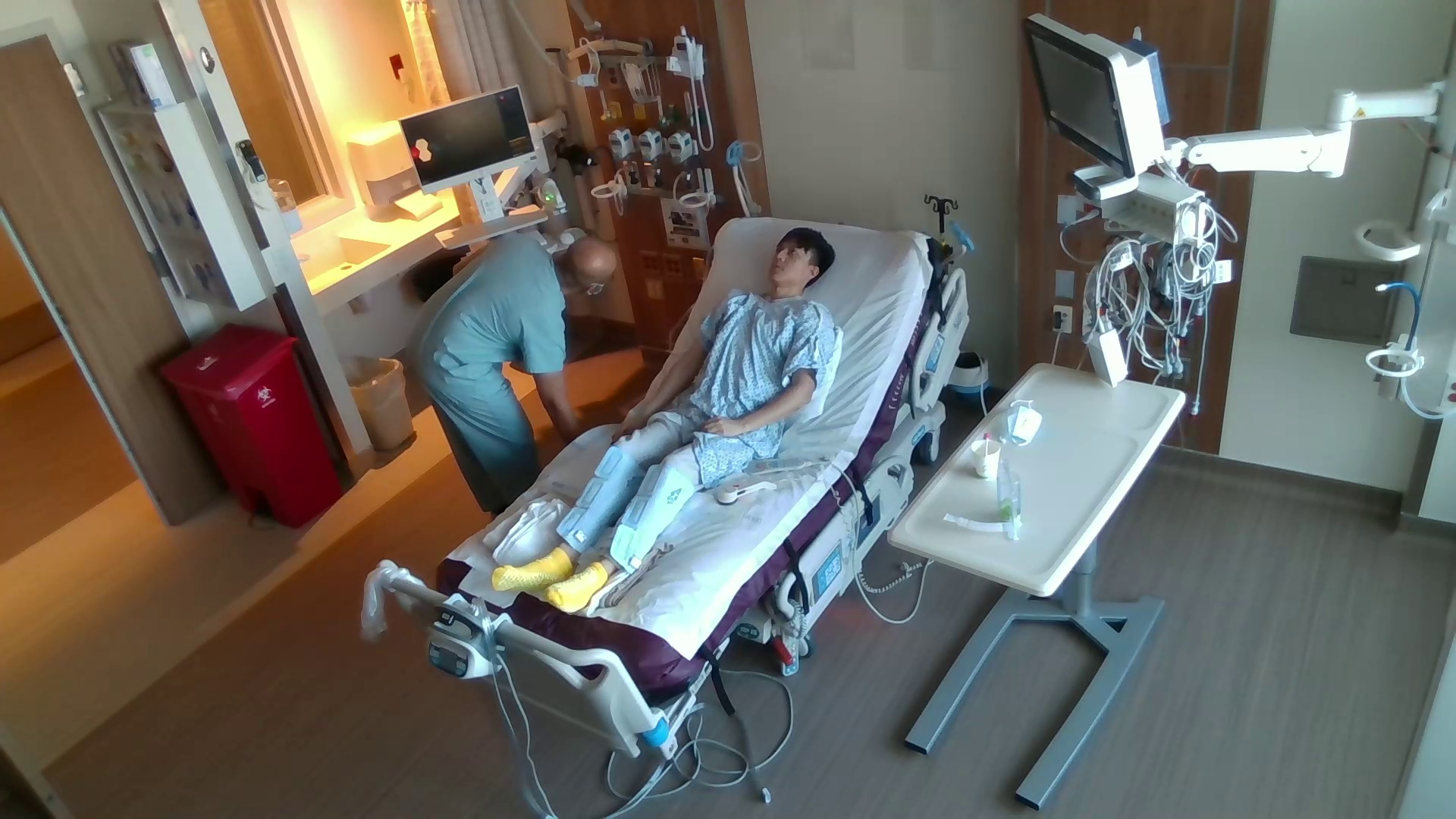 |
 |
Q: Where is the patient? A: patient is in deep sedation. The patient likely requires assistance. |
| Action Recognition (RASS) | 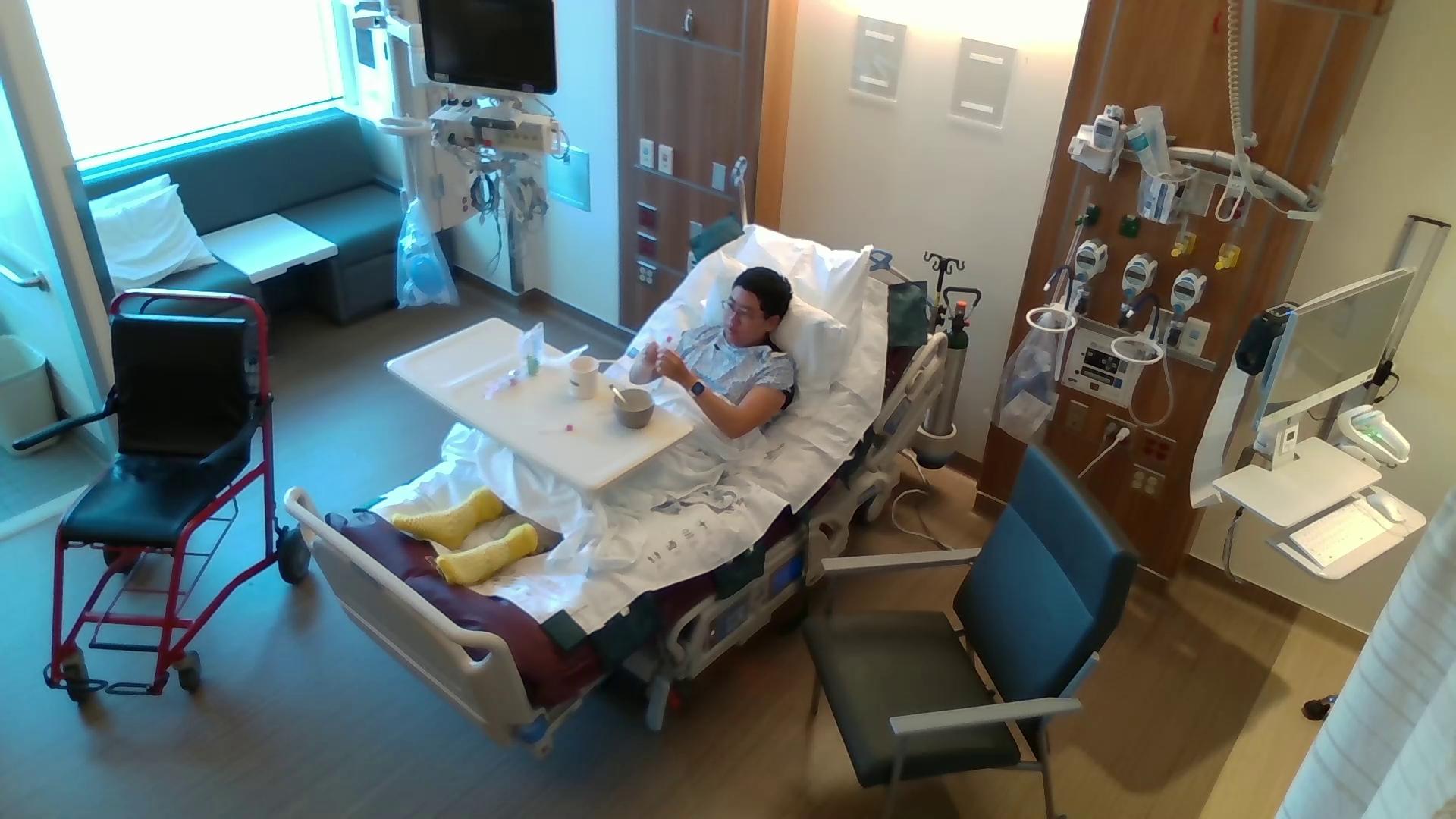 |
 |
0 - Alert and calm |
| Video Captioning | 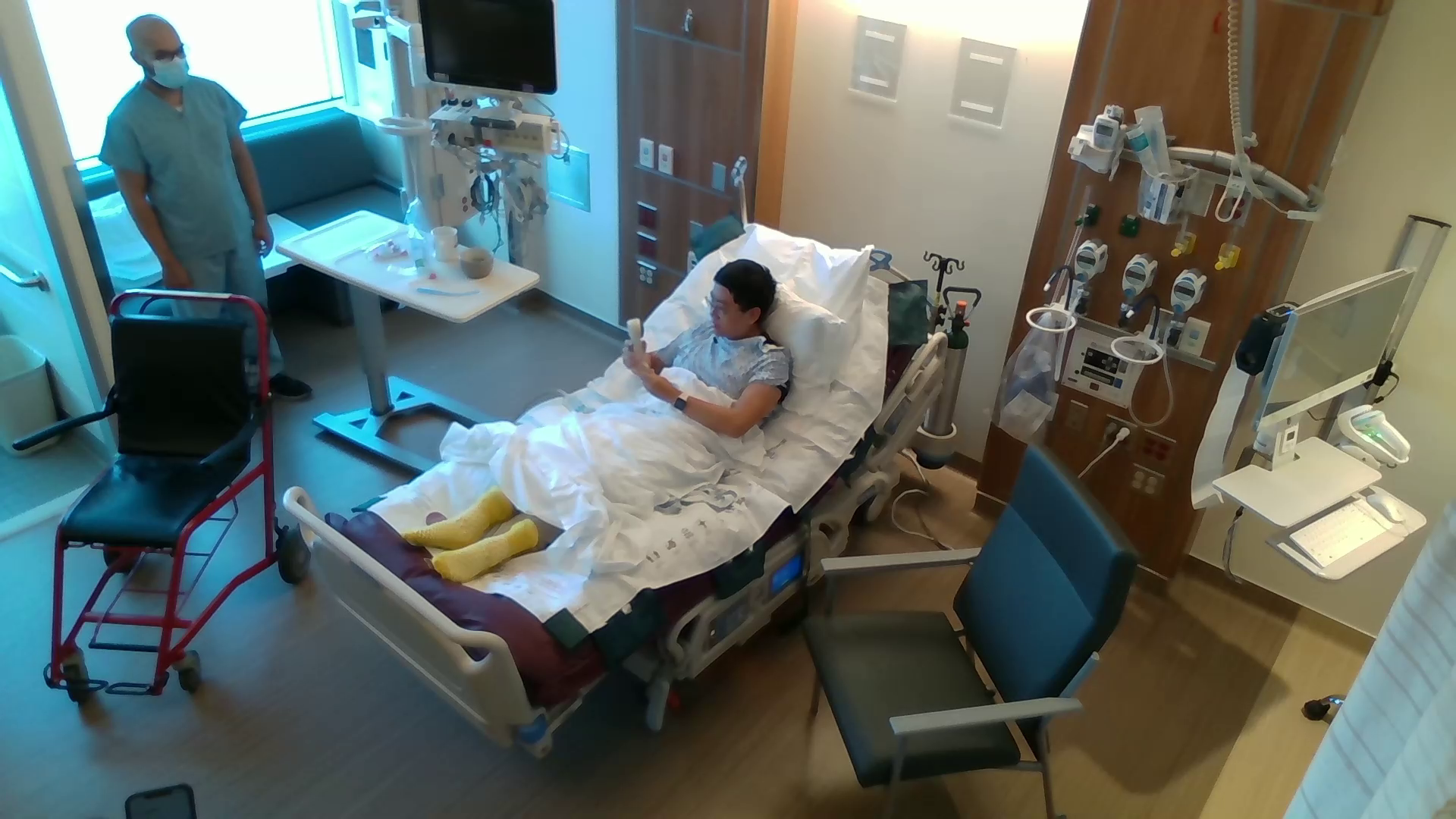 |
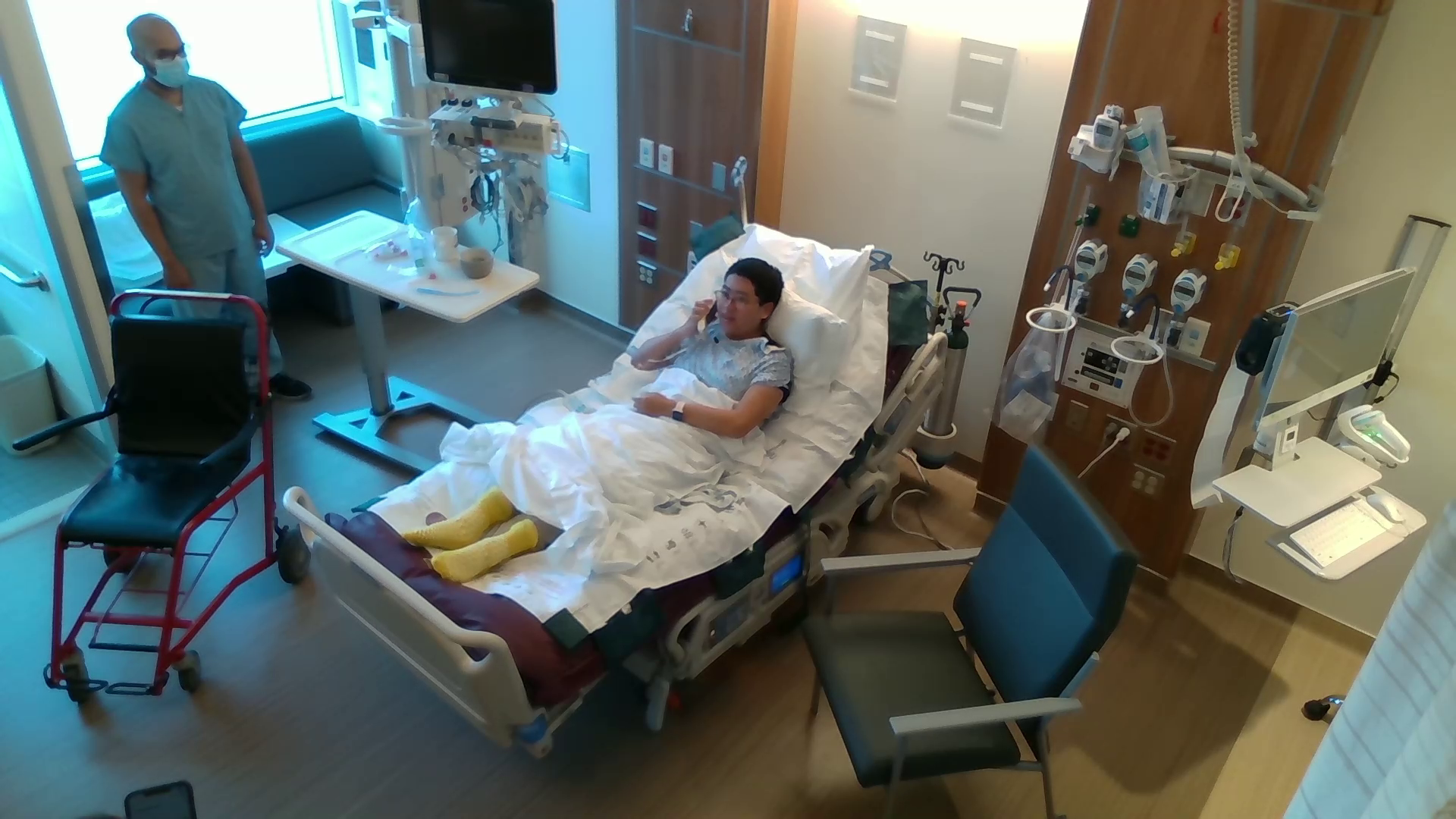 |
The patient is awake and calm. They are speaking on the phone. |
| Text instruction | Start frame | Predicted Action | Ground Truth Action |
|---|---|---|---|
| the player is digging and placing dirt blocks to terraform the terrain around their house… | 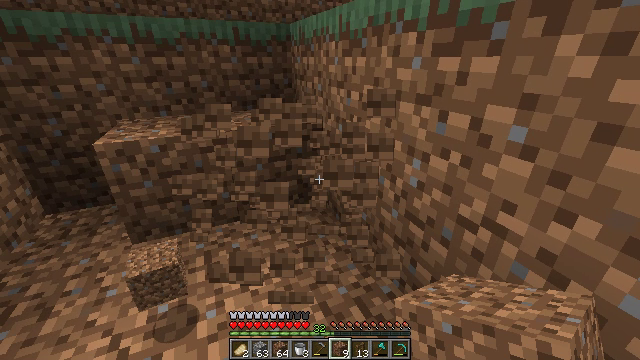 |
[STARTACTION] [attack] [CAMERAX0] [CAMERAY-1] [ENDOFACTION] | [STARTACTION] [attack] [ENDOFACTION] |
| the player is mining underground using a diamond pickaxe, gathering cobblestone, coal, iron ore… | 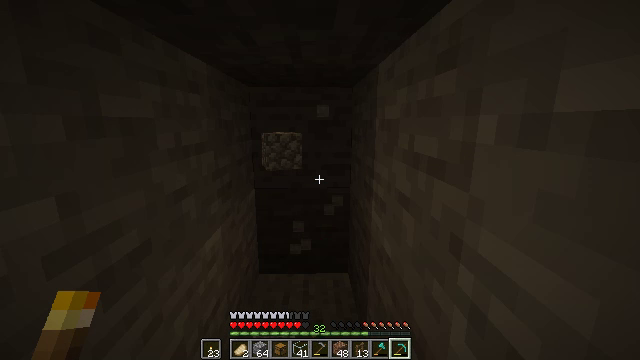 |
[STARTACTION] [attack] [CAMERAX-3] [CAMERAY0] [ENDOFACTION] | [STARTACTION] [attack] [CAMERAX-3] [CAMERAY0] [ENDOFACTION] |
| the minecraft player is moving around a village … | 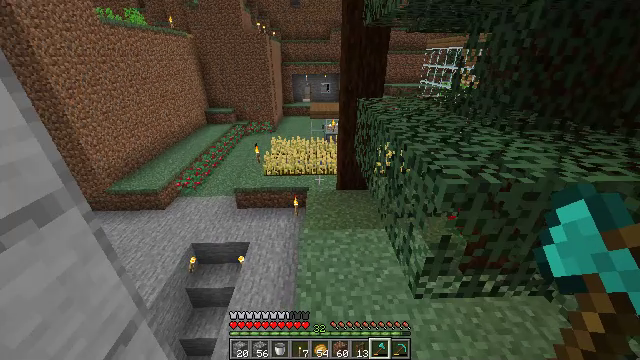 |
[STARTACTION] [forward] [sprint] [ENDOFACTION] | [STARTACTION] [forward] [sprint] [ENDOFACTION] |
| the player is using a brewing stand … | 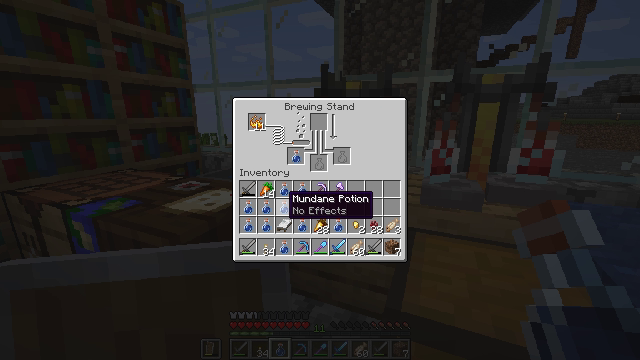 |
[STARTACTION] [sneak] [use] [ENDOFACTION] | [STARTACTION] [sneak] [ENDOFACTION] |
| the player is … terraforming by digging … | 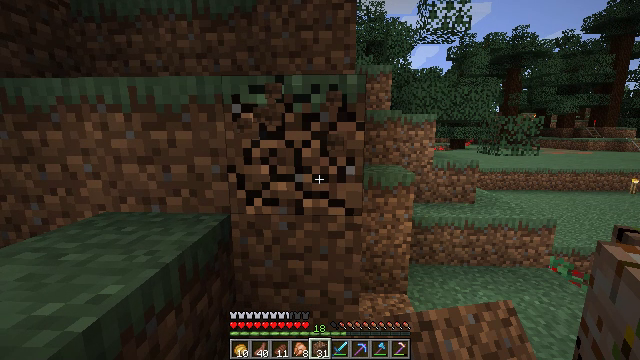 |
[STARTACTION] [attack] [ENDOFACTION] | [STARTACTION] [attack] [ENDOFACTION] |
| Text instruction | Start frame | Predicted Action | Ground Truth Action |
|---|---|---|---|
| the player is using a character with a sword to fight enemies and collect power cells … |  |
[STARTACTION] [lockon][meleeattack] [lrot214] [lmag4] [ENDOFACTION] | [STARTACTION] [lockon][meleeattack] [lrot213] [lmag4] [ENDOFACTION] |
| the player is riding a hoverboard-like vehicle … avoiding or attacking enemy players … |  |
[STARTACTION] [lockon][meleeattack] [lrot204] [lmag4] [ENDOFACTION] | [STARTACTION] [lockon][meleeattack] [lrot201] [lmag4] [ENDOFACTION] |
| the player starts by descending some stairs towards an open area where they engage in combat with an enemy player … | 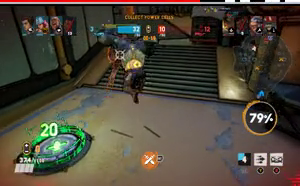 |
[STARTACTION] [jump] [lockon][specialability1] [lrot199] [lmag4] [ENDOFACTION] | [STARTACTION] [jump] [lockon][meleeattack] [lrot201] [lmag4] [ENDOFACTION] |
| the player … captures an objective point while fighting off multiple opponents … | 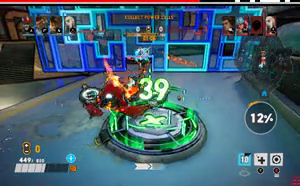 |
[STARTACTION] [lockon][meleeattack] [lrot63] [lmag4] [ENDOFACTION] | [STARTACTION] [lockon][meleeattack] [lrot63] [lmag4] [ENDOFACTION] |
| a bleeding edge player is controlling a robot character with a sword … engaging in combat with enemy players … | 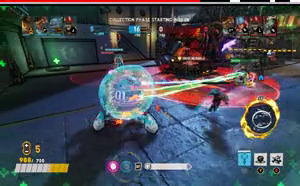 |
[STARTACTION] [evade] [lrot236] [lmag4] [ENDOFACTION] | [STARTACTION] [evade] [lrot236] [lmag4] [ENDOFACTION] |